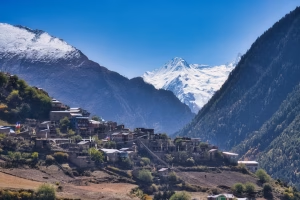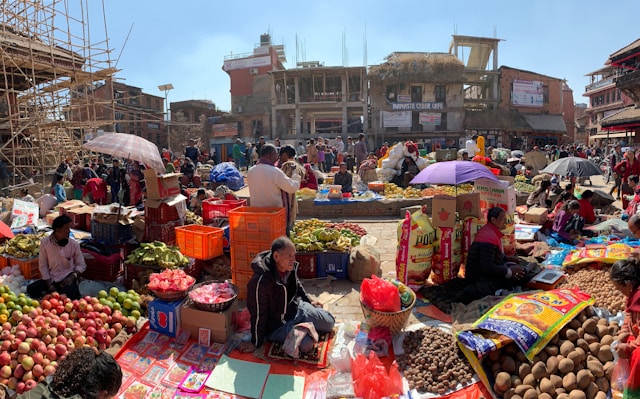
Nepal’s markets are alive with color, sound, and tradition. Walking through these bazaars means stepping into spaces where people have traded for centuries. The best markets in Nepal offer more than just shopping – they show you how local life unfolds. From mountain villages to valley cities, each market has its own character and specialty.
You’ll find everything from hand-spun pottery to fresh mountain cheese. Vendors sell spices that fill the air with fragrance. Craftsmen work in open shops, shaping metal and weaving textiles. These aren’t sterile shopping centers but real places where tradition meets daily needs.
We’ve put together 10 markets from across Nepal, covering everything from what’s worth buying to the best times for visiting and directions to get there. So whether you’re hunting for trekking gear or traditional jewelry, you’ll find the right spot.
10 Best Markets in Nepal
1. Asan Bazaar

Asan has stood at Kathmandu’s center since ancient times, where six streets meet at a perpetual crossroads. The Nepal Tourism Board describes it as one of the finest examples of a traditional Asian bazaar. Walk here, and you’ll see why – vendors spread their goods across the entire square while temples watch from the corners.
This is where locals shop for daily essentials. Spice vendors display mountains of turmeric, cumin, and dried chilies. Fish sellers offer dried varieties from mountain streams. Rice merchants measure out grains while textile shops stack colorful fabrics. You can buy everything from ritual items to fresh vegetables in this single square.
- Highlights: Dried fish, spices (turmeric, cumin, chilies), rice varieties, textiles, religious items, candles, brassware, copperware, local snacks, breakfast items, clarified butter, oils
- Timings: Daily 5:00 AM – 9:00 PM
- Address: Chittadhar Marg, Kathmandu 44600, Nepal
2. Thamel Market Kathmandu

Thamel extends for about 6 kilometers through narrow, winding streets. The name comes from “Tha Bahi” in the Newa language. Since the hippie trail days of the 1960s and 70s, this area has served travelers heading to the mountains. Now it’s the only place in Nepal selling authentic North Face equipment and gear.
The market sells climbing equipment, sleeping bags, down jackets, and hiking boots for rent or purchase. Thangka painters work in small studios above street-level shops. Music stores sell traditional instruments like the madal drum and the sarangi. DVDs, books, and handicrafts compete for tourist attention.
- Highlights: Authentic The North Face gear, trekking equipment (boots, sleeping bags, jackets), pashmina shawls, thangka paintings, Tibetan handicrafts, traditional musical instruments, woolen items, khukuris, travel accessories
- Timings: Daily 10:00 AM – 10:00 PM (many shops and restaurants stay open later or 24 hours)
- Address: P876+PGW, Thamel Marg, Kathmandu 44600, Nepal
Suggested Read: Nepal Visa Photo Requirements for Indians
3. Indra Chowk (Pote Bazaar)

Named after Indra, the Vedic god of rain, this square sits on the historic India-Tibet trade route. Six streets converge here, linking Maru, Kathmandu Durbar Square, Makhan, Jana Baha, Asan, and Naxal. The Raki Bazaar occupies the eastern side, where glass bead merchants have traded since medieval times.
The Akash Bhairav Temple dominates the western side. Inside sits a large mask of Bhairav, the god of the sky, decorated with silver ornaments. During the Indra Jatra festival, the statue of Indra is placed in the square and decorated with flowers. Chariot processions of Kumari, Ganesh, and Bhairav pass through these streets.
- Highlights: Pote (glass bead necklaces), tilhari (wedding necklaces), gold tilauri beads, blankets, textiles, pashmina, traditional clothing, shoes, woolen items, wedding supplies
- Timings: Daily 8:00 AM – 7:00 PM
- Address: Watu Marg, Kathmandu 44600, Nepal
4. New Road Market Kathmandu

The 1934 earthquake destroyed much of Kathmandu, and Prime Minister Juddha Shumsher built this road through the rubble. Originally called Juddha Sadak in his honor, it became the capital’s main commercial street. This is where Kathmandu shops for electronics, jewelry, and fashion. Gold and silver shops dominate – locals joke it feels like Dubai’s gold market.
The market operates as both wholesale and retail. Traders stock up here before selling elsewhere. During festival seasons, especially Dashain and Tihar, crowds pack the streets from morning to night.
- Highlights: Gold and silver jewelry, mobile phones, electronics, cameras, watches, branded clothing, shoes, bags, accessories, traditional musical instruments, khukuris, titaura (local snacks)
- Timings: 7:00 AM – 10:00 PM daily
- Address: P837+758, Sundhara Marg, Kathmandu 44600, Nepal
Suggested Read: Reasons For Nepal Visa Rejection For Indian Nationals
5. Kathmandu Durbar Square Market

Over 50 temples surround this UNESCO World Heritage Site, where the Malla and Shah kings once ruled. The square even serves as “the Museum of Temples” because of its religious density.
Artisans work in small stalls scattered throughout the palace complex. The area specializes in religious statues, wooden masks, and architectural pieces. Some shops sell prayer wheels, singing bowls, and incense. Entry requires a ticket (NPR 1,000 for foreigners, NPR 200 for SAARC nationals, and free for Nepalis). Many shops sit just outside the ticketed area, so you can browse without paying.
- Highlights: Wood carvings, temple replicas, religious statues (Buddha, Hindu deities), traditional masks, prayer wheels, singing bowls, brass and copper items, architectural pieces
- Timings: Daily 9:00 AM – 5:00 PM (Hours may vary based on shops)
- Address: Kathmandu 44600, Nepal
6. Boudhanath Stupa Market

Following the 1959 Tibetan uprising, refugees settled around this stupa and built over 50 monasteries. The area became a UNESCO World Heritage Site in 1979. Tibetan merchants have long used Boudhanath as a rest stop on the trade route from Tibet. Now their shops ring the entire stupa complex, creating Nepal’s largest Tibetan marketplace.
Tibetan jewelry features turquoise, coral, and silver in traditional designs. Incense vendors offer monastery-quality sticks and powders. Prayer flags flutter above nearly every shop. You can buy full sets with mantras printed on them. Rooftop restaurants let you shop, eat, and watch pilgrims circle the stupa.
- Highlights: Singing bowls, prayer beads, Tibetan jewelry, thangka paintings, prayer flags, incense, Buddhist statues, prayer wheels, monastery supplies
- Timings: 6:00 AM – 8:00 PM daily (shops stay open during evening prayers)
- Address: Boudhanath, Kathmandu, Nepal (6 km northeast of city center)
Suggested Read: How To Check Nepal Entry Requirements For Indians
7. Kalimati Wholesale Market
Established in 1987 with UN Capital Development Fund support, Kalimati is Nepal’s first organized wholesale market. The Kalimati Fruit and Vegetable Market Development Board manages this market.
Wholesale market operates with a minimum 5-kilogram purchase. A separate farmers’ section has 12 stalls where growers sell directly to consumers. This section runs 6-10 AM and 3-7 PM daily. Retail shops serve individual buyers. The market is a 15-minute walk from Thamel, across the Bishnumati River.
- Highlights: Fresh vegetables, fruits, fish (%, spices, wholesale prices, seasonal produce with 115+ product varieties
- Timings: Daily 5:00 AM – 7:00 PM
- Address: Ganeshman Singh Rd, Kathmandu 44600, Nepal
8. Patan Durbar Square Market

Located 5 km from central Kathmandu across the Bagmati River, the Patam Durbar Square Market houses 136 courtyards and 55 major temples. The Krishna Temple stands as Nepal’s first Shikhara-style structure, built entirely of stone in 1637.
Metal craftsmen have worked here for generations. Shops display bronze and copper statues created using the lost-wax casting method. You can find everything from small ritual bells to life-size deity figures. The metalwork includes detailed facial features and traditional iconography.
- Highlights: Bronze statues, copper items, lost-wax casting work, silver jewelry, thangka paintings, metal ritual items, traditional crafts, Newari architectural pieces
- Timings: 8:00 AM – 6:00 PM daily (Hours may vary based on shops)
- Address: Lalitpur 44600, Nepal
Suggested Read: 21 Must-Try Nepal Famous Foods: Traditional, Street & Authentic Food
9. Bhaktapur Pottery Square

Pottery Square (also called Bolachha Tole or Kumha Tole) has operated since the 16th century. The Prajapati community, one of the Newari ethnic groups, has shaped clay here for generations. Originally, 226 households worked in pottery, but now only about 60 families continue the tradition.
The square comes alive on sunny days when pots dry in organized rows. Potters use both traditional treadle wheels and modern weighted tires. You’ll see them shape clay into bowls, lamps, incense holders, and decorative pieces. During the Tihar festival, orders overwhelm the workshops as people buy oil lamps and ritual items.
- Highlights: Traditional pottery, clay lamps, incense holders, decorative pots, pottery lessons, Juju dhau bowls, ceramic crafts
- Timings: 9:00 AM – 6:00 PM (best during sunny mornings when pots are drying)
- Address: MC9H+Q65 pottery square कुम्हः त्व, Bhaktapur 44800, Nepal
10. Old Pokhara Bazaar

Located 4 kilometers north of Lakeside, Old Pokhara (Purana Bazaar) was the city’s original trade center. The area features Ganesh Tole, Bhairav Tole (famous for Bhairav Nach dance), and Bindhabasini Margh. Unlike modern Lakeside, this area shows Pokhara before tourism transformed it.
Local markets operate daily, selling fresh produce and traditional items. Handmade woolen carpets are the specialty here. The old trade route to Tibet once passed through these streets. The Bhimsen Temple, dedicated to the Newari god of trade, stands at the market’s heart.
- Highlights: Handmade woolen carpets, traditional pottery, Newari handicrafts, local textiles, traditional food items, and architectural elements
- Timings: Daily 8:00 AM – 6:00 PM
- Address: 6XFM+QRH, Ganeshman Sinha Maarga, Pokhara 33700, Nepal
Suggested Read: 10 Famous Temples in Nepal: Mandir Timings & Details


Frequently Asked Questions
What are the best things to buy from the best markets in Nepal?
Pashmina shawls and cashmere products are the standout purchases since Nepal produces some of the finest quality at reasonable prices. Handicraft markets in Nepal are packed with handmade singing bowls and wooden carvings that make meaningful souvenirs. Local food markets in Nepal also sell excellent tea, spices, and dried fruits from the Himalayan region.
Are prices negotiable at markets in Nepal?
Bargaining is absolutely expected and part of the shopping experience at traditional markets in Nepal. Vendors typically quote two to three times the actual price, so starting at half is a safe approach. Street shopping in Nepal works best when you negotiate calmly and with a smile since aggressive haggling tends to backfire.
What is the best time to shop at markets?
Late mornings around 10 AM to noon are ideal when shops are open, and crowds are manageable. Weekend markets in Nepal get busier, especially around Kathmandu’s tourist districts. Seasonal markets in Nepal during Dashain and Tihar festivals offer unique items, but expect higher prices and larger crowds.
Which markets are good for souvenirs?
Thamel in Kathmandu remains the go-to for most tourists since it has everything from pashminas to handicrafts within walking distance. Asan Bazaar offers a more authentic experience with better prices on local goods. Both are among the top shopping markets in Nepal for finding quality souvenirs.
Are wholesale markets in Nepal open to tourists?
Yes, wholesale markets in Nepal generally welcome tourists even though they cater to bulk buyers. Kalimati for produce and Ason for textiles let you walk around freely and purchase smaller quantities. Prices are lower, but don’t expect the same bargaining flexibility you’d get at retail stalls.
What should I avoid when shopping at traditional markets?
Be cautious with “genuine pashmina” claims since many shops sell synthetic blends at real pashmina prices. Fake branded trekking gear is also common, so stick to reputable outdoor stores for safety equipment. Avoid changing money with street dealers inside markets because rates are poor and scams happen regularly.
Which markets offer the best bargains in Nepal?
Famous flea markets in Nepal, like Ratnapark area and local neighborhood bazaars, offer the best bargains in Nepal markets for everyday items. Clothing markets in Nepal outside Thamel have much better prices since they serve locals rather than tourists. For the lowest prices, try visiting markets in Patan or Bhaktapur instead of central Kathmandu.
Do antique markets in Nepal sell real items?
Genuine antiques exist, but reproductions are everywhere, especially items marketed to tourists. Antique markets in Nepal around Durbar Square and Thamel mix authentic pieces with factory-made copies that look convincingly old. Nepal also restricts the export of items over 100 years old, so anything genuinely antique may not legally leave the country anyway.
Can I find luxury shopping spots in Nepal markets?
Nepal isn’t a luxury shopping destination like Dubai or Singapore, but quality options exist. Luxury shopping spots in Nepal are mostly in Kathmandu’s Lazimpat and Durbarmarg areas with upscale boutiques. Some of the best markets in Nepal also have premium stores, and night markets in Nepal occasionally feature high-end thangkas and fine pashminas.