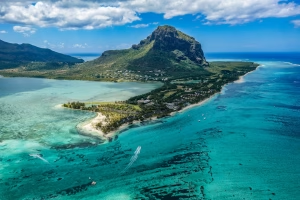
Mauritius draws travelers with coral-blue lagoons, quiet beaches, and a warm island atmosphere that feels inviting from the moment you arrive. As you start planning, it’s natural to pause and ask, ‘Is Mauritius safe to visit?’ especially when you want your trip to feel as stress-free as the destination itself.
Petty theft, taxi scams, and currency exchange tricks do occur in busy areas like Port Louis and Grand Baie, and cyclone season brings its own considerations between November and May. Awareness of these factors, along with local laws, healthcare access, and road conditions, helps you move through your trip prepared and relaxed.
Source: Freepik
Mauritius Safety Report: What You Need to Know

Source: Freepik
Recent statistics paint an encouraging picture for visitors wondering about the crime rate in Mauritius. Official government data from Statistics Mauritius reveals the number of criminal cases lodged in the Court decreased by 16.0% from 88,531 in 2023 to 74,384 in 2024.
This downward trend continues with offenses reported to police (excluding contraventions) dropping 9.3% from 58,794 to 53,331 during the same period, mainly due to a decrease in offenses related to acts against property.
The island maintains remarkably low violent crime levels. With a homicide rate consistently below 3.0 per 100,000 population, Mauritius ranks among Africa’s safest destinations.
Most incidents travelers encounter involve petty theft rather than violent confrontations.
Pickpocketing and bag snatching occur primarily in crowded markets, busy beaches, and tourist-heavy zones like Port Louis, Grand Baie, and Flic en Flac. These crimes are opportunistic rather than targeted, meaning simple precautions significantly reduce your risk.
The government has invested heavily in tourism security infrastructure. Tourist zones receive dedicated protection through specialized police units trained specifically to assist international visitors.
Suggested Read: Mauritius Visa Extension for Indian Citizens
Crime and Safety Concerns

Source: Unsplash
Common scams in Mauritius often target visitors in busy commercial areas and tourist zones. These include taxi overcharging, currency exchange tricks, counterfeit product sales, fake booking websites, and ATM fraud.
Familiarity with these scam methods helps travellers protect their money and avoid added stress while traveling.
Scam Categories
Taxi Driver Tactics
- Unlicensed drivers approach travelers at the airport with inflated fares, often claiming official taxis are unavailable or meters are broken.
- Some extend routes through unnecessary detours to increase costs, blaming traffic or construction that doesn’t exist.
- Others steer visitors toward certain shops or restaurants where they earn commissions, presenting false claims about your original destination being closed or unsafe.
- Licensed taxis display yellow identification signs and provide receipts, making them the safer choice under guidelines for safe travel in Mauritius.
Currency Exchange Frauds
- Street exchangers lure visitors with attractive rates, then short-change them using quick hand movements or hidden fee additions.
- Counterfeit notes are sometimes mixed into transactions, especially larger denominations unfamiliar to tourists.
- Extra “processing fees” appear only after you’ve agreed to the exchange, turning a good rate into an expensive mistake.
- Banks and authorized counters offer genuine currency and documentation, helping avoid these common scams in Mauritius.
Counterfeit Product Sales
- Factory outlet shops often present counterfeit items as designer overstock, using polished displays and persuasive sales pitches.
- Products may have low-quality materials, incorrect labels, or inconsistent stitching despite looking convincing at first glance.
- Vendors reinforce the scam with stories about duty-free seizures or limited liquidation stock to pressure quick purchases.
- Buying only from registered retailers protects you from fake goods and ensures valid return or authenticity guarantees.
Booking Website Deceptions
- Fake hotel and tour websites imitate legitimate brands by copying images, names, and reviews, collecting payments before disappearing.
- Travelers often discover upon arrival that no reservation exists, with the property unaware of the booking agent.
- Some operators deliver poor service, alter itineraries without consent, or fail to show up for scheduled tours after collecting deposits.
- Using trusted booking platforms or listings verified by the tourism board offers stronger protection and clearer dispute options.
ATM Skimming Operations
- Scammers approach ATM users with unsolicited “help,” watching PIN entries while scanning cards using hidden devices.
- ATMs in isolated spots are fitted with skimmers that capture data before the transaction process, leading to rapid account withdrawals.
- The “stuck card” trick involves someone guiding you through false button sequences that reveal your PIN to accomplices.
- Using ATMs located inside bank branches during business hours is one of the most reliable safety tips for travelers in Mauritius.
Suggested Read: Mauritius Visa Photo Requirements for Indian Citizens
Prevention Strategies

Source: Unsplash
- Book tours, hotels, and transport through verified platforms with licensing details and genuine reviews, helping reduce exposure to common scams in Mauritius.
- Agree on fares before entering taxis or use hotel-arranged services and ride-hailing apps, which record each trip and support how to stay safe in Mauritius as a tourist.
- Exchange money only at banks or authorized counters, confirm current rates online, and examine all bills before leaving to avoid counterfeit or short-change issues.
- Keep passports, extra cash, and electronics in hotel safes, and use secure bags when out, important for solo travel safety in Mauritius and general trip protection.
- Learn typical prices for meals, tours, and activities to recognize unrealistic offers, and save receipts, confirmations, and photos as documentation if disputes arise.
Suggested Read: How to Check Mauritius Visa Status
General Safety Guidelines

Source: Unsplash
After-Dark Precautions
- Certain parts of Port Louis become risky after 10 PM due to low lighting and reduced foot traffic, making these zones common areas to avoid in Mauritius for anyone walking alone.
- Bars and clubs operate safely overall, but drink tampering occurs occasionally, so keeping beverages in sight remains an essential part of nightlife safety in Mauritius.
- Beachfront areas become isolated after sunset, and a lack of patrols increases the chance of theft or harassment, which matters for solo travel safety in Mauritius.
- Using licensed taxis arranged through hotels offers safer transport options at night.
Emergency Response System
Emergency numbers in Mauritius:
- Police: 999 or 112
- Ambulance (SAMU): 114
- Fire Services: 115 or 995
Response times in Port Louis and major cities average 15-20 minutes for emergency services. This efficiency reflects significant infrastructure investment designed to protect both residents and tourists. Tourist police stations operate 24/7 in popular areas with English-speaking officers trained specifically for international visitor needs.
The security presence extends beyond emergency response. Cameras monitor public spaces in Grand Baie, Flic en Flac, and central Port Louis, creating digital records that help solve crimes and deter potential offenders. Uniformed officers conduct regular patrols through high-traffic zones, providing visible deterrence and rapid assistance when situations develop.
Coastal regions maintain lifeguard stations during peak hours at popular beaches. These professionals monitor swimming conditions and respond to water emergencies. Warning flags indicate dangerous conditions caused by currents, weather, or marine life.
Accommodation security forms another layer of protection. Hotels and resorts registered with the Tourism Authority employ private security guards and implement access controls. These properties display license numbers proving compliance with government safety standards.
Medical Services
The healthcare system in Mauritius plays a key role in helping visitors manage emergencies, routine care, and unexpected medical needs. These details matter for travelers assessing ‘Is Mauritius safe to visit?’ and wanting clear expectations about treatment access.
- Health and hygiene in Mauritius differ between public and private facilities; public hospitals offer basic emergency treatment, while private clinics provide faster care with multilingual staff.
- Tourists must pay for all medical services, so carrying insurance documents and ID simplifies treatment, especially at major hospitals and clinics listed by local authorities.
- Pharmacies carry a wide range of medications, including Western brands, though prescriptions may be required for certain drugs; 24-hour locations in cities assist with urgent needs.
- Mosquito-borne illnesses such as dengue and chikungunya are more common during the warmer months in Mauritius, so using insect repellent and wearing protective clothing is important.
- Travelers are also advised to drink bottled water and stick to fresh, well-cooked meals to stay safe.
Suggested Read: Hiking in Mauritius: 15 Breathtaking Trails to Explore
Laws and Local Regulations

Source: Unsplash
- Mauritius follows a modern legal system shaped by diverse religious communities, so cultural awareness matters for visitors. Public displays of affection are restricted, and kissing in conservative areas can lead to fines.
- Dress codes apply at temples, mosques, and churches, where covering shoulders and knees is expected; this helps support women’s safety in Mauritius and reduces unwanted attention in non-resort areas.
- Photography near government buildings, military sites, and police stations is prohibited, and authorities may confiscate devices or question intentions if images violate security rules.
- Drug laws are strict, smoking regulations cover most public spaces, and police carry out ID checks in sensitive zones, making legal awareness an important part of guidelines for safe travel in Mauritius.
Suggested Read: Mauritius in January: Weather, Activities to Do, Packing Checklist & More
Climate and Weather Patterns

Source: Unsplash
Mauritius experiences distinct weather patterns that dramatically influence travel conditions throughout the year. Summer heat dominates from November through April, with temperatures reaching 27-30°C daily. Humidity levels climb above 80%, resulting in oppressive conditions that make physical activities exhausting.
The official cyclone season runs from November 1 to May 15, with the highest risk concentrated between January and March. These tropical storms bring torrential rains and destructive winds, often lasting several days.
Hotels implement safety protocols during Cyclone Warning Class III and IV, requiring guests to remain confined indoors until the alert is terminated by authorities. Car insurance policies typically become invalid once the official Class 3 warning is issued.
Winter months from May to October offer cooler, drier conditions perfect for outdoor exploration. Daytime temperatures average 24-26°C, warm enough for beach activities but comfortable for hiking and sightseeing. Evenings drop to 17-20°C, requiring light jackets in exposed coastal areas and higher elevations.
Suggested Read: 15 Places To See Witness The Real Nightlife In Mauritius
Traffic and Pedestrian Safety

Source: Unsplash
Road travel in Mauritius varies widely between busy city centers and quieter coastal or village routes. Many visitors asking ‘Is Mauritius safe to visit?’ consider these transportation factors when deciding whether to rent a car, rely on taxis, or use public transit.
- Left-side driving, frequent priority shifts, and narrow village roads challenge visitors used to different traffic systems, making extra attention important when navigating unfamiliar areas.
- Speed limits change often, and enforcement through cameras and roadside police checks is strict; rental companies pass fines to customers, reinforcing the need for guidelines for safe travel in Mauritius.
- Congested routes in cities like Port Louis and Curepipe during rush hours, combined with aggressive driving habits and limited road maintenance, contribute to higher accident risks.
- Night driving is particularly hazardous due to poor lighting and unpredictable driver behavior, so daytime travel remains the safer option for how to stay safe in Mauritius as a tourist.
Suggested Read: Honeymoon in Mauritius – Top Romantic Places & Experiences for Couples


FAQs
Q: How safe is solo travel in Mauritius?
Solo travelers generally find the island secure, with low violent incidents and manageable petty theft risks. Using registered transport and avoiding isolated spots after dark strengthens solo travel safety in Mauritius.
Q: Which locations require extra caution?
Backstreets in Port Louis after office hours and nighttime beach areas in Grand Baie or Flic en Flac can attract opportunistic theft, making these common areas to avoid in Mauritius after dark.
Q: What makes nightlife safety a concern?
Drink tampering and occasional harassment appear in less-regulated venues, so nightlife safety in Mauritius improves by choosing reputable clubs, keeping drinks in sight, and moving in groups.
Q: Do women face specific safety challenges?
Most women feel comfortable during the day, but dressing modestly outside resorts and avoiding isolated areas at night helps support women’s safety in Mauritius.
Q: Is Mauritius safe to visit during cyclone season?
Cyclones occur from November to May, especially January to March, so monitoring forecasts and carrying travel insurance helps travelers answer ‘Is Mauritius safe to visit?’ during these months.