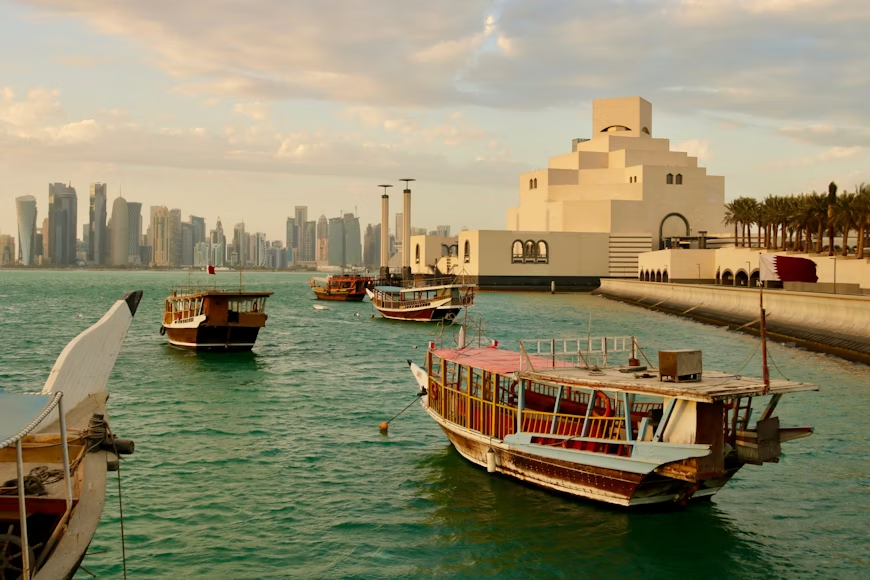
Qatar feels like a place where the future and the past meet in the same frame, glass towers glowing over the Corniche, spice markets buzzing with old-world energy, and desert dunes stretching beyond the city lights. Travelers come for the culture, design, food, and effortless luxury, and it’s only natural to ask ‘Is Qatar safe to visit?’ before exploring this rapidly growing Gulf destination. Safety becomes clear once you look at how the country operates.
What surprises travelers in Qatar is usually the culture, not crime. Taxis may overcharge, some ATMs have high fees, and restaurant bills can include extras. Strict Islamic laws mean limited alcohol, modest dress, no public affection, and special rules during Ramadan. The sections ahead cover these points, along with healthcare and transport tips, so you can move around Doha stress-free.
Source: Unsplash
Current Safety Status in Qatar

Source: Unsplash
The crime rate in Qatar remains exceptionally low, confirming its status as one of the safest countries worldwide. According to the Numbeo 2024 Mid-Year Report, Qatar was ranked the 3rd safest country in the world with a Safety Index of 84.0, which corresponds to a low Crime Index of 16.0.
Its capital, Doha, has similarly been recognized as one of the safest cities globally, frequently ranking as the 3rd safest city out of all cities indexed. Furthermore, Qatar is consistently highly rated in global peace indices, ranking 29th on the Global Peace Index (GPI) 2024.
The country’s homicide rate is remarkably low, standing at just 0.43 per 100,000 people, which is significantly lower than most countries. The Qatari government maintains an extensive security infrastructure throughout the country, prioritizing public safety. This includes a highly visible police presence in key tourist areas such as Souq Waqif, The Pearl-Qatar, Katara Cultural Village, and the Corniche waterfront.
For the resident population, Qatar is also highly regarded for safety; international surveys consistently rank it as the safest country in the Middle East and among the top 10 globally for expat safety (e.g., 5th in the Safety & Security category of the Expat Insider 2024 survey).
Suggested Read: Qatar Visa Rejection For Indians
Crime and Safety Concerns

Source: Unsplash
Scams in Qatar affect tourists who are new to local practices, though cases remain far lower than in many destinations. Visitors may face taxi meter tricks, found-money ploys, fake booking sites, inflated restaurant bills, costly ATM setups, aggressive parking attendants, and online phishing attempts.
Common Scam Types
Taxi Meter Manipulation
- Drivers refuse meters and claim they’re “broken,” pushing inflated fixed rates, common scams in Qatar affecting tourists at airports and malls.
- Some take unnecessarily long routes to raise fares, knowing visitors aren’t familiar with Doha’s road network.
- Others claim they have no change for large bills, pressuring passengers to overpay.
- Airport pickups sometimes quote fares 2–3× the normal meter rate before the ride even begins.
“Found Money” Schemes
- Strangers approach with a “found” wallet or cash, suggesting you split it before asking you to contribute money upfront.
- Scammers request help verifying foreign currency, swapping real notes for counterfeits during the distraction.
- Accomplices may pickpocket while you’re focused on the conversation.
- They apply urgency, saying the “owner is coming” or “authorities will arrive” to stop you from thinking clearly.
Suggested Read: Qatar Visa Photo Requirements for Indian Citizens
Fake Booking Websites
- Fraudulent Qatar Airways pages mimic official domains to steal credit card details.
- Hotel website clones capture payments that never reach the actual property.
- Fake tour operators advertise packages online without licenses or office addresses.
- Scammers push unusual payment methods like wire transfers or cryptocurrency instead of secure card portals.
Restaurant Bill Inflation
- Bills sometimes include items never ordered, such as extra drinks or appetizers.
- Some restaurants charge for complimentary items that should be free, like water or bread.
- Incorrect or repeated service charges appear on bills, hoping tourists won’t check details.
- “Special menus” without clear pricing target visitors and result in inflated final charges.
ATM Fee Scams
- Independent ATMs like Euronet charge extremely high fees and offer poor exchange rates.
- Machines encourage “home currency” billing that adds hidden conversion charges.
- Repeated “failed” withdrawal attempts may still charge your account multiple times.
- These ATMs appear in tourist-heavy areas where visitors may not know bank ATMs are nearby.
Aggressive Parking Attendants
- Unofficial attendants demand fees in public lots, keeping money for themselves.
- Some imply your car may be ticketed or harmed if you refuse.
- Valet scams occur when attendants raise prices upon vehicle return.
- Tips presented as “mandatory” confuse tourists unfamiliar with local customs.
Online Phishing Attempts
- Emails impersonating Qatar’s Ministry of Interior request personal information or fake visa payments.
- Job offer scams promise high salaries but require upfront “processing fees.”
- Rental fraud lists non-existent properties to collect deposits before disappearing.
- Romance scammers use fabricated profiles to build trust before asking for financial assistance.
Prevention Tips

Source: Unsplash
- Use official, metered taxis or regulated apps. Karwa taxis follow government-set rates, while Uber and Careem provide app-tracked pricing.
- Verify bookings through trusted sources. Reserve flights, hotels, and tours only through verified websites with security certificates, confirmed contact details, and official customer service channels.
- Review each item on restaurant receipts and question unfamiliar charges to avoid inflated prices often aimed at tourists.
- Choose bank ATMs inside branches or malls. Stick to Qatar National Bank, Commercial Bank of Qatar, or Doha Bank ATMs instead of independent operators that charge high fees or use poor exchange rates.
- Genuine services in Qatar do not approach visitors on the street; walk to official counters or information desks to ensure you’re using legitimate providers.
Suggested Read: How to Check Qatar Visa Status Online for Indians?
General Safety Guidelines

Source: Unsplash
Nighttime Safety Concerns
- Doha’s main districts remain well-lit into late hours, with areas like the Corniche, West Bay, and major shopping zones offering bright, continuous lighting that supports comfortable evening movement and improves overall nightlife safety in Qatar.
- Visible police patrols enhance security, with officers monitoring tourist hubs such as The Pearl, Katara, and Souq Waqif, offering reassurance for solo travel safety in Qatar during evening outings.
- Public transportation in Qatar runs safely until midnight, with the Doha Metro and major bus routes operating from staffed stations and monitored stops. This makes them a reliable option and one of the practical safety tips for travelers in Qatar who prefer not to rely on taxis at night.
- Late-night dining areas stay secure, with restaurants and cafés in waterfront districts and malls operating under private security, providing safe environments for visitors enjoying Qatar’s evening food scene.
Emergency Response System
Emergency numbers in Qatar:
- Police, Ambulance, Fire: 999
- Mobile phone emergency calls: 112
- Deaf and hearing impaired emergency line: 992
- Utility emergencies: 991
|
Service |
Number |
Notes (Official Govt. Source) |
|
Police / Ambulance / Fire (Emergency) |
999 |
Qatar emergency number for police, ambulance, and fire services (Qatar gov emergency list). |
|
Mobile emergency calls (redirect) |
112 |
Universal mobile emergency number that connects to 999 throughout Qatar (Qatar gov emergency contact). |
|
Emergency services for deaf / hearing impaired |
992 |
Dedicated emergency contact for people with hearing/speech impairment. |
|
Utility emergencies (Electricity & Water) |
991 |
Short code for KAHRAMAA (water & electricity emergency services) per Qatar gov directory.Government of Qatar |
|
Local telephone directory assistance |
180 |
Local telephone directory service listed in official Qatar gov directory. |
|
Government directory (call centre) |
109 / 44069999 |
Qatar Gov “Hukoomi” call centre listed on official e-government portal. |
The emergency response infrastructure operates at international standards with English-speaking operators available 24/7. Ambulances arrive within 8-10 minutes in urban areas. Qatar maintains some of the world’s fastest emergency response times with fully equipped paramedic teams and air ambulance services for severe cases.
The security presence includes both local police and tourist police units specifically trained to assist visitors. Officers speak English and other languages, stationed at major attractions, hotels, and shopping centers. The country’s extensive CCTV network and monitoring systems contribute to exceptionally low crime rates and rapid incident response.
Health and Medical
Qatar’s healthcare system is one of the strongest in the region, offering modern hospitals, reliable emergency services, and excellent access to treatment, an important reassurance for anyone assessing health and hygiene in Qatar before visiting.
- Hospitals with JCI accreditation provide international-standard care, with facilities like Hamad Medical Corporation, Sidra Medicine, and Al-Ahli Hospital equipped with advanced technology and globally aligned protocols.
- 24-hour emergency services operate across major hospitals, ensuring immediate access to urgent care through dedicated ER departments in both public and private facilities.
- English-speaking medical staff support clear communication, as most doctors and nurses receive training abroad and work comfortably with international visitors.
- Wide acceptance of international insurance, with private hospitals supporting direct billing for many global healthcare plans.
- Pharmacies stocked with international medicines, including familiar Western brands, operate throughout Doha, many offering 24-hour service.
Suggested Read: Top 10 Beaches in Qatar: Your Ultimate Guide to Serenity and Fun
Laws and Local Regulations

Source: Unsplash
Qatar follows Islamic law and maintains conservative social standards, though the country has modernized certain regulations for international visitors. Respect for local rules helps avoid legal issues and ensures a smooth stay.
- Alcohol rules are strict; only non-Muslims may drink, and only in licensed hotels and restaurants. Public drinking is illegal, and customs confiscates any alcohol brought into the country.
- Drunk driving follows zero-tolerance enforcement, with immediate arrest and heavy penalties regardless of blood alcohol level.
- Dress codes require modest clothing in public; shoulders and knees must be covered, with stricter expectations for women. Beachwear is allowed only at private hotel pools or clubs.
- Public displays of affection are prohibited, and kissing or hugging in public can lead to legal consequences. Unmarried couples may face questioning, though tourist hotels typically allow shared rooms without issue.
- Photography restrictions apply at government sites, military areas, and construction zones. Never photograph Qatari nationals, especially women, without clear, explicit consent.
- Ramadan rules affect public behavior, as eating, drinking, and smoking in public during daylight hours are banned. Visitors should dress more conservatively and expect adjusted business schedules throughout the month.
Suggested Read: 15 Top Markets in Qatar to Delight Every Type of Shopper!
Climate and Weather Patterns

Source: Unsplash
Qatar’s desert climate creates extreme conditions requiring preparation and awareness. Understanding seasonal patterns helps you plan appropriately and stay comfortable during your visit.
The country experiences two main seasons with dramatic temperature differences. Winter months from November through February offer ideal visiting conditions with temperatures ranging from 15-25°C (59-77°F), clear skies, and minimal rainfall. These months see the highest tourist arrivals as the weather permits extensive outdoor activities and sightseeing without heat-related risks.
Summer extends from May through September with brutal conditions that challenge even prepared visitors. Temperatures regularly exceed 40°C (104°F) and frequently reach 45-50°C (113-122°F) during peak afternoon hours.
Humidity levels between 40-60% make the heat feel even more oppressive. The combination of extreme heat and high humidity can cause heat exhaustion or heat stroke within 15-20 minutes of outdoor exposure during midday hours.
Qatar receives over 3,400 hours of sunshine annually, making sun protection essential year-round. Apply high-SPF sunscreen every two hours, even during winter months. Wear wide-brimmed hats, sunglasses with UV protection, and light-colored, loose-fitting clothing that covers skin. The intense UV radiation causes severe sunburn within 15 minutes without protection, particularly for fair-skinned visitors.
Sandstorms occur periodically, especially during the spring and early summer months. The Shamal wind system brings strong northwesterly winds from June through August, creating dust storms that reduce visibility dramatically.
These storms can last hours or days, affecting flight schedules and outdoor activities. Monitor weather forecasts and stay indoors during severe dust events as the fine particles irritate the respiratory systems.
Suggested Read: Temples & Religious Sites in Qatar: Complete Visitor’s Guide
Traffic and Pedestrian Safety

Source: Unsplash
- Qatar reports steady improvements in road safety, though August 2024 still saw 583 accidents and 11 fatalities, reflecting why awareness matters even with modern infrastructure.
- Driving laws are strict: seat belts are mandatory, child seats are required, and running red lights leads to QAR 6,000 fines and traffic points that can cause license suspension.
- Pedestrian safety improves with designated crossings and maintained sidewalks, but drivers may not always yield, wait for clear gaps and avoid jaywalking, as fines apply.
- The Doha Metro offers the safest transport option, operating daily with monitored stations, frequent patrols, and direct access to major attractions.
- Public buses through Mowasalat provide reliable, air-conditioned routes, while licensed taxis, Uber, and Careem ensure transparent fares when meters are used properly.
- The Metrash2 app supports visitors by allowing quick checks of traffic violations, fine payments, and access to relevant emergency services information.
Suggested Read: Nightlife In Qatar: 15 Best Places To Experience The Ultimate Fun


FAQs
Q: Is Qatar safe for solo travelers?
Yes, Qatar is highly suitable for solo travel. Low crime levels, reliable public transport, and strong cultural norms supporting respectful behavior create a secure environment for both men and women exploring independently.
Q: Are there any areas to avoid in Qatar?
There aren’t many areas to avoid in Qatar, as popular tourist spots like West Bay, The Pearl, Katara, and Souq Waqif stay safe around the clock. Industrial areas outside Doha see fewer tourists, but they don’t pose serious risks if you take normal precautions.
Q: How safe is nightlife in Qatar?
Nightlife safety in Qatar is strong since all licensed venues follow strict regulations and maintain security staff. Most visitors rely on hotel bars, and the Metro and ride-hailing apps offer safe late-night transport.
Q: Is it safe to use public transportation in Qatar?
Yes, the Doha Metro, Mowasalat buses, and licensed taxis operate with consistent security measures and monitored stations, making them dependable options for everyday travel.
Q: What should I do in case of an emergency in Qatar?
Call 999 for immediate assistance or 112 from mobile phones, and keep embassy contacts accessible. Quick response times help visitors confidently answer ‘Is Qatar safe to visit?’ during unexpected situations.