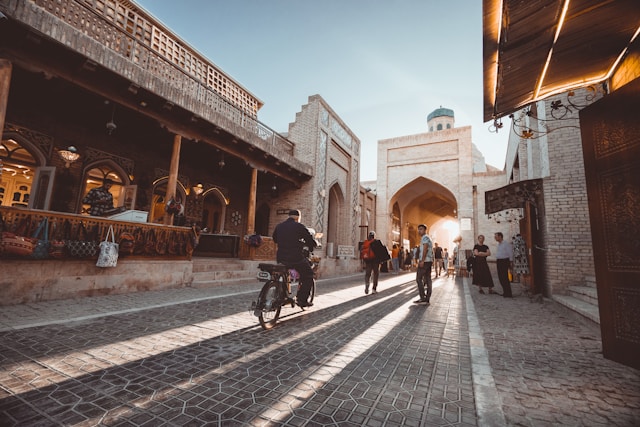
Travelers often wonder, ‘Is Uzbekistan safe to visit?’ when planning their Silk Road adventure. This Central Asian nation draws visitors with ancient cities and vibrant bazaars that tell centuries-old stories.
This guide walks you through the actual crime situation on the ground, the scams that target tourists, health precautions that matter, local laws that could trip you up, and the emergency numbers worth saving in your phone right now.
Uzbekistan Safety Overview: Current Situation

The crime rate in Uzbekistan showed a 27.1% increase compared to 2023, with authorities handling 35.6 crimes per 10,000 people nationwide. Statistics reveal that 59.4% of offenses involved young people, while 36.1% were committed by repeat offenders.
Tashkent, the capital city, recorded the highest rate at 104.3 crimes per 10,000 residents. Following behind were the Tashkent region at 47.7, Navoi at 38.0, and Bukhara at 36.3. The lowest rates appeared in the Khorezm region, with 21.5 crimes per 10,000 people.
Digital crime surged dramatically, with 58,800 cybercrimes registered throughout the year. Bank card fraud accounted for 97.7% of these incidents, mostly involving phishing attacks and unauthorized payment system access.
The U.S. Department of State classifies Uzbekistan as Level 1, placing it among the safest countries globally for travel. This designation means visitors should exercise normal precautions similar to traveling anywhere else.
Suggested Read: Uzbekistan Visa Photo Requirements for Indians 2026
Notable Incidents and Scams Targeting Visitors

Visitors occasionally encounter deceptive practices in tourist zones throughout Uzbekistan. Reports from travelers highlight specific schemes that target people unfamiliar with local customs, emphasizing awareness around common scams in Uzbekistan.
Frequent Scam Types
1. Found Money Scheme
- Strangers approach tourists claiming they discovered cash lying on the street. They engage in conversation and convince victims to contribute their own money for “splitting” the find.
- The scammer uses sleight of hand and persuasive talking to confuse the situation. By the time the victim realizes what happened, both the original money and their contribution have disappeared.
- This scheme operates in crowded tourist areas where distractions run high. Perpetrators work in pairs, with one person engaging while another creates diversions.
2. Taxi Overcharging
- Drivers quote inflated prices to foreign visitors, especially at airports and train stations. Unmarked private cars pose additional risks beyond just financial loss.
- Some taxi drivers claim their meters are broken or refuse to use them altogether. They negotiate prices after the ride, demanding amounts several times higher than normal rates.
- Using official ride-sharing apps like Yandex Go ensures transparent pricing. Pre-booking transportation through hotels provides another safe alternative.
Suggested Read: Uzbekistan Famous Food – 20 Must-Try Dishes From Street Snacks to
3. Currency Exchange Confusion
- Unofficial money changers offer attractive rates that seem better than banks. They use counterfeit bills or short-change tourists during the exchange process.
- These operators work in bazaars and tourist districts, approaching people with whispered offers. The complexity of counting large denomination notes creates opportunities for deception.
- Official banks and authorized exchange offices provide secure transactions. Always count your money carefully before leaving the counter.
4. Unlicensed Tour Guides
- People approach tourists offering private tours at discounted prices. These guides lack proper credentials and insurance coverage.
- Some guides take visitors to shops where they receive commissions. Others charge hidden fees for site entries or transportation costs not mentioned initially.
- Official guides carry identification badges from tourism authorities. Booking through registered agencies ensures quality service and accountability.
Prevention Measures
- Research typical prices for services before arriving in the country. Online forums and recent traveler reviews provide current pricing information.
- Keep emergency contact numbers saved in your phone for quick access. Sharing your itinerary with someone reliable adds another safety layer.
- Carry only necessary cash and leave valuables secured at accommodations. Anti-theft bags with hidden pockets offer extra protection in crowded spaces.
- Trust your instincts when situations feel uncomfortable or suspicious. Politely declining offers and walking away remains your safest option.
Suggested Read: 20 Uzbekistan’s Famous Foods to Try in 2026
General Safety for Travelers

Uzbekistan provides welcoming environments for international guests while maintaining a visible security presence. Those exploring alone should consider solo travel safety in Uzbekistan by staying connected and sharing plans.
Evening Security Considerations
- Major cities like Tashkent, Samarkand, and Bukhara feature well-lit streets in tourist zones. Walking in these areas after dark remains relatively safe with normal awareness.
- Avoid isolated neighborhoods and poorly lit side streets once the sun sets. Stick to the main boulevards where other people and businesses stay active.
- Tourist police patrol popular sites regularly, offering assistance to foreign visitors. Their presence increases during evening hours when restaurants and attractions close.
- Pre-arranging transportation for late returns eliminates uncertainties. Hotels can recommend reliable taxi services familiar with guest needs.
Physical Safety Infrastructure
Law enforcement maintains strong visibility throughout the country. Tourist police operate in Tashkent, Samarkand, Bukhara, and other major destinations with multilingual staff.
For emergencies, remember these critical numbers:
|
Service |
Emergency Number |
Notes (Official Govt Links) |
|
Unified Emergency (All Services) |
112 |
National unified emergency number for police, fire, medical, and other urgent help. Official govt. service info:https://my.gov.uz (Uzbek Govt. portal)MyGov – elektron davlat xizmatlari |
|
Police |
102 |
Police emergency number for crime and public safety. Govt emergency services listing:https://iibb.uz/en/menu/shoshilinch-xizmat-telefon-raqamlariIIBB |
|
Ambulance (Medical Emergency) |
103 |
Medical emergency and ambulance services. Govt emergency services listing:https://iibb.uz/en/menu/shoshilinch-xizmat-telefon-raqamlariIIBB |
|
Fire Service |
101 |
Fire brigade and rescue services nationwide. Govt emergency services listing:https://iibb.uz/en/menu/shoshilinch-xizmat-telefon-raqamlariIIBB |
|
Gas Emergency Service |
104 |
Report gas leaks or gas-related emergencies. Govt emergency services listing:https://iibb.uz/en/menu/shoshilinch-xizmat-telefon-raqamlariIIBB |
|
Tourist Assistance (Tourist Police/Hotline) |
1173 |
24/7 tourist support hotline with English/Russian/Uzbek operators for visitor safety. Official travel advisory reference:https://www.gov.uk/foreign-travel-advice/uzbekistan/getting-helpGOV.UK |
Response times in urban centers average 15-20 minutes for most emergency situations. The unified 112 system, introduced in 2024, connects callers to appropriate services automatically.
Medical facilities in Tashkent offer better care than rural regions. International medical clinics serve foreign patients with English-speaking staff and modern equipment. Women’s safety in Uzbekistan receives positive feedback from travelers consistently. The country maintains low rates of harassment and assault compared to global averages.
Health Precautions
- Assemble basic medical supplies, including pain relievers, bandages, and prescription medications. Pharmacies in cities stock common remedies, but rural areas have limited options.
- Avoid drinking tap water throughout your visit. Bottled water remains inexpensive and widely available in shops and restaurants.
- Food safety standards vary between establishments. Eating where locals gather usually indicates good hygiene practices and fresh ingredients.
- Checking health and hygiene in Uzbekistan recommendations ensures proper vaccinations before departure. No mandatory vaccines exist, but standard immunizations provide protection.
Suggested Read: Uzbekistan Visa for Indians: A Complete Guide
Local Laws and Regulations

Regulations in Uzbekistan maintain public order and reflect the country’s cultural values. Authorities enforce rules consistently, making awareness important for visitors.
- Carrying your passport remains legally required at all times. Police conduct random document checks, especially near metro stations and government buildings.
- Photography restrictions apply to airports, military installations, border areas, and some government facilities. Always ask permission before photographing people, particularly women.
- Homosexuality faces social disapproval and legal restrictions. Public displays of affection, regardless of orientation, should be avoided to respect local customs.
- Currency regulations require declaring amounts over $2,000 when entering the country. Keeping receipts for currency exchanges helps when departing.
- Registration at accommodations happens automatically when staying at hotels. Private homestays require manual registration through the online system within three days.
Suggested Read: Transportation in Uzbekistan: Complete Travel Guide
Climate and Natural Considerations

Uzbekistan experiences a continental climate with distinct seasonal variations. Temperatures swing from cold winters to extremely hot summers across most regions.
Summer months from June through August bring intense heat, with temperatures reaching 40-45°C (104-113°F) in some cities. Samarkand and Bukhara feel particularly warm during this period.
Winter temperatures from December to February drop to -10°C to 5°C (13-41°F) in valleys. Mountain regions experience much colder conditions with snow.
Spring (March-May) and autumn (September-November) offer pleasant weather for sightseeing. Temperatures range between 15-25°C (59-77°F), making outdoor exploration comfortable.
The country sits in a seismically active zone prone to earthquakes. Minor tremors occur occasionally, though major events remain infrequent. Dust storms affect some regions during the spring and summer months. Air quality can deteriorate significantly in Tashkent and other urban centers during these periods.
Suggested Read: 11 Tempting Reasons to Visit Uzbekistan
Transportation and Road Safety

Roads in Uzbekistan tell two completely different stories. The main highways between big cities are decent enough, but venture onto secondary routes, and you’ll quickly understand why renting a car isn’t everyone’s first choice here.
- Tashkent’s metro system operates efficiently, with stations featuring ornate decorations. Security checks occur at entrances, requiring bags to pass through scanners.
- Intercity trains connect Tashkent with Samarkand, Bukhara, and other destinations. High-speed trains offer comfortable travel with air conditioning and dining cars.
- Driving customs differ significantly from Western standards. Lane markings often get ignored, and drivers change directions unpredictably without signaling.
- Rural roads lack lighting completely, making nighttime driving hazardous. Livestock and agricultural equipment appear suddenly on roadways without reflectors or warnings.
- Public buses run on compressed natural gas (CNG), which occasionally causes safety concerns. Recent incidents have raised awareness about vehicle maintenance standards.
- Fuel availability remains inconsistent outside major cities. Planning routes carefully and filling tanks when possible prevents getting stranded.
Suggested Read: How to Book a Uzbekistan Visa Appointment for Indians


FAQs
Q: What is the current safety situation in Uzbekistan?
A: Uzbekistan ranks as a Level 1 destination by the U.S. State Department, indicating it’s among the safest countries worldwide. While crime statistics show increases in certain categories, the crime rate in Uzbekistan remains lower than in many popular tourist destinations globally.
Q: Which areas should travelers exercise caution in Uzbekistan?
A: Some of the areas to avoid in Uzbekistan include regions within 5 kilometers of the Afghanistan border due to security restrictions. The western Fergana Valley near the Kyrgyzstan and Tajikistan borders requires caution due to unmarked landmines from past conflicts.
Q: What steps prevent falling victim to scams?
A: Exchange currency only at official banks and authorized locations with posted rates. Use ride-sharing apps for transparent taxi pricing and avoid unmarked vehicles. Verify guide credentials before booking tours, and decline any schemes involving found money or splitting cash. Guidelines for safe travel in Uzbekistan emphasize researching standard prices beforehand.
Q: How can solo travelers ensure their safety?
A: Solo travel safety in Uzbekistan improves by sharing detailed itineraries with trusted contacts and maintaining regular communication. Stay in well-reviewed accommodations in central locations near tourist sites. Emergency numbers in Uzbekistan should be programmed into your phone immediately upon arrival.
Q: Is Uzbekistan safe to visit considering recent crime statistics?
To answer your question, ‘Is Uzbekistan safe to visit?’ it receives a positive ‘Yes’ despite statistical increases. The country maintains its status as Central Asia’s safest destination with a strong law enforcement presence. Following basic precautions, respecting local customs, and staying aware in crowded areas ensures positive experiences.