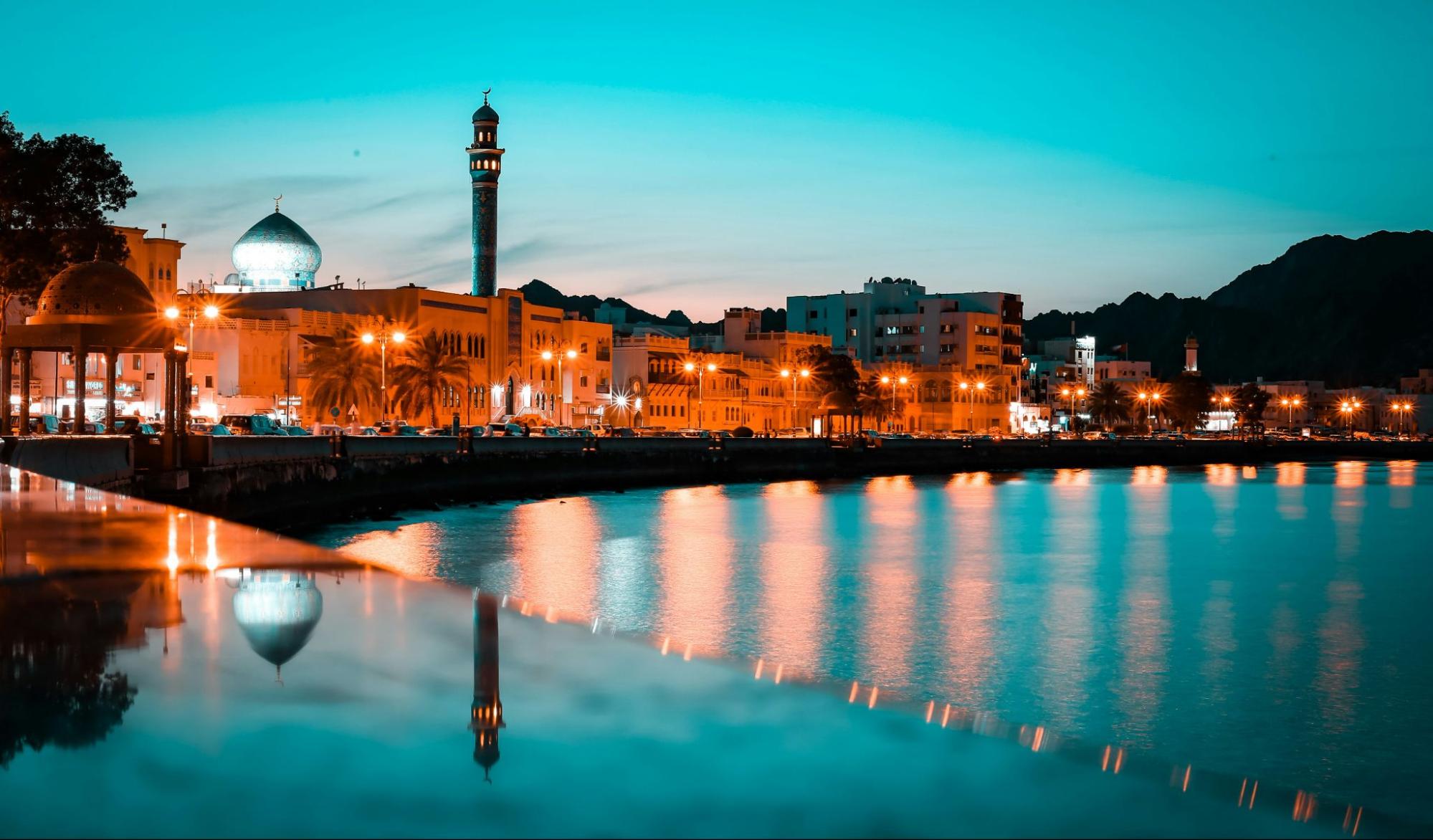
Things to do in Oman span rugged deserts, lush wadis, ancient forts, mosques of stunning design, and serene beaches along the Arabian Sea. Oman is a culturally rich and geographically diverse destination where you can explore centuries-old heritage sites, swim in crystal-clear natural pools, hike dramatic mountain gorges, and camp beneath desert stars.
From Muscat’s elegant Corniche to hidden desert landscapes and remote wadis, this guide lists top Omani experiences with practical highlights to help you plan your trip.
- 1. Visit Sultan Qaboos Grand Mosque – Muscat
- 2. Explore Mutrah Corniche & Souq – Muscat
- 3. Swim at Wadi Shab – Al Sharqiyah
- 4. Discover Wadi Bani Khalid – Al Sharqiyah
- 5. Wander Nizwa Fort & Souq – Ad Dakhiliyah
- 6. Experience Wahiba Sands (Sharqiyah Sands)
- 7. Explore Jebel Akhdar – Al Hajar Mountains
- 8. Cruise the Musandam Fjords – Khasab
- 9. Visit Ras Al Jinz Turtle Reserve – Al Sharqiyah
- 10. Explore Al Hoota Cave – Near Nizwa
- 11. Hike Jebel Shams – Al Hajar Mountains
- 12. Visit Bahla Fort – Ad Dakhiliyah
- 13. Discover Sur & Traditional Dhow Shipyards – Ash Sharqiyah
- 14. Enjoy Salalah & the Khareef Season – Dhofar
- 15. Experience Omani Food & Traditional Markets
- FAQs
1. Visit Sultan Qaboos Grand Mosque – Muscat

The Sultan Qaboos Grand Mosque is Oman’s most breathtaking mosque and a must-see for first-time visitors. Completed in 2001 to commemorate the late Sultan’s reign, it showcases exquisite Islamic architecture with hand-woven Persian carpets, detailed mosaics, and an enormous marble prayer hall that can hold up to 20,000 worshippers. Non-Muslim visitors are welcome outside prayer times, provided modest dress is observed (women cover arms/legs and head; coverings are available on site).
Highlights
- Google Rating: 4.7/5
- Location:Sultan Qaboos Road, Muscat, Oman
- Timings: 8:00 AM–11:00 AM (often; check local holidays)
- Price: Free entry
Must Read: Oman Visa For Indians – E-Visa Requirements, Eligibility & How To Apply
2. Explore Mutrah Corniche & Souq – Muscat

Mutrah Corniche is a scenic waterfront promenade in Muscat that curves along the turquoise Gulf of Oman. Lined with palm trees, cafés, fountains, and landscaped gardens, it’s ideal for morning or sunset strolls. Adjacent is Mutrah Souq, one of Oman’s oldest bazaars with aromatic frankincense, traditional khanjars (daggers), jewelry, spices, and textiles.
Highlights
- Google Rating: 4.6/5
- Location: Mutrah, Muscat, Oman
- Timings: Corniche open 24 hrs; Souq ~10:00 AM–10:00 PM
- Price: Free walking; purchases vary
3. Swim at Wadi Shab – Al Sharqiyah

Wadi Shab is one of Oman’s most popular attractions, located in the Al Sharqiyah region southeast of Muscat. This dramatic canyon features towering limestone walls, palm-lined valleys, and turquoise natural pools perfect for swimming. The experience begins with a short boat ride across a shallow inlet, followed by a scenic hike (≈45–60 minutes) along the wadi floor to reach crystal clear pools and a hidden waterfall cave.
Highlights
- Google Rating: 4.8/5
- Location:Wadi Shab, Al Sharqiyah, Oman
- Timings: 7:00 AM–6:00 PM (approx.)
- Price: Boat & guide fees vary; hiking is free
Must Read: Oman Visa Extension – Step-by-Step Guide
4. Discover Wadi Bani Khalid – Al Sharqiyah

Wadi Bani Khalid is one of Oman’s most accessible and scenic wadis, famous for its year-round emerald pools and wide gravel paths. Located in the Eastern Hajar Mountains, the wadi is fed by permanent springs, making it ideal for swimming even in warmer months. The area includes shaded picnic spots, palm groves, and clear signage, so it suits families and first-time visitors.
Highlights
- Google Rating: 4.7/5
- Location:Wadi Bani Khalid, Al Sharqiyah Region, Oman
- Timings: Open daily, approx. 7:00 AM – 6:00 PM
- Price: Free entry (parking free); optional local guide ~ OMR 5–10 (₹1,200–₹2,400)
5. Wander Nizwa Fort & Souq – Ad Dakhiliyah

Nizwa Fort is one of Oman’s most important historical landmarks and a symbol of the country’s interior heritage. Built in the 17th century, the massive round tower once defended the former capital against invasions. Inside, you’ll find exhibits on traditional Omani life, falaj irrigation systems, and weaponry. Adjacent to the fort, Nizwa Souq is known for silver jewelry, pottery, dates, and the traditional Friday cattle market, offering a deep look into rural Omani culture.
Highlights
- Google Rating: 4.6/5
- Location:Nizwa, Ad Dakhiliyah Governorate, Oman
- Timings: 8:00 AM – 6:00 PM (Souq busiest mornings)
- Price: Fort entry OMR 5 (~₹1,200)
6. Experience Wahiba Sands (Sharqiyah Sands)

Wahiba Sands, also known as Sharqiyah Sands, is a vast desert region covering over 12,500 sq km of rolling golden dunes in eastern Oman. Home to Bedouin communities for generations, the desert offers classic Arabian experiences such as dune bashing, camel rides, sandboarding, and overnight camping. Sunset and sunrise views over the dunes are highlights.
Highlights
- Google Rating: 4.8/5
- Location: Sharqiyah Region, Oman
- Timings: Best visited afternoon–morning (overnight stay)
- Price: Desert tour from OMR 25–50 (₹6,000–₹12,000); overnight camps OMR 60–120 (₹14,400–₹28,800)
Must Read: Oman Visa Rejection for Indians
7. Explore Jebel Akhdar – Al Hajar Mountains

Jebel Akhdar, meaning “Green Mountain,” is a high mountain plateau in the Al Hajar range, rising over 2,000 meters above sea level. Known for its cooler climate, terraced farms, and rose gardens, it is a stark contrast to Oman’s deserts. The region produces famed Damask roses used to make rose water each spring (March–April). Visitors can hike canyon trails, visit traditional villages like Al Ayn and Wadi Bani Habib, and enjoy panoramic viewpoints.
Highlights
- Google Rating: 4.7/5
- Location:Al Hajar Mountains, near Nizwa, Oman
- Timings: Open all day (daytime visits recommended)
- Price: Free entry; 4×4 tour approx. OMR 30–60 (₹7,200–₹14,400)
8. Cruise the Musandam Fjords – Khasab

The Musandam Peninsula, often called the “Norway of Arabia,” is famous for its dramatic fjord-like inlets carved into rugged mountains. Located in northern Oman, the region is best explored on a traditional wooden dhow cruise from Khasab. Cruises typically include dolphin sightings, snorkeling in clear waters, and visits to remote fishing villages only accessible by boat.
Highlights
- Google Rating: 4.8/5
- Location:Musandam Peninsula, Khasab, Oman
- Timings: Day cruises (usually 9:00 AM – 4:00 PM)
- Price: Dhow cruise from OMR 25–40 (₹6,000–₹9,600)
Must Read: Oman Visa Photo Size Requirement & Specification Guide
9. Visit Ras Al Jinz Turtle Reserve – Al Sharqiyah
Ras Al Jinz Turtle Reserve is one of the world’s most important nesting sites for endangered green sea turtles. Located on Oman’s eastern coast, the reserve protects thousands of turtles that come ashore each year to lay eggs, particularly between May and October. Guided night and early-morning tours allow visitors to observe nesting or hatchlings under strict conservation rules.
Highlights
- Google Rating: 4.6/5
- Location:Ras Al Jinz, Al Sharqiyah Region, Oman
- Timings: Night tours ~9:00 PM; morning tours ~4:30 AM
- Price: Adult ticket OMR 7 (₹1,680); guided tours included
10. Explore Al Hoota Cave – Near Nizwa

Al Hoota Cave is one of the largest and most accessible limestone cave systems in the Arabian Peninsula, stretching over 4.5 kilometers, with around 500 meters open to visitors. Formed over millions of years, the cave features stalactites, stalagmites, underground lakes, and rare blind cave fish. Located near Nizwa at the foothills of Jebel Shams, the site includes a geological museum explaining Oman’s natural history.
Highlights
- Google Rating: 4.5/5
- Location:Al Hamra, Ad Dakhiliyah Governorate, Oman
- Timings: 9:00 AM – 4:00 PM (closed Mondays)
- Price: Adult OMR 7 (₹1,680); Child OMR 3.5 (₹840)
11. Hike Jebel Shams – Al Hajar Mountains
Jebel Shams is the highest mountain in Oman, rising to approximately 3,009 meters above sea level, and is home to the famous “Grand Canyon of Oman.” The mountain offers dramatic cliffs, deep gorges, and panoramic views across the Al Hajar range. One of the most popular activities is the Balcony Walk, a marked trail overlooking the canyon that passes abandoned villages and cliffside viewpoints.
Highlights
- Google Rating: 4.8/5
- Location: Al Hajar Mountains, near Al Hamra, Oman
- Timings: Open all day (best early morning)
- Price: Free hiking; guided hikes OMR 20–40 (₹4,800–₹9,600)
Must Read: How to Book an Oman Visa Appointment
12. Visit Bahla Fort – Ad Dakhiliyah

Bahla Fort is a UNESCO World Heritage Site and one of Oman’s oldest and most impressive mud-brick forts. Dating back to the 13th century, the fort once served as a defensive stronghold and administrative center during the Banu Nebhan dynasty. Its massive walls, towers, courtyards, and restored interiors offer insight into medieval Omani architecture and governance.
Highlights
- Google Rating: 4.6/5
- Location:Bahla, Ad Dakhiliyah Governorate, Oman
- Timings: 8:00 AM – 4:00 PM
- Price: Entry OMR 5 (₹1,200)
13. Discover Sur & Traditional Dhow Shipyards – Ash Sharqiyah

Sur is a historic coastal city in eastern Oman, renowned for its centuries-old maritime heritage and traditional dhow-building industry. For generations, Omani craftsmen in Sur have constructed wooden dhows by hand, using techniques passed down through families. These vessels once sailed as far as East Africa and India, forming the backbone of Oman’s trading legacy.
Highlights
- Google Rating: 4.5/5
- Location:Sur, Ash Sharqiyah Region, Oman
- Timings: Shipyards visible daytime (approx. 8:00 AM – 5:00 PM)
- Price: Free to explore; museum entry ~ OMR 1–2 (₹240–₹480)
Must Read: How to Check Oman Visa Status? [Updated Visa Guide]
14. Enjoy Salalah & the Khareef Season – Dhofar
Salalah, located in southern Oman’s Dhofar region, transforms dramatically during the Khareef (monsoon) season from June to September. While much of the Arabian Peninsula remains dry, Salalah turns lush and green with waterfalls, mist-covered mountains, and grazing cattle. The region is also known for frankincense trees, pristine beaches, and archaeological sites linked to ancient incense trade routes.
Highlights
- Google Rating: 4.7/5
- Location:Dhofar Governorate, Southern Oman
- Timings: Best visited June–September
- Price: Free natural sites; guided tours OMR 20–40 (₹4,800–₹9,600)
15. Experience Omani Food & Traditional Markets

Omani cuisine reflects centuries of trade with Africa, India, and the Middle East. Signature dishes include shuwa (slow-cooked spiced lamb), majboos, harees, and fresh seafood along the coast. Dates and Omani coffee (kahwa) flavored with cardamom are integral to hospitality. Traditional markets across Muscat, Nizwa, and Salalah sell spices, frankincense, honey, and sweets like halwa.
Highlights
- Google Rating: 4.8/5 (average food experiences)
- Location:Nationwide
- Timings: Markets typically 8:00 AM – 10:00 PM
- Price: Meals from OMR 2–5 (₹480–₹1,200); fine dining higher
Must Read: Is Oman Safe to Visit? Solo Traveler’s Guide 2026


FAQs
What are the best things to do in Oman for first-time visitors?
You should visit Sultan Qaboos Grand Mosque, explore Mutrah Corniche, swim in Wadi Shab or Wadi Bani Khalid, experience Wahiba Sands, and visit historic forts like Nizwa.
What shouldn’t you miss in Oman?
You shouldn’t miss a desert experience in Wahiba Sands, mountain views from Jebel Shams or Jebel Akhdar, turtle watching at Ras Al Jinz, and a cultural visit to Nizwa Fort.
What are the best things to do in Oman during the day?
During the day, explore wadis, hike mountain trails, tour forts and caves, visit souqs, and take dhow cruises in Musandam or along the coast.
What are the best things to do in Oman at night?
At night, enjoy desert camping, stargazing in Wahiba Sands, evening walks along Mutrah Corniche, or guided turtle-watching tours at Ras Al Jinz.
What are the most kid-friendly activities in Oman?
Yes. Oman offers kid-friendly activities such as swimming in wadis, visiting Al Hoota Cave, beach outings, desert camps, and easy fort visits.
What are the best cultural things to do in Oman?
You can explore historic forts, visit traditional villages, attend local festivals, learn about falaj irrigation systems, and experience Omani hospitality and cuisine.
What are the top food experiences in Oman?
Top food experiences include tasting shuwa, majboos, harees, fresh seafood, dates with kahwa, and shopping for halwa and spices in local markets.
What’s the best time of year to visit Oman for sightseeing?
The best time to visit Oman is October to March, when temperatures are cooler and ideal for sightseeing, desert travel, and outdoor activities.