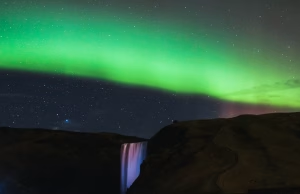
Iceland, the “Land of Fire and Ice,” is a one-of-a-kind destination. With stunning waterfalls, black sand beaches, and the Northern Lights, Iceland is filled with natural wonders and cultural charm.
In this blog, you’ll discover 25 amazing facts about Iceland to prepare you for an unforgettable adventure. Whether you’re planning your first trip or dreaming of one, these facts will help you fully appreciate Iceland’s magic.
- 1. Iceland Has No Forests
- 2. More than 60% of Icelanders Live in Reykjavik
- 3. Iceland Runs Almost Entirely on Renewable Energy
- 4. The Northern Lights Are Visible for Eight Months
- 5. Iceland Has No McDonald’s!
- 6. Beer Was Banned Until 1989
- 7. Iceland’s Horses Are a Special Breed
- 8. Iceland Has No Army, Navy, or Air Force
- 9. Iceland is Home to Europe’s Largest Glacier
- 10. Iceland’s National Sport is Handball
- 11. The Blue Lagoon was an Accidental Discovery
- 12. Icelanders Believe in Elves and Hidden People
- 13. Iceland Has the World’s Oldest Parliament
- 14. Midnight Sun Makes Iceland Glow in Summer
- 15. Iceland Has 130+ Volcanic Mountains
- 16. Iceland Has More Sheep Than People
- 17. You Can Swim in Geothermal Pools Year-Round
- 18. Iceland’s Water is Some of the Purest in the World
- 19. Iceland Hosts an Annual Arctic Open Golf Tournament
- 20. Iceland’s National Dish is Fermented Shark
- 21. Iceland Is One of the Safest Countries in the World
- 22. Iceland Has a Christmas Tradition Involving 13 Santa Clauses
- 23. Iceland’s National Day Celebrates Independence and the Summer Solstice
- 24. Iceland Has the Oldest Continually Active Volcano in the World
- 25. Iceland Is Famous for Its Spectacular Waterfalls
- FAQs
1. Iceland Has No Forests
Iceland’s landscape is famously treeless, as early settlers cleared most of the forests centuries ago. Volcanic activity has made regrowth challenging. Today, reforestation efforts continue, but the island’s open vistas of moss, lava, and mountains remain a key part of its wild beauty.
Suggested Read: How to Check Iceland Visa Status Online for Indians
2. More than 60% of Icelanders Live in Reykjavik

Reykjavik is not just Iceland’s capital; it’s where the majority of Iceland’s population resides. This lively, colorful city is filled with museums, art, and a vibrant food scene. Travelers often base themselves here to explore both urban and natural attractions. Reykjavik truly feels like the heart of the nation.
- Location:Reykjavik
- Timings: City open year-round
- Ticket: Free to explore; museum entry around ₹1,200–₹2,000 (2,000–3,500 ISK)
3. Iceland Runs Almost Entirely on Renewable Energy
Iceland is a leader in green energy, with about 85% of its power coming from renewable sources, primarily geothermal and hydropower. Travelers can enjoy eco-friendly heating, electricity, and even naturally heated pools. Iceland’s commitment to sustainability is truly inspiring.
- Location: Across Iceland (Geothermal Plants like Hellisheiði)
- Timings: Plant tours vary; typically 9 AM – 5 PM
- Ticket: Approx. ₹1,400 (2,400 ISK) for plant tours
Planning a trip to Iceland? You can book your Iceland visa online with OneVasco for a fast and hassle-free process.
4. The Northern Lights Are Visible for Eight Months

One of the facts you didn’t know about Iceland is that the Northern Lights are visible even from Reykjavik on clear nights. Best seen from August to April, they’re most vivid in rural areas where there’s no light pollution—making every viewing feel magical.
- Location: Best seen from countryside areas like Thingvellir or Vik
- Timings: August to April, typically 10 PM – 2 AM
- Ticket: Free (Northern Lights tours cost around ₹7,000–₹10,000 / 12,000–16,000 ISK)
Suggested Read: How to Book a Iceland Visa Appointment
5. Iceland Has No McDonald’s!
Iceland has no McDonald’s; the chain closed in 2008. Instead, locals enjoy lamb hot dogs and specialty burgers, offering a refreshing taste of homegrown flavors.
- Location: Reykjavik and other towns (local restaurants)
- Timings: Varies by restaurant, typically 11 AM – 11 PM
- Ticket: Meal prices start around ₹1,000–₹1,800 (1,700–3,000 ISK)
6. Beer Was Banned Until 1989

Iceland legalized beer on March 1, 1989, after banning it due to concerns about its influence. Now, March 1st is celebrated as “Beer Day” with festivities nationwide. Iceland’s thriving craft breweries make beer tastings a must for visitors.
- Location: Pubs and breweries in Reykjavik and Akureyri
- Timings: Beer Day events usually start around noon
- Ticket: Pub crawl packages cost around ₹5,000–₹8,000 (8,500–13,000 ISK)
7. Iceland’s Horses Are a Special Breed

The Icelandic horse is a national treasure, known for its strength, endurance, and unique five gaits. Brought over by Norse settlers, these horses have been kept pure through selective breeding. Riding them through Iceland’s lava fields, beaches, and meadows offers an unforgettable experience.
- Location: Riding tours across the country (e.g., near Selfoss or Skagafjörður)
- Timings: Tours available year-round
- Ticket: Approx. ₹8,500–₹12,000 (14,000–20,000 ISK) for 2–3 hour rides
Suggested Read: Iceland Visa Extension for Indian Tourists

Iceland is one of the few countries without a standing army, navy, or air force. Despite this, it remains in NATO and relies on defense agreements. The peaceful environment makes it a safe, welcoming destination for travelers.
9. Iceland is Home to Europe’s Largest Glacier

Among the famous facts about Iceland, Vatnajökull stands out as Europe’s largest glacier, covering 8% of the country. This massive ice sheet conceals volcanoes, lakes, and caves. Visitors can experience its grandeur through ice caving, hiking, or thrilling snowmobile tours.
- Location: Vatnajökull National Park
- Timings: Tours usually from 9 AM – 5 PM (seasonal)
- Ticket: Approx. ₹10,000–₹15,000 (17,000–25,000 ISK) for glacier tours
10. Iceland’s National Sport is Handball

While football is globally popular, Icelanders are crazy about handball. The national handball team is highly respected and has performed impressively in international championships. If you visit during a major tournament, you’ll find streets, cafes, and bars buzzing with excitement. It’s a fun way to experience local spirit.
- Location: Laugardalshöll Stadium, Reykjavik (for major matches)
- Timings: Event-specific
- Ticket: Match tickets start around ₹2,000–₹4,500 (3,500–7,500 ISK)
11. The Blue Lagoon was an Accidental Discovery

Iceland’s famous Blue Lagoon was formed by accident from runoff of a geothermal power plant in the 1970s. People soon discovered its healing properties, and today it’s a top tourist spot. The steamy blue waters amid black lava fields create a surreal experience.
- Location: Grindavík, near Keflavik Airport
- Timings: 8 AM – 10 PM (timings may vary by season)
- Ticket: Approx. ₹6,500–₹12,000 (11,000–20,000 ISK) depending on package
Suggested Read: Iceland Visa Photo Requirements For Indian Tourists

Many Icelanders believe in elves and “hidden people,” who, according to folklore, live in rocks and landscapes. Construction projects often avoid disturbing their habitats. You can even join “elf tours” to explore these intriguing stories.
- Location: Hafnarfjörður and Reykjavik areas
- Timings: Tour times vary, typically 10 AM – 2 PM
- Ticket: Approx. ₹3,000–₹4,500 (5,000–7,500 ISK) for guided tours
13. Iceland Has the World’s Oldest Parliament
Iceland’s Alþingi (Althing) is considered the world’s oldest parliament, established in 930 AD. Today, you can visit Þingvellir National Park, where the original assembly met under open skies. It’s also a UNESCO World Heritage Site, offering a glimpse into Iceland’s rich political history.
- Location: Þingvellir National Park
- Timings: Visitor center open 9 AM – 5 PM
- Ticket: Park entry is free; parking fee around ₹400 (750 ISK)
14. Midnight Sun Makes Iceland Glow in Summer

During the summer months, Iceland experiences almost 24 hours of daylight, a phenomenon called the Midnight Sun. This unique experience allows travelers to explore and sightsee late into the night. It’s an extraordinary feeling to hike, photograph, or even have picnics under a sun that never sets.
- Location: Entire country, best in North Iceland
- Timings: Late May to late July
- Ticket: Free experience
15. Iceland Has 130+ Volcanic Mountains

Iceland’s nickname, “Land of Fire and Ice,” reflects its 130+ active and inactive volcanoes. Sitting on the Mid-Atlantic Ridge, the island is geologically active. Famous volcanoes like Eyjafjallajökull and Hekla offer thrilling tours that showcase Earth’s raw power.
- Location: Sites like Eyjafjallajökull, Hekla, Katla
- Timings: Tour timings vary; usually between 9 AM – 6 PM
- Ticket: Approx. ₹7,000–₹12,000 (12,000–20,000 ISK) for volcano tours
Suggested Read: Iceland Visa for Indians: Your Complete Guide
16. Iceland Has More Sheep Than People

Sheep farming is a vital part of Iceland’s culture and economy. Astonishingly, the number of sheep in Iceland outnumbers its human population by nearly two to one. During the summer, sheep roam freely across mountains and valleys before being rounded up in the fall. You’ll often encounter fluffy herds during your road trips.
- Location: Throughout rural Iceland
- Timings: Best seen from May to September
- Ticket: Free to observe
17. You Can Swim in Geothermal Pools Year-Round

No matter the weather, Icelanders love their geothermal swimming pools. These naturally heated pools offer relaxation, health benefits, and a social hub for locals. From small village pools to luxurious lagoons, there’s always a warm place to take a dip—even during snowfall!
- Location: Reykjavik (e.g., Laugardalslaug), across Iceland
- Timings: Pools generally open 7 AM – 10 PM
- Ticket: Approx. ₹800–₹1,400 (1,400–2,400 ISK)
18. Iceland’s Water is Some of the Purest in the World
Iceland’s tap water is some of the cleanest and freshest in the world, flowing directly from glaciers and springs, naturally filtered through lava rocks. Travelers are encouraged to refill bottles instead of using plastic. Drinking from a glacier-fed stream is a must-try experience!
19. Iceland Hosts an Annual Arctic Open Golf Tournament

Golf enthusiasts might be surprised to learn that Iceland hosts an Arctic Open Golf Tournament under the Midnight Sun. Playing golf at midnight, with the sun still glowing, is a surreal experience. The tournament attracts international players seeking an unforgettable round of golf.
- Location: Akureyri Golf Club
- Timings: Late June (Midnight Sun season)
- Ticket: Tournament entry approx. ₹20,000–₹30,000 (35,000–50,000 ISK)
20. Iceland’s National Dish is Fermented Shark
Hákarl, or fermented shark, is Iceland’s traditional delicacy. It’s made by curing Greenland shark meat for several months and has a strong, ammonia-like smell. While many travelers find it challenging, tasting it is often considered a rite of passage when visiting Iceland.
- Location: Reykjavik (e.g., Bjarnarhöfn Shark Museum, local restaurants)
- Timings: Restaurants open typically 11 AM – 9 PM
- Ticket: Tasting plates cost around ₹500–₹1,200 (800–2,000 ISK)
Suggested Read: Iceland Visa Rejection for Indians
21. Iceland Is One of the Safest Countries in the World
Iceland consistently ranks as one of the safest countries for travelers. With low crime rates, a strong sense of community, and a welcoming culture, it’s no surprise that people of all ages visit Iceland with peace of mind. Whether you’re hiking in remote areas or enjoying the city, you’re bound to feel safe and secure.
22. Iceland Has a Christmas Tradition Involving 13 Santa Clauses
Forget one Santa Claus— Iceland celebrates 13 Yule Lads, mischievous brothers who visit children during the 13 nights before Christmas. Each Yule Lad has distinct traits, from stealing food to playing tricks. The tradition blends folklore with festive fun and makes Christmas in Iceland extra magical.
- Location: Nationwide, special displays in Reykjavik
- Timings: December (Christmas season)
- Ticket: Free (special events may vary)
23. Iceland’s National Day Celebrates Independence and the Summer Solstice
Iceland’s National Day, celebrated on June 17th, marks its independence from Denmark in 1944. This day is celebrated with parades, performances, and festivities, but it also coincides with the Midnight Sun, creating an incredibly special atmosphere. It’s an excellent time to experience Icelandic culture at its best.
- Location: Reykjavik and major towns
- Timings: Parades usually 11 AM – 1 PM
- Ticket: Free to attend events
Suggested Read: 20 Compelling Reasons to Visit Iceland – Explore the Land of Fire and Ice
24. Iceland Has the Oldest Continually Active Volcano in the World
Iceland is home to Mount Hekla, one of the world’s oldest continuously active volcanoes. It has erupted over 20 times since the 9th century and is considered one of Europe’s most dangerous. Trekking to Hekla offers stunning views and a firsthand experience of nature’s raw power.
- Location: South Iceland, near Hella
- Timings: Hiking tours available year-round
- Ticket: Approx. ₹2,000–₹4,000 (3,500–7,000 ISK) for guided hikes
25. Iceland Is Famous for Its Spectacular Waterfalls

Iceland boasts iconic waterfalls like Gullfoss, Seljalandsfoss, and Skogafoss. Formed by glacial rivers and volcanic terrain, they’re easily accessible and breathtaking year-round. This is one of the top facts about Iceland that makes it a dream for nature lovers and photographers alike.
- Location: Gullfoss (Golden Circle), Seljalandsfoss (South Coast)
- Timings: Open year-round, best seen in summer (8 AM – 9 PM)
- Ticket: Free access (Guided tours start from ₹4,000–₹8,000 / 7,000–14,000 ISK)


FAQs
What is the best time to visit Iceland for the Northern Lights?
The best time to visit Iceland for the Northern Lights is during the winter months, from late September to early April. During this period, the nights are long, and the skies are dark, increasing your chances of witnessing this breathtaking phenomenon.
Can you see glaciers in Iceland?
Yes, Iceland is home to several massive glaciers, including the famous Vatnajökull. You can visit glaciers on guided tours, go ice hiking, or even try ice climbing, providing a unique and thrilling experience for adventure seekers.
Is Iceland a good place for hiking?
Absolutely! Iceland offers some of the most stunning hiking trails in the world. From short walks to challenging multi-day treks, you can explore the unique landscapes of volcanoes, glaciers, and waterfalls while surrounded by dramatic scenery.
Are there any hot springs in Iceland?
Yes, Iceland is famous for its hot springs, many of which are geothermal and naturally heated. The Blue Lagoon is the most well-known, but there are countless other hot springs throughout the country, where you can relax and rejuvenate.
What makes Iceland’s cuisine special?
Iceland’s cuisine is unique, with a heavy reliance on fresh seafood, lamb, and dairy products. Dishes like Hákarl (fermented shark), skyr (a type of yogurt), and lamb stew offer a taste of Iceland’s heritage and history.
What are some interesting facts about Iceland’s culture?
Some of the most fascinating facts about Iceland include its deep-rooted belief in elves and hidden people, its absence of a standing army, and its remarkable commitment to sustainability through renewable energy. Icelanders also have a strong literary tradition, with many people reading books year-round.