Germany is a country where history, culture, and architecture converge seamlessly. From old buildings in Germany that tell stories of medieval kings and emperors to contemporary skyscrapers defining the skyline, the country offers an impressive architectural journey.
Exploring famous buildings in Germany allows travelers to witness both historical grandeur and modern engineering marvels. Some sites showcase the largest building in Germany, while others feature the tallest building in Germany or the highest building in Germany, providing stunning views and iconic photo opportunities.
In this guide, we highlight must-visit landmarks, from centuries-old castles and cathedrals to modern architectural feats, making your trip through Germany a captivating experience.
Suggested Read: Germany Visa for Indians – Everything You Need to Know
1. Brandenburg Gate

Highlights
- Symbol of Unity: Once a divided landmark between East and West Berlin, today it symbolizes German unity and peace.
- Festive Events: Hosts events like New Year’s Eve celebrations and Berlin’s Marathon finish line.
- Illumination at Night: Beautifully lit at night, making it a spectacular sight for evening visitors.
Architecture
- Designed by Carl Gotthard Langhans, inspired by the Acropolis in Athens.
- Built in the neoclassical style with 12 Doric columns forming five passageways.
- The Quadriga sculpture atop the Brandenburg Gate represents the goddess of victory driving a chariot.
Facilities
- Nearby cafes and souvenir shops.
- Guided walking tours start here.
- Information plaques provide historical context.
Accessibility
- Wheelchair accessible with smooth pavements.
- Accessible restrooms are available at nearby tourist centers.
Costs Involved
- Free entry; guided tours start from €15.
Location & How to Get There
- Address: Pariser Platz, 10117 Berlin, Germany.
- How to Get There:
- Metro: Take U-Bahn to Brandenburger Tor station.
- Taxi: A short ride from central Berlin costs around €8–15.
Pro Tips
- Visit at sunset for stunning photos.
- Book a guided tour for deeper historical insights.
Apply for your Germany visa online with OneVasco for a secure and effortless application experience.
2. Neuschwanstein Castle

Highlights
- Fairy Tale Inspiration: Inspired by Disney’s Sleeping Beauty Castle.
- Panoramic Views: Stunning views of the Bavarian Alps and lakes.
Architecture
- The Romanesque Revival style was designed by Christian Jank.
- Features elaborate towers, turrets, and frescoes inside.
Facilities
- Guided tours.
- Gift shops and cafes near the entrance.
- Shuttle buses and horse-drawn carriage options.
Accessibility
- Limited wheelchair access due to steep paths.
Costs Involved
- Tickets: Around €17.50 for adults.
Location & How to Get There
- Address: Neuschwansteinstraße 20, 87645 Schwangau, Germany.
- How to Get There:
- Train: To Füssen, then bus to Hohenschwangau village.
- Taxi: From Füssen station, approx. €10–15.
Pro Tips
- Book tickets online to avoid queues.
- Wear comfortable walking shoes.
Suggested Read: How to Book a Germany Visa Appointment
3. Cologne Cathedral (Kölner Dom)

Highlights
- UNESCO World Heritage Site: Known for its Gothic architecture.
- View from the Tower: Climb 533 steps for breathtaking city views.
Architecture
- Gothic twin-spired structure, designed by Master Gerhard.
- Features stained glass windows and ornate sculptures.
Facilities
- Museum and treasury.
- On-site cafes and bookstores.
Accessibility
- Ramp access and elevators.
Costs Involved
- Cathedral entry free; Tower climb: €6.
Location & How to Get There
- Address: Domkloster 4, 50667 Cologne, Germany.
- How to Get There:
- Train: Directly beside Cologne Central Station.
Pro Tips
- Visit early morning to avoid crowds.
- Don’t miss the evening illumination.
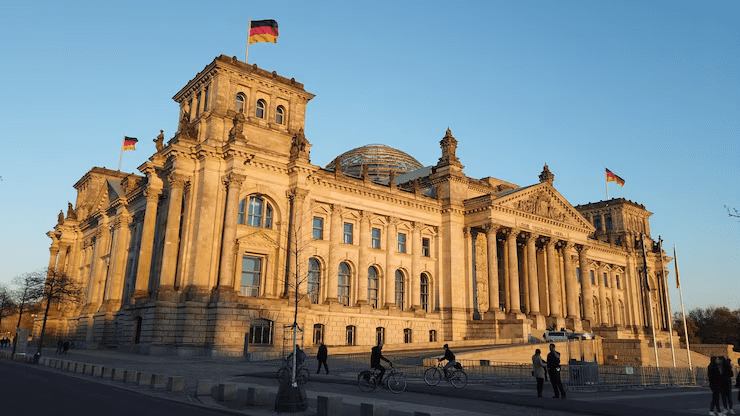
4. Reichstag Building

Source: https://en.wikipedia.org/wiki/Reichstag_dome
Highlights
- Glass Dome: Offers a 360° view of Berlin’s cityscape.
- Political Hub: Home to the German Bundestag (Parliament).
Architecture
- Designed by Paul Wallot in a Neo-Renaissance style.
- Norman Foster later added the glass dome for transparency.
Facilities
- Rooftop restaurant.
- Free guided tours.
Accessibility
- Fully wheelchair accessible.
Costs Involved
- Free entry, but pre-registration is needed.
Location & How to Get There
- Address: Platz der Republik 1, 11011 Berlin, Germany.
- How to Get There:
- Metro: Bundestag U-Bahn station.
Pro Tips
- Book dome visits at least 2 weeks ahead.
- Visit during sunset for stunning light.
Suggested Read: Nightlife in Germany: Best 15 Places to Explore After Sunset
5. Heidelberg Castle

Source: https://en.wikipedia.org/wiki/Heidelberg_Castle
Highlights
- Historical Significance: Icon of Renaissance architecture.
- Great Barrel: Home to the world’s largest wine barrel.
Architecture
- Renaissance-style ruins with intricate stonework.
- Expansive courtyards perfect for strolling and photography.
Facilities
- Castle museum showcasing regional history.
- Cable car access to the castle from the city below.
Accessibility
- Cable car available; some uneven surfaces inside the castle.
Costs Involved
- Entry ticket: €9.
Location & How to Get There
- Address: Schlosshof 1, 69117 Heidelberg, Germany.
- Bus/Tram: Travel to Kornmarkt station for easy access.
Pro Tips
- Attend the evening illumination tours for a magical view.
- Bring a picnic to enjoy in the castle gardens.
Suggested Read: Germany with Kids
6. Berlin TV Tower (Fernsehturm)

Highlights
- Rotating Restaurant: Enjoy meals while overlooking Berlin.
- Observation Deck: Offers panoramic views of the city.
Architecture
- Built in the 1960s with a futuristic design.
- Height: 368 meters, one of Europe’s tallest structures.
Facilities
- Fast elevators.
- Gift shops and cafes.
Accessibility
- Wheelchair accessible, limited in the restaurant area.
Costs Involved
- Ticket: €24.50.
Location & How to Get There
- Address: Panoramastraße 1A, 10178 Berlin.
- How to Get There:
- Metro: Alexanderplatz station.
Pro Tips
- Book fast-track tickets online.
- Go just before sunset for spectacular views.
Suggested Read: 12 Temples in Germany: Sacred Spaces in the Heart of Europe
7. Munich Residenz
Highlights
- Lavish Interiors: Gold-laden halls and antique collections.
- Treasury: Houses royal jewels and artifacts.
Architecture
- Munich Residenz is a mix of Renaissance, Baroque, and Rococo styles.
- Started in 1385 and expanded over centuries.
Facilities
- Audio guides.
- Cloakrooms and restrooms.
Accessibility
- Mostly accessible, some old sections are limited.
Costs Involved
- Entry ticket: €9.
Location & How to Get There
- Address: Residenzstraße 1, 80333 Munich.
- How to Get There:
- Metro: Odeonsplatz station.
Pro Tips
- Allocate at least 3 hours for full exploration.
- Don’t miss the Cuvilliés Theatre inside.
8. Frauenkirche, Dresden

Highlights
- Stunning Reconstruction: Rebuilt after WWII bombings.
- Dome Views: Climb to see the Elbe River.
Architecture
- Baroque masterpiece by George Bähr.
- Features a grand dome (“Stone Bell”).
Facilities
- Gift shops and nearby cafes.
- Concerts and organ performances.
Accessibility
- Fully accessible.
Costs Involved
- Entry: Free; Tower climb: €8.
Location & How to Get There
- Address: Neumarkt, 01067 Dresden.
- How to Get There:
- Tram: Neumarkt station.
Pro Tips
- Visit during a concert for an unforgettable experience.
Suggested Read: Solo Travel in Germany
9. Mercedes-Benz Museum

Highlights
- Car Enthusiasts’ Paradise: 130 years of automotive history.
- Interactive Exhibits: Virtual rides and car simulators.
Architecture
- The Mercedes-Benz Museum has a futuristic spiral design by UNStudio.
- Inspired by the double helix DNA structure.
Facilities
- Cafes, gift shops.
- Audio guides in multiple languages.
Accessibility
- Fully accessible.
Costs Involved
- Ticket: €12.
Location & How to Get There
- Address: Mercedesstraße 100, 70372 Stuttgart.
- How to Get There:
- Train: NeckarPark (Mercedes-Benz) station.
Pro Tips
- Download the app for a self-guided tour.
- Weekday visits mean fewer crowds.
Suggested Read: 20 Must-Visit Museums in Germany
10. Elbphilharmonie

Source: https://en.wikipedia.org/wiki/Elbphilharmonie
Highlights
- Concert Hall: Acoustic marvel with world-class performances.
- Plaza: Free observation deck overlooking Hamburg harbor.
Architecture
- Elbphilharmonie was designed by Herzog & de Meuron.
- Glass structure on top of a historic warehouse.
Facilities
- Restaurants and cafes.
- Gift shops.
Accessibility
- Fully accessible.
Costs Involved
- Plaza access is free; concert tickets vary.
Location & How to Get There
- Address: Platz der Deutschen Einheit 1, 20457 Hamburg.
- How to Get There:
- Metro: Baumwall station.
Pro Tips
- Book concert tickets months ahead.
- Visit the plaza even without attending a concert.
11. Schloss Sanssouci

Source: https://en.wikipedia.org/wiki/Sanssouci
Highlights
- Frederick the Great’s Palace: A slice of royal life.
- Vineyard Terraces: Beautiful gardens and vineyards.
Architecture
- Rococo style, designed by Georg Wenzeslaus von Knobelsdorff.
- Schloss Sanssouci is a single-story building with lavish interiors.
Facilities
- Guided tours.
- Park restaurants and cafes.
Accessibility
- Partially accessible.
Costs Involved
- Ticket: €14.
Location & How to Get There
- Address: Maulbeerallee, 14469 Potsdam.
- How to Get There:
- Train: Potsdam main station, then bus.
Pro Tips
- Visit midweek for fewer crowds.
- Bring a picnic for the sprawling gardens.
Suggested Read: Explore the Best of Germany’s Famous Food: 20 Must-Try Dishes
12. Allianz Arena

Highlights
- Football Heaven: Home of FC Bayern Munich.
- Illuminated Exterior: Changes colors based on events.
Architecture
- Designed by Herzog & de Meuron.
- Unique inflated ETFE plastic panels.
Facilities
- Stadium tours.
- Restaurants and merchandise shops.
Accessibility
- Fully accessible.
Costs Involved
- Tour and museum: €19.
Location & How to Get There
- Address: Werner-Heisenberg-Allee 25, 80939 Munich.
- How to Get There:
- Metro: Fröttmaning station.
Pro Tips
- Catch a live match if schedules align!
- Visit during the evening for the lit-up exterior.


FAQs
1. What are the most famous buildings in Germany?
Some of the most famous buildings in Germany include the Brandenburg Gate, Neuschwanstein Castle, Cologne Cathedral, Reichstag Building, and the Berlin TV Tower. Each of these famous buildings in Germany showcases unique historical and architectural significance.
2. Can you visit the inside of Neuschwanstein Castle?
Yes, guided tours allow visitors to explore the interior of Neuschwanstein Castle. Booking in advance is recommended, as it remains one of Germany’s top tourist attractions and a must-visit old building in Germany.
3. Are Germany’s historic buildings wheelchair accessible?
Many historic buildings have been updated for better accessibility, but some older structures may still pose challenges. Major landmarks like the Reichstag and Brandenburg Gate are fully accessible.
4. Which German city has the most historic architecture?
Berlin, Munich, and Dresden are celebrated for their rich historic architecture. Berlin blends modern and historical styles, Dresden features beautifully reconstructed baroque buildings, and Munich showcases Renaissance and Rococo designs.
5. How much does it cost to visit famous buildings in Germany?
Entry fees vary: landmarks like Brandenburg Gate are free, while museum and castle tickets typically range from €5–20. Some sites like the Reichstag Dome are free but require prior registration.
6. What is the best time to explore buildings in Germany?
Spring (April–June) and autumn (September–October) offer pleasant weather and fewer crowds, making it the ideal period to explore old buildings in Germany and the country’s tallest and most iconic structures.