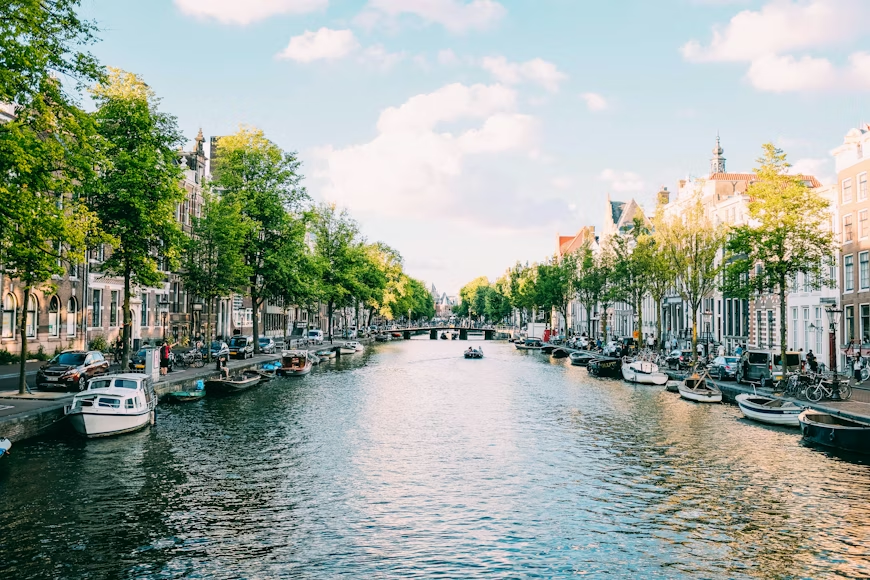
Canals lined with tilted gabled houses, quiet windmills turning in the distance, and flower fields that glow through spring make the Netherlands feel like a postcard brought to life. You might pause to ask, ‘Is Netherlands safe to visit?’, especially if you want a clear sense of what to expect on the ground. With lively cities, efficient transport, and a culture that welcomes travelers, it’s no surprise so many people place it high on their European list.
That said, the charm comes with a few things worth knowing. Pickpockets work the crowds at Amsterdam Central and Dam Square, and fake police scams catch tourists off guard. Beyond scams, things like nightlife areas, cannabis laws, and getting around the transport system can affect how smooth your trip feels. The sections ahead break it all down so you can enjoy your trip without stress.
Source: Unsplash
Current Safety Status in the Netherlands

Source: Unsplash
Official data from Statistics Netherlands (CBS) shows the crime rate in Netherlands has remained stable in recent years. Police recorded 812,000 crimes in 2024, averaging 2,220 incidents daily. This represents a slight decrease from 816,000 crimes in 2023.
Property crimes account for nearly 60% of all recorded offenses, including theft, fraud, and burglary. High-impact crimes such as domestic burglary, violent crime, armed robbery, and street crime affected fewer people in 2024.
The Netherlands recorded 120 homicides in 2024, down from 125 in 2023. This represents half the murder rate from the start of the century. The country maintains one of Europe’s lowest homicide rates and ranks among the safest countries for both residents and visitors.
Drug-related crimes and weapons offenses present localized concerns. Police recorded 15,300 drug-related crimes and 7,300 weapons crimes in 2024. While drug offenses remained stable compared to ten years earlier, weapons crimes increased 24% since 2014.
These statistics largely reflect domestic issues rather than tourist-targeted crimes.
Online crime affects residents more than visitors. Approximately 2.4 million Dutch residents aged 15 and older reported experiencing online fraud in 2024, with purchase fraud affecting 7% of the population.
Suggested Read: Netherlands Visa Photo Requirements for Indians
Crime and Safety Concerns

Source: Unsplash
Common scams in Netherlands target travellers in busy cities and usually involve pickpocketing in crowded areas, fake police encounters, taxi overcharging, counterfeit tulip bulbs, menu price tricks, and accommodation fraud. Insight into these scams helps travellers avoid costly mistakes and stressful encounters.
Scam Categories
Pickpocketing Operations
- Thieves operate in crowded spots like Amsterdam Central Station, Dam Square, and major markets, using distraction tactics where one person talks to you while another steals valuables.
- Transport hubs pose added risk during rush hours and late evenings, with pickpockets targeting tourists carrying cameras or checking maps.
- Café terraces become hotspots when visitors hang bags on chairs or leave phones on tables, making quick grabs easy in closely packed seating.
- By keeping bags on your lap, securing zippers inward, and staying alert, travelers in the Netherlands can significantly reduce the risk of theft.
Fake Police Encounters
- Scammers posing as officers approach tourists, claiming they must inspect wallets for counterfeit Euros, using convincing badges before stealing cash during the “check.”
- Genuine Dutch police rarely stop tourists without cause and never inspect currency or demand immediate payment. They present a full ID with a photo, badge number, and issuing station.
- If someone claiming to be the police approaches you, request complete credentials and call 112 to verify identity. Real officers cooperate with verification and do not pressure tourists.
Suggested Read: Netherlands Visa Extension for Indians
Taxi Overcharging
- Unlicensed taxis near Schiphol Airport and major stations avoid meters and quote unclear fares, later increasing prices dramatically or claiming charges apply per person.
- Some drivers extend routes unnecessarily or insist card machines are “broken,” pushing cash-only payments that remove accountability.
- Licensed taxis display company names, meter seals, and blue license plates, providing printed receipts with full fare breakdowns.
- Using official taxi ranks or ride apps aligns with guidelines for safe travel in Netherlands and prevents most overcharging issues.
Counterfeit Tulip Bulbs
- Vendors at tourist markets sell bulbs year-round, even though off-season stock is often old or nonviable. Tests show most bulbs sold outside planting season fail to grow.
- Sellers reinforce scams with claims of “fresh stock,” but visitors only discover failure months later at home.
- Authentic bulbs are sold from September onward through reputable horticultural companies that follow export rules.
- Checking your country’s import restrictions also forms part of sensible planning when assessing how to stay safe in Netherlands as a tourist.
Menu Price Manipulation
- Restaurants in nightlife or tourist zones sometimes display menus without printed prices. Staff quote modest costs verbally, but final bills arrive highly inflated.
- This tactic appears late at night when diners are less likely to challenge discrepancies.
- Legitimate establishments always provide menus with clearly marked Euro pricing and transparent billing.
- Reviewing the bill before paying protects visitors and helps avoid disputes that may arise in busy nightlife districts.
Accommodation Fraud
- Fraudsters mirror real rental listings on social platforms, offering attractive apartments at unusually low rates while requesting deposits upfront. Victims later discover the property doesn’t exist or belongs to someone unrelated.
- These scams persuade travelers by offering immediate availability and “limited-time prices.”
- Booking only through verified platforms with payment protection prevents losses and ensures authentic listings.
- Strong accommodation vetting remains a key part of safety tips for travelers in Netherlands, especially for longer stays.
Prevention Strategies

Source: Unsplash
A few proactive steps can cut the risk of scams, theft, and unfair charges. Awareness, preparation, and careful choices protect personal items and help ensure a safer, more relaxed journey.
- Carry valuables in crossbody bags with closed zippers and do not display costly electronics or large amounts of cash.
- Always confirm prices in advance, check menus for printed costs, agree on taxi fares before departure, and research typical rates online to spot inflated charges.
- Use official transportation only. Book taxis through licensed companies or reliable apps, and buy train or tram tickets from authorized machines or vendors.
- Stay alert in crowded areas by keeping bags zipped inward and watching your surroundings, especially when someone approaches asking for directions or assistance.
Suggested Read: A Complete Guide to Netherlands Visa for Indians
General Safety Guidelines

Source: Unsplash
Nighttime Navigation
Nightlife safety in Netherlands is considered reliable, especially in established locations, including Leidseplein, Rembrandtplein, Jordaan, and other centrally located entertainment areas.
However, safety levels can change significantly depending on the time of night, crowd density, and the specific neighborhood.
- Amsterdam’s Red Light District gets rowdy late at night; solo travelers, especially women, may feel uncomfortable despite low incident levels.
- Walking alone after midnight in quieter neighborhoods such as Bijlmer, parts of Rotterdam Zuid, or Schilderswijk carries a higher risk based on the local crime rate in Netherlands.
- Public transport remains safe, though suburban stations quiet down after midnight. Stay in well-lit central areas and remain alert.
Emergency Response System
Emergency numbers in Netherlands:
- Police, Fire, Ambulance: 112
- Non-Emergency Police: 0900-8844
The 112 system operates 24/7 throughout the Netherlands and connects to all European Union emergency services. Operators speak English, German, and French in addition to Dutch. The system routes calls to appropriate services based on emergency type while tracking caller’s location.
Response times in major cities average 10-15 minutes for police and ambulances. Fire services typically arrive within 8 minutes in urban zones. Rural areas experience longer response times due to greater distances between stations and incidents.
For non-urgent police matters, including reporting theft after it occurred or asking general questions, call 0900-8844 to reach local police stations. This line operates during business hours with English-speaking staff available in tourist areas.
Medical Services
Access to reliable healthcare is an important consideration for anyone wondering, ‘Is Netherlands safe to visit?’ The country’s medical system offers strong support for travelers, which makes it easier to manage health needs during a trip.
- Health and hygiene in Netherlands rank among Europe’s highest, supported by modern hospitals, efficient clinics, and English-speaking medical professionals.
- Public hospitals treat all emergencies, though visitors pay for services; private clinics offer shorter wait times at premium costs.
- Pharmacies provide prescription and basic medications, but some items require doctor approval, so carrying essential prescriptions is important.
- Tap water remains safe nationwide, meeting strict quality standards and commonly served in restaurants and hotels.
- Food safety regulations ensure clean kitchens and licensed vendors, keeping foodborne illnesses rare for travelers.
Suggested Read: How to Book a Visa Appointment for the Netherlands
Laws and Local Regulations

Source: Unsplash
- Cannabis use is allowed only inside licensed coffeeshops, with purchases capped at 5 grams; consuming it on streets, parks, or near schools is prohibited, and exporting it is treated as trafficking.
- Public intoxication can lead to police detention if behavior becomes disruptive, as officers prioritize safety in crowded nightlife zones.
- Bicycle lanes function as strict traffic routes; pedestrians entering them risk fines and create hazards, since cyclists have the right-of-way and rarely slow down.
- Photography near military sites, security checkpoints, or government facilities can trigger questioning or equipment seizure, so caution is essential around sensitive areas.
Suggested Read: How To Check Netherlands Visa Status for Indians
Climate and Weather Patterns

Source: Unsplash
The Netherlands experiences a temperate maritime climate with mild winters and cool summers. Weather patterns influence travel conditions and outdoor activity planning throughout the year.
Winter months from December through February bring temperatures ranging from 0-6°C with frequent rain and occasional snow. Days remain short with darkness arriving by 5 PM. Strong winds from the North Sea can make temperatures feel colder than thermometer readings suggest.
Spring from March through May sees temperatures climbing from 7-15°C with decreasing rainfall. Tulip season peaks in April when Keukenhof Gardens and bulb fields display millions of flowers. This period attracts maximum tourist crowds, requiring advanced bookings.
Summer, June through August, provides the warmest weather at 17-23°C with occasional heat waves reaching 30°C. These are peak tourism months with the longest daylight hours and maximum outdoor activity options. Accommodation prices reach annual highs while popular attractions sell out quickly.
Autumn, September through November, brings cooling temperatures from 10-18°C with increasing rain. Leaves change color throughout October, creating photogenic landscapes. Tourism crowds thin significantly after mid-September, offering better availability and prices.
Suggested Read: Experience Dutch nightlife with these 15 best spots in the Netherlands
Traffic and Pedestrian Safety

Source: Unsplash
- NS trains connect major cities with frequent, reliable service; buy tickets through machines or the app to avoid fines during conductor checks.
- Trams in Amsterdam, Rotterdam, The Hague, and Utrecht require checking in and out with an OV-chipkaart or contactless card to prevent being charged full fares.
- Metro lines stay clean and well-monitored, though travelers should secure bags near busy hubs that reduce theft risks.
- Cycling remains the most common way to move around; dedicated bike paths make it easy, but always use strong locks since bicycle theft is widespread.
- Driving is less convenient for visitors due to right-priority rules, tram and cyclist dominance, and expensive parking in city centers like Amsterdam.
Suggested Read: Experience the Winter in the Netherlands: From Festive Markets to Frozen Canals


FAQs
Q: Which areas in major Dutch cities should tourists avoid?
Some neighborhoods deserve extra caution, including Amsterdam’s Bijlmer, sections of Rotterdam Zuid, The Hague’s Schilderswijk, and parts of Eindhoven’s Woensel. Tourist zones like the canal ring and Museum Quarter stay safe with normal awareness.
Q: How does solo travel safety in Netherlands compare to other European destinations?
Solo travel safety in Netherlands ranks high due to reliable transport, clear signage, and low violent crime. Petty theft happens in busy areas, but overall risk remains lower than in many European countries.
Q: What precautions do women traveling alone need to take?
Women’s safety in Netherlands is strong, though avoiding isolated streets late at night and keeping bags secured in crowded areas remains wise. Most women feel comfortable navigating cities using official transport and populated routes.
Q: How should tourists handle interactions with police?
Dutch police communicate clearly and carry proper identification. If approached, provide ID when asked and avoid handing over cash, as real officers never request on-the-spot payments. For non-emergencies, call 0900-8844.
Q: Is Netherlands safe to visit despite concerns about crime?
Yes, the country maintains low violent crime rates, and visitors can travel safely by following simple safety tips in the Netherlands, such as avoiding isolated areas after dark. For most people, this means ‘Is the Netherlands safe to visit?’ tends to fade quickly once they’re there.