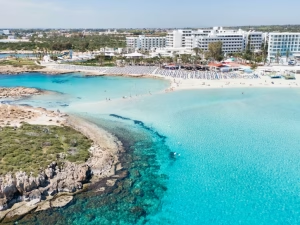
Malta sits at the heart of the Mediterranean Sea, somewhere between Sicily and North Africa. This small archipelago packs temples older than the Egyptian pyramids, waters so clear they look unreal, and medieval cities frozen in time. Things to do in Malta cover a surprisingly wide range for such a tiny nation.
Malta, Gozo, and Comino, the three islands, hold medieval fortifications, prehistoric sanctuaries, and turquoise swimming spots within easy reach of each other. This guide takes you through different locations worth visiting, complete with admission costs and operating hours.
1. Valletta
The capital city spreads across a narrow peninsula between two natural harbours. Valletta measures just 1 kilometer long and 600 meters wide, yet UNESCO listed the entire city as a World Heritage Site. The Knights of St. John built this fortress city after surviving the Great Siege of 1565. Every street holds baroque churches, grand palaces, and those colourful Maltese balconies you see on postcards.
Walking remains the best way to explore. Republic Street runs through the centre with shops, cafés, and historic buildings on both sides. Fort St. Elmo guards the tip of the peninsula and houses the National War Museum. Among the top things to do in Malta, spending a full day wandering Valletta ranks high on every list.
- Google Rating: NA
- Location: Valletta, Malta
- Timings: City accessible 24 hours, Museums typically 9:00 AM – 5:00 PM
- Price: City entry is free; National War Museum has separate entry fees; plan to spend a couple of days to explroe this city
Suggested Read: Malta in July: Sunshine, Beaches, and Festivals
2. St. John’s Co-Cathedral

From the outside, this cathedral looks plain and fortress-like. Step through the door and the contrast hits you immediately. Gold covers nearly every surface. Marble tombs of 400 knights form the floor. Mattia Preti painted the ceiling with scenes from the life of St. John the Baptist directly onto wet plaster.
Two paintings by Caravaggio hang inside, including his largest work, The Beheading of St. John the Baptist. The artist created these pieces while living in Malta after fleeing Rome. Built between 1573 and 1578, the cathedral served as the main church for the Knights of Malta. The things to do in Malta for tourists should always start here.
- Google Rating: 4.8/5
- Location: Triq San Gwann, Il-Belt Valletta, Malta
- Timings: Daily 9:00 AM – 4:15 PM, closed on Sunday
- Price: For adults, the booking fee is €16.05 total/ INR 1,717, for students €12.84 total/ INR 1,373, (valid student card required), for seniors (aged 60+), €12.84 total/ INR 1,373, (valid proof of age required), and free for children under 12
3. Blue Lagoon Comino

Between Malta and Gozo sits the tiny island of Comino, home to the famous Blue Lagoon. The water here shifts between shades of turquoise and aquamarine depending on the sunlight. White sand and smooth rocks surround the shallow cove, making it safe for swimming and snorkeling.
Ferries run daily from Cirkewwa in northern Malta and from Mġarr Harbour in Gozo. The journey takes about 25 minutes from Malta or 15 minutes from Gozo. Since 2024, visitors must register online for a free QR code during peak hours to manage crowds. Arriving on the first morning ferry gives you the best chance of finding quiet spots before the masses descend.
- Google Rating: 4.1/5
- Location: Comino Island, Malta
- Timings: Ferries run approximately every 30 minutes from 8:00 AM (Timings may vary)
- Price: Ferry costs vary based on the operator; plan to spend at least a day on this island
4. Mdina

Locals call it the Silent City for good reason. Cars cannot enter the old walls of Mdina. Only residents park inside. The rest of us walk the narrow limestone streets in near silence, broken only by footsteps and the occasional church bell. This fortified medieval town served as Malta’s capital for centuries before Valletta took over.
Perched on a hill about 13 kilometers from Valletta, Mdina offers panoramic views across the island. St. Paul’s Cathedral stands at the centre, built on the site where the Roman Governor Publius once lived. The neighboring town of Rabat holds the Catacombs of St. Paul, an underground burial complex dating to Roman times. These count among the fun things to do in Malta for history lovers.
- Google Rating: NA
- Location: Mdina, Central Malta
- Timings: City accessible 24 hours, Cathedral 9:30 AM – 5:00 PM (Timings may vary)
- Price: City entry free; St. Paul’s Cathedral has separate tickets; plan to spend at least a day in this city
Suggested Read: Malta With Kids: An Unforgettable Mediterranean Adventure for Your Family
5. Ħal Saflieni Hypogeum

Workers digging a well in 1902 accidentally broke through into something extraordinary. Beneath the streets of Paola lies an underground temple carved entirely by hand around 4000 BC. This makes the Hypogeum older than the Egyptian pyramids by roughly 1,000 years. UNESCO designated it a World Heritage Site in 1980.
Only 80 visitors enter each day in groups of 10. Tours last about 50 minutes, including an audiovisual introduction. Tickets sell out months ahead, so booking early becomes necessary. The Oracle Room features original ochre paintings on the walls, remarkably preserved after 6,000 years.
- Google Rating: 4.4/5
- Location: Triq Ic Cimiterju, Raħal Ġdid, Malta
- Timings: Daily 9:00 AM – 5:00 PM
- Price: Ticket prices for adults (aged 18+), €35.00/ INR 3,745, for youths (aged 12–17), €20.00/ INR 2,140, for senior citizens (aged 60+), €20.00/ INR 2,140, for children (aged 6–11), €15.00/ INR 1,605, and last-minute tickets at €50.00/ INR 5,350. Infants aged 1–5 are not admitted; set aside at least an hour to visit this place
6. Ġgantija Temples

On the island of Gozo stands the second-oldest religious structure on Earth, younger only than Göbekli Tepe in Turkey. The Ġgantija Temples date back to 3600–3200 BC, making them roughly 5,500 years old. Some megaliths used in construction weigh over 50 tonnes. Local folklore says a giantess built the temples alone, which explains the name, meaning “place of giants” in Maltese.
The Interpretation Centre at the entrance displays artefacts and explains the significance of these Neolithic structures. From the temples, views stretch across the Gozitan landscape. Getting there requires taking the ferry from Cirkewwa to Mġarr Harbour, then bus 322 to Xaghra village.
- Google Rating: 4.4/5
- Location: Triq John Otto Bayer, Ix-Xagħra, Malta
- Timings: Daily 9:00 AM – 5:00 PM
- Price: Ticket price for adults (aged 18+), €10/ INR 1,070, for youths aged 12–17, €8/ INR 856, for senior citizens (aged 60+), €8/ INR 856, for concessions and students, €8/ INR 856, for children (aged 6 – 11), €6/ INR 642, and free for infants aged 1–5; set aside 2 to 3 hours to explore this tourist attraction
Suggested Read: Malta Visa Rejection For Indian Tourists
7. Blue Grotto

Six sea caves on Malta’s southern coast create the Blue Grotto, named for the vivid blue light that reflects off the limestone walls. Small traditional boats called luzzu take visitors through the cave system. The best time comes early morning when sunlight angles through the water create the strongest colours.
The caves sit near the village of Wied iż-Żurrieq, about a five-minute drive south of the Ħaġar Qim archaeological site. A panoramic viewpoint above the village lets you see the caves from the clifftop before heading down to the jetty. Boat trips run weather permitting, typically from around 9:00 AM until mid-afternoon.
- Google Rating: 4.7/5
- Location: Blue Grotto, Malta
- Timings: Boat trips 9:00 AM – 3:00 PM approximately (weather dependent)
- Price: Boat tour varies based on operator; set aside 1 to 2 hours for exploring
8. Marsaxlokk

The name sounds tricky to pronounce (say “marsa-shlock”). This fishing village on the southeastern coast remains the place to see traditional Maltese life. Colourful luzzu boats fill the harbour, each painted with the Eye of Osiris on the bow for protection at sea. Fishermen still bring their catch here each morning.
Sunday draws the biggest crowds when a fish market spreads along the waterfront. Restaurants line the harbour serving fresh seafood, lampuki (dolphinfish), and rabbit stew. The village holds historical weight too, as Ottoman forces landed here before the Great Siege of 1565. St. Peter’s Pool, a natural swimming spot with clear water, sits nearby.
- Google Rating: NA
- Location: Marsaxlokk, Southern Malta
- Timings: Village accessible 24 hours; Sunday market morning through early afternoon
- Price: Free to visit; plan to spend at least a day in this town
Suggested Read: Malta Visa Photo Requirements for Indian Travelers


FAQs
What are the best things to do in Malta for first-time visitors?
Valletta deserves your first day with its museums, baroque churches, and historic sites all within comfortable walking distance. Medieval Mdina offers a striking contrast with its silent streets and honey-colored stone walls. A boat trip to the Blue Lagoon on Comino provides the beach escape that balances all the history, covering the best things to do in Malta for tourists.
What shouldn’t you miss in Malta?
St. John’s Co-Cathedral surprises everyone who steps inside, as its plain exterior hides an interior dripping with gold and artistic treasures. The Hypogeum takes you underground into a prehistoric temple older than the Egyptian pyramids themselves. If your schedule allows only two indoor attractions, these must see places in Malta deserve your time above all others.
What are the best things to do in Malta during the day?
Morning hours suit temple visits and cathedral tours when temperatures stay comfortable and fewer visitors crowd the entrances. Blue Grotto boat trips run best before midday when sunlight creates the most vivid colors on the cave walls. Afternoons fill nicely with swimming at Golden Bay or the Blue Lagoon, offering fun things to do in Malta between cultural stops.
What are the best things to do in Malta at night?
St. Julian’s and Paceville draw nightlife seekers with clubs, bars, and waterfront restaurants, keeping energy high until late. Valletta offers a gentler evening pace with wine bars and rooftop dining overlooking the Grand Harbour below. Summer village festas bring fireworks, band marches, and street food that represent top things to do in Malta after dark.
What are the most kid-friendly activities in Malta?
Popeye Village entertains children for hours with shows, splash pools, and costumed characters in a colorful film set location. The Malta National Aquarium at St. Paul’s Bay introduces young visitors to Mediterranean marine life through engaging displays. Mellieha Bay welcomes families with shallow water extending far from shore, making it one of the fun things to do in Malta for travelers with children.
What are the best cultural things to do in Malta?
Village festas celebrating patron saints fill nearly every summer weekend with fireworks, processions, and competing band clubs. The Hypogeum and megalithic temples connect you with prehistoric cultures that lived here over five thousand years ago. Traditional crafts like silver filigree continue in workshops open to visitors, ranking these among the top things to do in Malta for culture lovers.
What are the top food experiences in Malta?
Pastizzi cost less than a euro and appear in every bakery, offering flaky pastry filled with ricotta or mushy peas. Rabbit stew cooked slowly in wine and garlic holds its place as the beloved national dish worth ordering. Fresh fish from Marsaxlokk harbour reaches the waterfront restaurant plates the same day fishermen bring it ashore.
What are the best shopping areas in Malta?
Republic Street and Merchants Street in Valletta hold the main shops selling silver filigree jewelry and traditional Maltese crafts. The Sunday fish market at Marsaxlokk spreads along the waterfront with fresh catches, produce, and colorful souvenirs. Village festas include stalls selling nougat and traditional sweets, providing must see places in Malta for authentic local shopping.
What’s the best time of year to visit Malta for sightseeing?
The best time to visit Malta is during spring (April to June) and in autumn (September to October) because of the warm weather. Crowds thin during these months while sea temperatures remain comfortable for swimming well into October. You can access things to do in Malta year-round, though shoulder seasons offer the smoothest balance of pleasant weather and manageable visitor numbers.