Cambodia is a land of ancient temples, colorful traditions, and rich spiritual heritage. The festivals in Cambodia reflect centuries-old customs, royal traditions, Buddhist teachings, and vibrant community celebrations.
This article covers the 20 best festivals in Cambodia, explaining what they are, why they matter, when they are celebrated, and what visitors can experience at each.
Top 10 Festivals in Cambodia You Must Experience
1. Bonn Chol Chnam Thmey (Khmer New Year)

Bonn Chol Chnam Thmey is Cambodia’s largest national festival, marking the transition into the traditional Khmer calendar year. It is linked closely to the agricultural cycle, occurring after the rice harvest, when families return home, visit pagodas, and participate in community celebrations.
When It’s Celebrated:
13–16 April every year (3-day official holiday, sometimes extended by local celebrations).
Why It’s Celebrated:
To welcome the new Khmer year, honor ancestors, and celebrate the completion of the agricultural harvest season.
Highlights of the Festival:
- Families perform Sraung Preah, pouring scented water over Buddha statues and elders for blessings.
- Monks receive offerings during Pithi Srang Preah at pagodas across Phnom Penh and rural provinces.
- Traditional New Year games such as Bos Angkunh, Leak Kanseng, and Chaol Chhoung are played in village squares and temples.
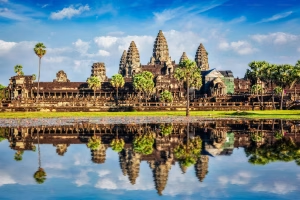
- Major celebrations occur at Angkor Archaeological Park, where the government hosts cultural programs, dance shows, and village markets.
- Homes are cleaned and decorated to welcome the “New Year Angel” (Tevada Chnam Thmey), believed to protect families for the coming year.
Must Read: Cambodia Visa For Indians – Requirements, Process, And Application Guide
2. Pchum Ben (Festival of the Dead)

Pchum Ben is one of Cambodia’s most important Buddhist festivals, dedicated to honoring ancestors from up to seven generations. Families visit pagodas early in the morning to make offerings, believing that departed spirits return during this period to receive merit.
When It’s Celebrated:
15-day festival ending on the 15th day of the lunar month of Photrob (usually in late September or early October), the final three days, known as Ben Thom, are the most significant.
Why It’s Celebrated:
To offer food and merit to ancestors who cannot receive offerings at other times of the year, ensuring spiritual peace and blessings for the living family.
Highlights of the Festival:
- Early morning rituals where families offer rice balls (Bay Ben) and traditional foods to monks who represent ancestors.
- Pagodas hold chanting ceremonies throughout the night during Ben Thom to guide wandering spirits.
- Major pagodas like Wat Phnom, Wat Ounalom, Wat Langka, and provincial pagodas experience large crowds.
- Rituals include creating sand stupas, lighting candles, and offering garments for monks.
- Rural communities prepare special foods such as nom ansom and nom krok for distribution.
Must Read: Cambodia Visa Extension for Indians
3. Water Festival (Bon Om Touk)

The Water Festival, known as Bon Om Touk, is one of Cambodia’s largest national events. It marks the reversal of the Tonle Sap River’s flow, a natural phenomenon unique to Cambodia. The festival also celebrates the country’s historical naval strength and the end of the rainy season.
When It’s Celebrated:
Over three days in November, coinciding with the full moon of the Buddhist month Kadeuk.
Why It’s Celebrated:
To honor the river’s importance, celebrate the annual reversal of the Tonle Sap River, and pay respect to Cambodia’s ancient naval forces that protected the Khmer Empire.
Highlights of the Festival:
- Dragon boat races on the Tonle Sap River with over 300+ teams representing provinces across Cambodia.
- Nightly fireworks displays and illuminated floating lanterns along Sisowath Quay.
- The Sampeah Preah Khe ceremony, where royal barges pass the riverfront in a formal procession.
- Street celebrations with food stalls offering grilled seafood, sweet sticky rice, and palm desserts.
- Phnom Penh becomes the main center, but celebrations are also observed in Kampong Cham, Battambang, and Siem Reap.
4. Royal Ploughing Ceremony
The Royal Ploughing Ceremony is an ancient Khmer ritual held to mark the official start of Cambodia’s rice-growing season. Presided over by royal representatives, the ceremony uses sacred oxen to predict the country’s agricultural prospects for the coming year.
When It’s Celebrated:
Annually, in May, at the beginning of the planting season, based on the royal calendar.
Why It’s Celebrated:
To bless the agricultural year, ensure a successful rice harvest, and symbolically guide farmers across the country.
Highlights of the Festival:
- The King or appointed royal officials perform a ceremonial ploughing of the field using traditional wooden ploughs.
- Two sacred oxen are presented with trays of offerings, rice, corn, beans, grass, water, and alcohol; their choice of food is interpreted as predictions for rainfall, crop yield, and overall agricultural prosperity.
- Royal Brahmin priests conduct rituals, chants, and traditional blessings according to ancient Khmer rites.
- The ceremony takes place at Veal Preah Meru (Royal Parade Ground) near the Royal Palace in Phnom Penh.
Must Read: Cambodia Visa Photo Requirements for Indians 2026
5. Visak Bochea

Visak Bochea is one of Cambodia’s most sacred Buddhist festivals, marking the birth, enlightenment, and passing (Parinirvana) of Buddha. Pagodas across the country hold rituals, processions, and offerings, and thousands of devotees gather for merit-making.
When It’s Celebrated:
On the full moon of the month of Visakha (usually in May), according to the Buddhist lunar calendar.
Why It’s Celebrated:
To honor the three major events in Buddha’s life and reflect on Buddhist teachings of compassion, morality, and wisdom.
Highlights of the Festival:
- Candlelight processions (Wien Tien), where devotees walk around pagodas three times carrying candles, incense, and lotus flowers.
- Monks lead chanting, Dhamma teachings, and scripture recitations throughout the day.
- Offerings of food, robes, and flowers are made at pagodas such as Wat Phnom, Wat Ounalom, Wat Langka, and pagodas in the provinces.
- Devotees release birds and fish as symbolic acts of compassion.
6. Meak Bochea

Meak Bochea is a major Buddhist festival in Cambodia commemorating the day when 1,250 enlightened disciples gathered spontaneously to hear Buddha deliver key teachings, without prior summons. It is considered a day of purity, discipline, and reflection in the Buddhist calendar.
When It’s Celebrated:
On the full moon of the month of Meakh (usually in February), according to the Buddhist lunar calendar.
Why It’s Celebrated:
To honor Buddha’s teaching of the Ovada Patimokkha, the core principles of avoiding evil, doing good, and purifying the mind.
Highlights of the Festival:
- Wien Tien (candlelit procession) around pagodas, similar to Visak Bochea but with a focus on Buddha’s early teachings.
- Large prayer gatherings at major temples such as Wat Phnom, Wat Ounalom, and Wat Botum.
- Devotees offer food, robes, candles, and incense to monks as acts of merit-making.
- Monks chant the Patimokkha, the code of monastic discipline, in a formal recitation ceremony.
- Many Cambodians observe Uposatha Day practices, avoiding meat, alcohol, and entertainment to keep the mind clear.
7. Angkor Festival

The Angkor Festival is a major cultural event held in Siem Reap, showcasing Khmer classical dance, theater, music, and historical re-enactments on stages set near the Angkor temple complex. The festival highlights the artistic heritage of the Khmer Empire and promotes cultural preservation.
When It’s Celebrated:
Annually, in December, with multi-day programs scheduled by the Ministry of Culture and Fine Arts.
Why It’s Celebrated:
To promote Cambodian performing arts, celebrate Khmer heritage, and support cultural tourism around the Angkor Archaeological Park.
Highlights of the Festival:
- Performances of Apsara dance, Lakhon Khol (masked dance), and traditional Khmer orchestra music.
- Large open-air stages were built near Angkor Wat, Bayon Temple, or the Angkor Thom South Gate for evening shows.
- Historical dramas depicting scenes from the Reamker (Cambodian Ramayana) and stories from Angkor-era kings.
- Participation from international artists and cultural delegations makes it a globally recognized festival.
- Food stalls offering local Siem Reap cuisine, including kuy teav, num banh chok, grilled fish, and palm desserts.
8. Cambodian Independence Day
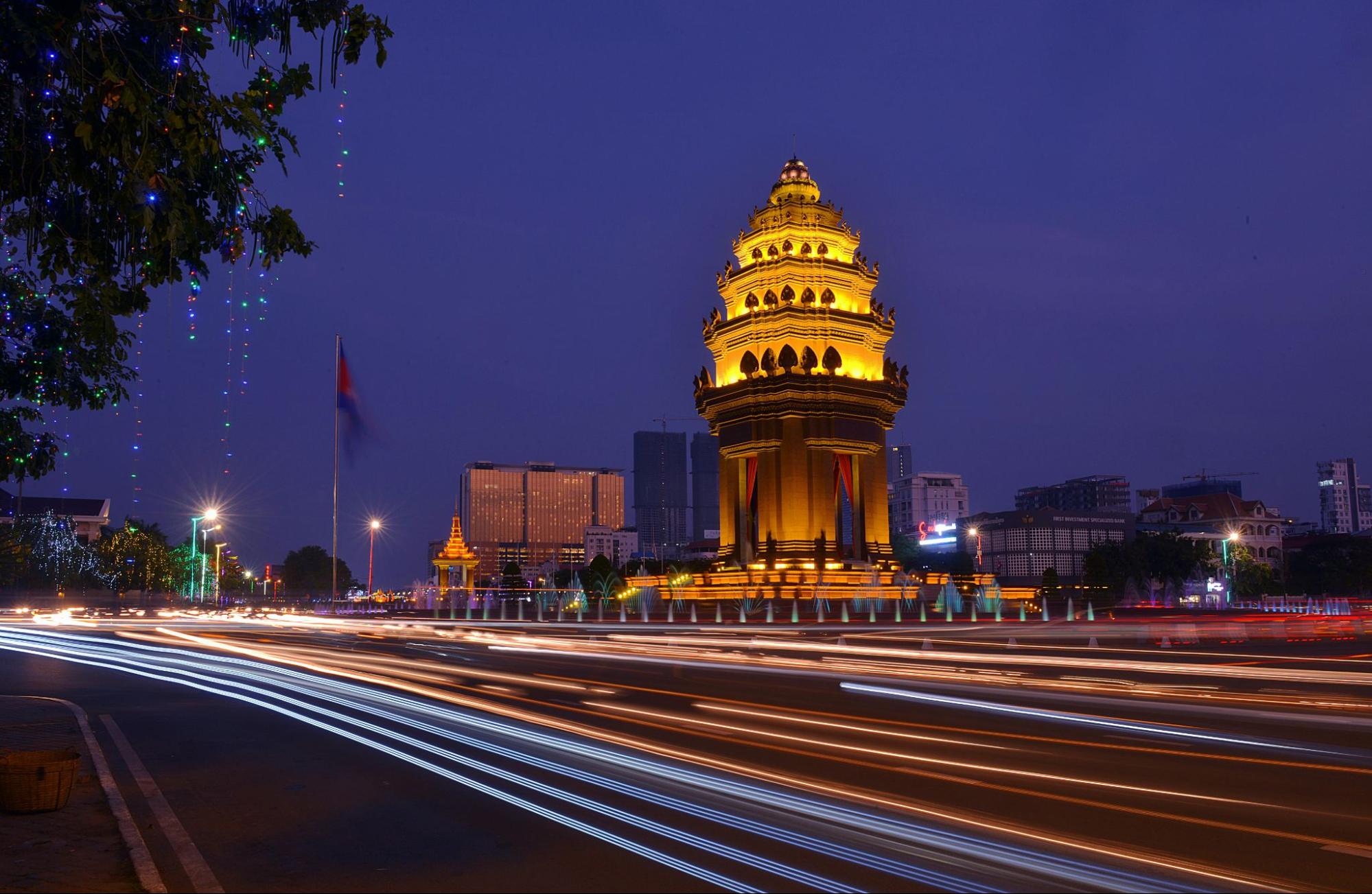
Cambodian Independence Day marks the country’s liberation from French colonial rule on 9 November 1953. The day honors King Norodom Sihanouk, who led the independence movement, and celebrates Cambodia’s national identity with official ceremonies and public events.
When It’s Celebrated:
Every year, 9 November is a national public holiday.
Why It’s Celebrated:
To commemorate Cambodia’s regained sovereignty and pay tribute to King Norodom Sihanouk’s leadership in securing independence.
Highlights of the Festival:
- A large national parade at the Independence Monument in Phnom Penh was attended by government leaders, military units, students, and cultural groups.
- Royal wreath-laying ceremony at the Independence Monument to honor those who fought for freedom.
- Evening fireworks launched over the Tonle Sap River near the Royal Palace.
- National flags are displayed across public buildings, homes, and streets.
- Schools and institutions hold educational programs about Cambodian history and independence.
9. Sea Festival

The Sea Festival is a national coastal tourism event held annually in rotation across Cambodia’s seaside provinces. It promotes beach culture, water sports, and the economic development of coastal cities such as Sihanoukville, Kep, Kampot, and Koh Kong.
When It’s Celebrated:
Every December, the host city changes each year among Cambodia’s four coastal provinces.
Why It’s Celebrated:
To highlight Cambodia’s coastline, promote domestic and international tourism, and showcase the country’s water sports and maritime culture.
Highlights of the Festival:
- Jet ski competitions, kayak races, beach volleyball, sailing, and kitesurfing are organized along the coast.
- Opening parade featuring cultural teams, athletes, and local performers from all coastal provinces.
- Concert stages hosting Khmer pop music, traditional dance groups, and LED night shows.
- Coastal food stalls serving fresh seafood such as grilled squid, crab from Kep, shrimp, oysters, and Cambodian beach snacks.
- Tourism exhibitions featuring coastal development projects, island tour promotions, and diving packages.
Must Read: Indian eVisa for Cambodian Citizens in 2026
10. Chinese New Year

Chinese New Year is widely celebrated in Cambodia by the country’s Chinese-Khmer communities, especially in Phnom Penh, Sihanoukville, Battambang, and Kampot. The festival includes temple worship, lion dances, family feasts, and rituals for good fortune in the coming lunar year.
When It’s Celebrated:
Between late January and mid-February, based on the Chinese lunar calendar.
Why It’s Celebrated:
To welcome the Lunar New Year, honor ancestors, and seek blessings for prosperity, health, and protection.
Highlights of the Festival:
- Lion and dragon dance performances in Phnom Penh’s Chinatown (O’Russey Market area) and major shopping districts.
- Families visit Chinese temples such as Wat Phnom Chinese Shrine, Leng Neak Ta Temple, and Chinatown Teochew Associations to offer incense, fruits, and paper offerings.
- Businesses distribute ang pao (red envelopes) and prepare offerings to household deities.
- Traditional foods like char siu, steamed fish, turnip cake, dumplings, and sweet rice cakes (nian gao) are prepared at home.
- Markets sell lanterns, firecrackers, traditional sweets, and zodiac-themed decorations.


FAQs
What are the most popular festivals in Cambodia?
Khmer New Year, Pchum Ben, and the Water Festival are the most widely celebrated. They represent Cambodian culture, tradition, and spirituality.
When is the Khmer New Year celebrated?
Khmer New Year takes place from 13–16 April. It marks the end of the harvest season and the start of the traditional Khmer calendar year.
Is Cambodia safe during festival celebrations?
Yes, Cambodia remains safe and welcoming during festivals. However, visitors should be mindful of large crowds at major events.
Which festival is best for tourists?
The Water Festival, Khmer New Year, and Angkor Festival are the most exciting festivals for tourists due to their performances and cultural activities.
What is the biggest Buddhist festival in Cambodia?
Visak Bochea is the most important Buddhist festival, honoring Buddha’s birth, enlightenment, and passing.
Do rural communities celebrate unique festivals?
Yes, festivals such as Bon Dalien, Bon Prodal, and Bon Pka Pring highlight rural traditions and farming culture.
What is the best time to visit Cambodia for festivals?
November to April is the best season to experience Cambodia’s major festivals and enjoy pleasant weather.