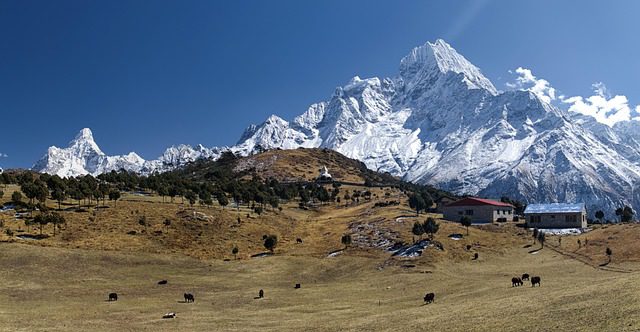
Nepal’s rich cultural and architectural heritage is beautifully preserved through its historical places and ancient landmarks. From the lively Durbar Squares of Kathmandu to the serene Buddhist stupas scattered across the valleys, each site reveals a chapter of the country’s glorious past.
Many historical sites in Nepal reflect the incredible artistry of Newari craftsmanship evident in detailed wood carvings, ornate metalwork, and intricate stone sculptures that have withstood earthquakes and centuries of change.
For travelers seeking to explore historical landmarks in Nepal, the country offers a journey through living history — where every temple, palace, and monument narrates timeless stories of kings, gods, and daily life. Whether you’re wandering through ancient places in Nepal like Bhaktapur or marveling at the spiritual calm of Swayambhunath, these historical sights in Nepal promise an unforgettable cultural experience.
Suggested Read: How To Check Nepal Entry Requirements For Indians
The historical places featured in this guide represent nearly 2,000 years of Nepalese history. Most of these famous historical places in Nepal are located in the Kathmandu Valley, making them easily accessible for visitors with limited time.
However, sites like Lumbini, Gorkha, and Palpa offer compelling reasons to venture beyond the capital region.
1. Kathmandu Durbar Square

Located in the vibrant heart of Kathmandu, Kathmandu Durbar Square is among the most iconic historical landmarks in Nepal, reflecting the grandeur of the country’s royal past. Once the residence of Nepal’s royal family until the 19th century, this UNESCO World Heritage Site offers visitors an enchanting look into centuries of history and tradition.
The square is adorned with intricately designed palaces, courtyards, and temples — many of which were built during the Malla period (12th–18th centuries). For anyone exploring ancient places in Nepal, Kathmandu Durbar Square remains a must-visit attraction that captures the artistic brilliance and cultural depth of the capital city.
Highlights:
- Kumari Ghar, home to Nepal’s living goddess, a young girl believed to be the incarnation of the goddess Taleju
- Kasthamandap, a 7th-century wooden building said to be constructed from a single tree
- Taleju Temple, the tallest temple in the square at 35 meters high
- Nasal Chowk courtyard where Nepalese kings were once crowned
- Numerous pagoda-style temples with multi-tiered roofs
- Intricate wood carvings depicting Hindu deities and mythological scenes
- Hanuman Dhoka Palace Museum showcasing royal artifacts
Address: Kathmandu, Nepal
Timings: 7:00 AM to 7:00 PM daily
Fees: NPR 1000 (approximately Rs. 625) for foreign tourists; NPR 150 (approximately Rs. 94) for SAARC country visitors, including Indians
Suggested Read: Nepal with Kids
2. Pashupatinath Temple

Pashupatinath Temple stands as one of the most sacred historical temples in Nepal for Hindus. Located on the banks of the Bagmati River, this temple complex dates back to 400 CE, though the current main temple was built in the 17th century.
The site attracts thousands of devotees daily, especially during festivals like Maha Shivaratri.
Highlights:
- Main pagoda-style temple with gold-plated roof dedicated to Lord Shiva
- Cremation ghats along the Bagmati River where Hindu funeral rituals take place
- Panch Deval (five temples) complex
- Numerous smaller shrines dedicated to various Hindu deities
- Guhyeshwari Temple nearby, dedicated to Shiva’s consort Parvati
- Daily rituals and aarti ceremonies performed by priests
- Large Nandi (bull) statue facing the main temple
- Ashrams where sadhus (holy men) reside
Address: Pashupati Nath Road, Kathmandu, Nepal
Timings: 4:00 AM to 9:00 PM daily (inner sanctum accessible only to Hindus)
Fees: NPR 1000 (approximately Rs. 625) for foreign tourists; free for Indian nationals with valid ID proof
Suggested Read: Solo Travel in Nepal
3. Boudhanath Stupa

Boudhanath Stupa stands as one of the largest and most revered historical landmarks in Nepal, drawing pilgrims and travelers from around the world. Built in the 6th century CE, this magnificent white dome adorned with Buddha’s all-seeing eyes symbolizes peace and enlightenment.
Recognized as a UNESCO World Heritage Site, Boudhanath is not only a sacred Buddhist monument but also one of the most visited historical sites in Nepal, offering a serene atmosphere for reflection and spiritual connection amidst the bustling energy of Kathmandu.
Highlights:
- Massive white dome with Buddha eyes painted on all four sides
- 13-tiered golden spire representing the path to enlightenment
- Prayer wheels around the base that visitors spin while circumambulating
- Numerous monasteries (gompas) in the surrounding area
- Monks performing rituals and prayers throughout the day
- Tibetan thangka painting shops and handicraft stores
- Butter lamp offerings that visitors can make for blessings
- Spectacular sight when illuminated in the evenings
Address: Boudha, Kathmandu, Nepal
Timings: 5:00 AM to 7:00 PM daily
Fees: NPR 400 (approximately Rs. 250) for foreign tourists; NPR 100 (approximately Rs. 63) for SAARC country visitors, including Indians
Suggested Read: Reasons For Nepal Visa Rejection For Indian Nationals
4. Changu Narayan Temple

Changu Narayan is considered one of the oldest buildings in Nepal, dating back to the 4th century. This UNESCO World Heritage Site sits atop a hill near Bhaktapur and is dedicated to Lord Vishnu.
The temple features some of the finest stone, wood, and metal craftsmanship in Nepalese history.
Highlights:
- Ancient stone inscriptions from 464 CE, the oldest discovered in Nepal
- Garuda statue from the 5th century, showing Vishnu’s mount
- Stone sculptures depicting ten incarnations of Lord Vishnu
- Intricate strut carvings showing multi-armed tantric deities
- Small museum displaying historical artifacts
- Panoramic views of Kathmandu Valley from the hilltop
- Traditional Newari village surrounding the temple
- 1,500-year-old stone water spouts still functioning today
Address: Changu Narayan, Bhaktapur, Nepal
Timings: 6:00 AM to 7:00 PM daily
Fees: NPR 300 (approximately Rs. 188) for foreign tourists; NPR 100 (approximately Rs. 63) for SAARC country visitors, including Indians
Suggested Read: Honeymoon in Nepal
5. Patan Durbar Square

Patan Durbar Square is renowned for its stunning display of Newari architecture. This former royal palace complex of the Malla kings features some of the most beautiful historical palaces in Nepal built between the 12th and 18th centuries.
Located just across the Bagmati River from Kathmandu, Patan (also known as Lalitpur) is often called the “City of Beauty” due to its artistic heritage and is considered one of the best historical sites in Nepal.
Highlights:
- Krishna Temple built entirely of stone with 21 gold-plated spires
- Golden Temple (Hiranya Varna Mahavihar) with richly gilded roof and façade
- Patan Museum housed in the former royal palace, displaying religious art
- Mul Chowk, the main ceremonial courtyard
- Sundari Chowk with the elaborately carved Tusha Hiti (sunken water spout)
- Keshav Narayan Chowk with traditional Newari architecture
- Bhimsen Temple dedicated to the god of trade and business
- Ancient bronze gateways and stone sculptures throughout the complex
Address: Patan, Nepal
Timings: 7:00 AM to 7:00 PM daily
Fees: NPR 1000 (approximately Rs. 625) for foreign tourists; NPR 250 (approximately Rs. 156) for SAARC country visitors, including Indians
Suggested Read: Summer in Nepal
6. Bhaktapur Durbar Square

Bhaktapur Durbar Square, also known as Bhadgaon, is the best-preserved durbar square in Nepal. This former royal palace complex showcases medieval Newari town planning and architecture, making it one of the most fascinating historical places in Nepal.
Highlights:
- 55-Window Palace with intricate wooden windows showcasing master craftsmanship
- Golden Gate (Sun Dhoka), considered a masterpiece of Nepalese metalwork
- Nyatapola Temple, a five-story pagoda that survived the 2015 earthquake intact
- Lion’s Gate with stone guardians
- Bhairavnath Temple dedicated to the fearsome form of Lord Shiva
- Pottery Square where traditional pottery-making continues today
- National Art Gallery displaying ancient manuscripts and paintings
- Traditional Newari houses with distinctive brick and woodwork
Address: Bhaktapur, Nepal
Timings: 7:00 AM to 7:00 PM daily
Fees: NPR 1500 (approximately Rs. 938) for foreign tourists; NPR 500 (approximately Rs. 313) for SAARC country visitors, including Indians
Suggested Read: Nepal Visa Photo Requirements for Indians
7. Swayambhunath Stupa (Monkey Temple)

Swayambhunath is an ancient religious complex atop a hill in Kathmandu Valley. Dating back to the 5th century CE, it’s one of the oldest Buddhist sites in Nepal and a UNESCO World Heritage Site.
This sacred place combines elements of both Buddhism and Hinduism, reflecting Nepal’s religious syncretism and making it one of the most important tourist attractions in Nepal.
Highlights:
- White dome stupa with Buddha eyes painted on all four sides
- 13-tiered golden spire representing the stages to enlightenment
- Prayer wheels and colorful prayer flags surrounding the complex
- Resident monkeys considered holy by locals
- Panoramic views of Kathmandu Valley from the hilltop
- Harati Temple dedicated to the goddess of children
- Shantipur Temple, said to house an immortal tantric master
- Numerous shrines and smaller temples dedicated to both Buddhist and Hindu deities
Address: Swayambhu, Kathmandu, Nepal
Timings: 5:00 AM to 7:00 PM daily
Fees: NPR 200 (approximately Rs. 125) for foreign tourists; NPR 50 (approximately Rs. 31) for SAARC country visitors, including Indians
Suggested Read: Festivals in Nepal
8. Lumbini

Lumbini is the birthplace of Gautama Buddha and one of the most sacred pilgrimage sites for Buddhists worldwide. This UNESCO World Heritage Site features ancient ruins, modern temples built by various Buddhist nations, and peaceful gardens.
Highlights:
- Maya Devi Temple marking the exact birthplace of Buddha
- Ashoka Pillar with ancient inscriptions from the 3rd century BCE
- Sacred Garden surrounding the Maya Devi Temple
- Puskarini Pond where Buddha’s mother bathed before giving birth
- World Peace Pagoda, a gleaming white stupa promoting peace
- Monasteries built by different Buddhist countries, each with unique architectural styles
- Lumbini Museum showcasing artifacts related to Buddha’s life
- Meditation centers where visitors can practice mindfulness
Address: Lumbini, Nepal
Timings: 6:00 AM to 6:00 PM daily
Fees: NPR 200 (approximately Rs. 125) for foreign tourists; NPR 100 (approximately Rs. 63) for SAARC country visitors, including Indians
Suggested Read: Is Nepal Safe to Visit
9. Hanuman Dhoka Palace

Hanuman Dhoka Palace is one of the most fascinating historical landmarks in Nepal, serving as the royal residence of the Malla and Shah dynasties from the 16th to the 19th centuries. Located within Kathmandu Durbar Square, this ancient complex offers a deep insight into Nepal’s regal past and architectural brilliance.
Today, the palace functions as a museum showcasing royal artifacts, traditional art, and historical relics making it one of the most significant historical sites in Nepal for travelers eager to explore the legacy of Nepal’s monarchs and cultural evolution.
Highlights:
- Hanuman statue at the entrance, believed to ward off evil spirits
- Nasal Chowk, the ceremonial courtyard where kings were crowned
- Nine-story Basantapur Tower offering views of Kathmandu
- Tribhuvan Museum dedicated to King Tribhuvan (ruled 1911-1955)
- Mahendra Museum showcasing items from King Mahendra’s reign (1955-1972)
- Birendra Museum with personal belongings of King Birendra (1972-2001)
- Mul Chowk, the oldest courtyard in the palace complex
- Sundari Chowk featuring the exquisitely carved royal bath (Tusha Hiti)
Address: Kathmandu Durbar Square, Kathmandu, Nepal
Timings: 8:00 AM to 5:00 PM (closed on Tuesdays)
Fees: NPR 1000 (approximately Rs. 625) for foreign tourists (included in Kathmandu Durbar Square ticket); NPR 150 (approximately Rs. 94) for SAARC country visitors, including Indians
Suggested Read: 21 Must-Try Nepal Famous Foods
10. Gorkha Durbar

Gorkha Durbar is a fort palace complex perched on a hill, representing the birthplace of modern Nepal. It was the seat of the Shah dynasty before they conquered the Kathmandu Valley and unified Nepal in the 18th century.
This historic complex combines elements of both palace and fortress architecture, making it one of the most unique historical forts in Nepal.
Highlights:
- Kalika Temple, the royal temple of the Gorkha kings
- Original palace of King Prithvi Narayan Shah, who unified Nepal
- Gorkha Museum displaying historical artifacts and weapons
- Panoramic views of Himalayan peaks including Manaslu and Annapurna
- Unique architecture blending palace and fortress elements
- Gorakhnath Cave, a sacred site for devotees
- Stone inscriptions documenting historical events
- 1,700 stone steps leading up to the complex (a rigorous climb!)
Address: Gorkha, Nepal
Timings: 10:00 AM to 5:00 PM daily
Fees: NPR 200 (approximately Rs. 125) for foreign tourists; NPR 50 (approximately Rs. 31) for SAARC country visitors, including Indians
11. Kirtipur

Kirtipur is an ancient Newari town that played a significant role in Nepal’s unification history. It resisted King Prithvi Narayan Shah’s forces twice before finally falling to his army in 1767.
Highlights:
- Bagh Bhairav Temple dedicated to the tiger manifestation of Lord Shiva
- Chilancho Stupa, an ancient Buddhist monument
- Uma Maheshwar Temple with panoramic views of Kathmandu Valley
- Ancient city gates marking the original boundaries
- Traditional Newari architecture with distinctive brick and woodwork
- Narrow stone-paved streets lined with traditional houses
- Ancient water spouts (hitis) still used by locals
- Traditional weaving centers producing famous Kirtipur cloth
Address: Kirtipur, Nepal
Timings: Town accessible 24 hours (individual temples have specific timings)
Fees: No entrance fee for the town; some temples may charge a nominal fee
Suggested Read: Winter in Nepal
12. Palpa (Tansen)

Palpa, with its capital Tansen, has significant historical importance as the former capital of the Magar Kingdom and later a Newar city. Located in the western hills, this town features unique architecture blending Newari and Magar influences.
Highlights:
- Tansen Durbar, a former palace now serving as the district administration office
- Amar Narayan Temple, a three-tiered pagoda-style temple from 1807
- Bhagwati Temple dedicated to the goddess Durga
- Ranighat Palace, often called “Nepal’s Taj Mahal,” located by the Kali Gandaki River
- Srinagar Hill offering spectacular views of the Himalayas
- Palpa Museum displaying local artifacts and cultural items
- Traditional Dhaka weaving centers producing famous Nepali textiles
- Maoist civil war historical sites providing insights into recent Nepali history
Address: Tansen, Palpa, Nepal
Timings: Town accessible 24 hours; individual sites have specific timings
Fees: No entrance fee for the town; Palpa Museum charges NPR 100 (approximately Rs. 63) for foreign tourists
Suggested Read: Nepal on a Budget


FAQs
Which are the best places to visit in Nepal?
Top places to visit in Nepal include Kathmandu’s UNESCO sites, Pokhara’s lakes and mountains, Chitwan National Park for wildlife, Lumbini (Buddha’s birthplace), and trekking spots like Everest Base Camp and the Annapurna Circuit.
Which are the best things to do in Nepal?
Top things to do in Nepal include Himalayan trekking, wildlife safaris, cultural city tours, paragliding in Pokhara, rafting, mountain biking, attending festivals, visiting spiritual sites, and exploring local cuisine and crafts.
What is the best time to visit Nepal?
The best time to visit Nepal is autumn (Sept–Nov) for clear skies and views, or spring (Mar–May) for blooms. Visiting historical places in Nepal is great year-round, unlike weather-dependent trekking.
Are there rental and transfer facilities in Nepal?
Yes, Nepal offers rentals like cars with drivers, motorcycles, mountain bikes, and trekking gear. Airport transfers, intercity transport, and ride-sharing apps like Pathao are also available, especially in Kathmandu.
Does Nepal have any historical sites?
Yes, Nepal has many historical sites including seven UNESCO World Heritage Sites like Durbar Squares, Pashupatinath, Boudhanath, Swayambhunath, and Lumbini, along with ancient temples, palaces, and centuries-old settlements across the country.
What is the oldest place in Nepal?
The Changu Narayan Temple is widely regarded as one of the oldest historical sites in Nepal, dating back to the 4th century CE, with inscriptions from 464 CE. It remains the oldest continuously active Hindu temple in the country. Archaeological evidence also shows that the Kathmandu Valley, home to many ancient places in Nepal, has been inhabited for over 11,000 years.
What to wear in Nepal?
When visiting historical places of Nepal, modest attire is recommended. Opt for light, breathable clothing during summer and layered outfits for higher altitudes or winter months. Comfortable walking shoes are essential for exploring historical landmarks in Nepal, and don’t forget sun protection and a rain jacket during the monsoon season.
Is Nepal expensive to visit?
Nepal is one of South Asia’s most budget-friendly destinations. Daily expenses range from ₹1,500 for budget travelers to ₹10,000+ for luxury seekers. Entry to historical sights in Nepal costs between ₹100–1,000, and local transport buses and taxis is affordable and easily accessible.