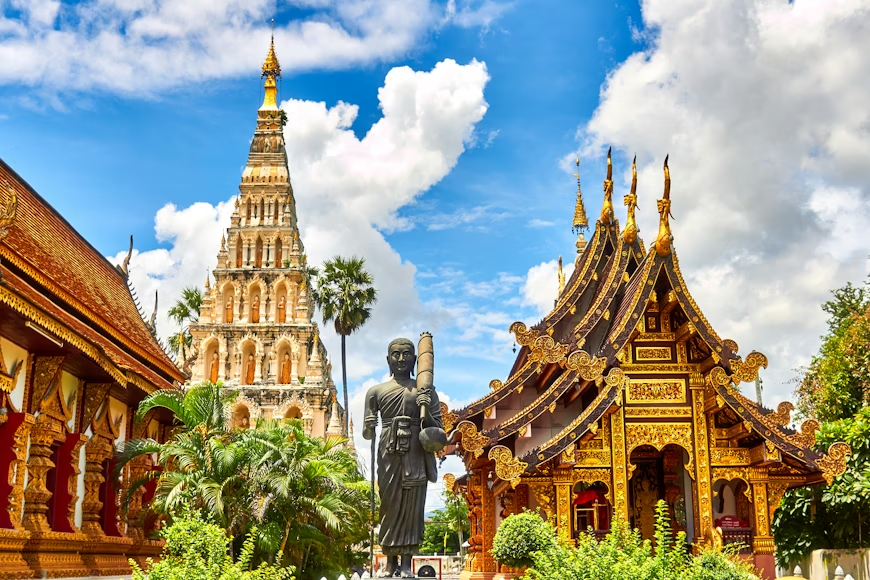
Southeast Asia attracts millions of Indian travelers each year, and Thailand vs. Singapore often becomes the toughest choice. Both destinations sit a short flight away, yet the travel experience differs sharply. Thailand suits relaxed trips with beaches, temples, nightlife, and affordable street food. Singapore offers a clean, modern setting with structured attractions, efficient transport, and higher comfort levels.
This Thailand vs. Singapore travel guide compares Thailand and Singapore across the factors that matter most for travelers. Weather, visa rules, daily spending, sightseeing options, and overall pace are laid out clearly to support a confident destination choice.
Source: Unsplash
- Thailand vs. Singapore: Quick Comparison Overview
- Best Time to Visit Thailand vs. Singapore
- Top Places to Visit in Thailand vs. Singapore
- Thailand vs. Singapore: Activities and Experiences Compared
- Thailand vs. Singapore: Food and Cuisine Differences
- Thailand vs. Singapore: Transportation and Getting Around
- Budget Comparison: Thailand vs. Singapore Costs in 2026
- Thailand vs. Singapore: Visa Requirements for Indian Travellers
- Thailand vs. Singapore: Which Destination Should You Choose?
- FAQs
Thailand vs. Singapore: Quick Comparison Overview

Source: Unsplash
The table below highlights how Thailand and the Maldives compare across key travel factors, making the differences easier to spot at a glance.
| Factor | Thailand | Singapore |
| Visa for Indians | Visa-free for 60 days + TDAC required | Tourist visa needed |
| Flight Duration | 4-5 hours from major cities | 4-6 hours from major cities |
| Currency | Thai Baht (THB); THB 1 =
INR 2.85 |
Singapore Dollar (SGD); SGD 1 = INR 69.99 |
| Daily Budget (Mid-range) | ₹5,000-8,000 | ₹8,000-12,000 |
| Best For | Beaches, temples, nightlife, and budget travel | Urban attractions, family trips, and shopping |
| Language | Thai (English in tourist areas) | English widely spoken |
| Trip Duration | 7-14 days recommended | 4-7 days recommended |
Suggested Read: Thailand’s New Entry Requirements 2025 – Complete & Updated Guide
Best Time to Visit Thailand vs. Singapore

Source: Unsplash
The timing of your trip makes a clear difference to comfort and activities. Seasonal conditions in each destination shape what you can do and when.
Thailand Weather Patterns
Thailand follows three main seasons that influence your travel experience throughout the year.
| Season | Months | Temperature | What to Expect |
| Cool & Dry | November – February | 17°C – 32°C | Clear skies, low humidity, peak tourist season |
| Hot Season | March – May | 30°C – 40°C | Scorching heat, good for beaches, Songkran festival |
| Rainy Season | June – October | 24°C – 32°C | Short afternoon showers, fewer crowds, lower prices |
Northern areas around Chiang Mai turn noticeably cool from December to January, with evening temperatures sometimes falling below 15°C. Southern beaches along the Andaman Coast, including Phuket and Krabi, see their best conditions from November to April. The Gulf Coast around Koh Samui remains relatively dry from January through September, making it suitable for beach stays during much of the year.
Early November works well if you want to attend the Yi Peng lantern festival in Chiang Mai. Hotel availability tightens quickly during this period, so advance bookings matter.
Singapore Weather Patterns
Singapore lies close to the equator, which keeps temperatures fairly consistent throughout the year.
| Season | Months | Temperature | What to Expect |
| Northeast Monsoon | November – January | 24°C – 30°C | Heavy rainfall, festive celebrations |
| Inter-Monsoon | February – April | 25°C – 32°C | Less rain, pleasant weather |
| Southwest Monsoon | May – September | 25°C – 32°C | Moderate rain, occasional haze |
| Inter-Monsoon | October | 25°C – 31°C | Variable weather, fewer tourists |
February through April brings the driest conditions, sitting between the two monsoon periods. June and July feel hotter, yet visitor numbers stay steady due to the Great Singapore Sale and air-conditioned attractions.
Late afternoon visits to Gardens by the Bay work well, especially between 5 PM and 8 PM. The Garden Rhapsody light show runs daily at 7:45 PM and 8:45 PM at Supertree Grove. The best time to visit Thailand vs. Singapore helps you pack appropriately and plan activities that align with local weather patterns.
Suggested Read: Thailand Visa Photo Requirements for Indians
Top Places to Visit in Thailand vs. Singapore

Source: Unsplash
Both countries offer a strong mix of attractions within short travel distances. The sections below cover the must-see spots that draw most visitors.
Must-Visit Places in Thailand
- Bangkok: The capital moves between tradition and modern life with ease. Royal temples like the Grand Palace and Wat Pho sit close to the river, while large markets and malls handle daily commerce. Chatuchak Weekend Market spreads across a vast area, and boat rides along the Chao Phraya reveal quieter neighborhoods away from traffic.
- Phuket: Beach days define Phuket’s appeal. Patong caters to nightlife and water activities, while Kata and Karon offer a calmer shoreline. Old Phuket Town adds character with compact streets, cafés, and restored Sino-Portuguese buildings.
- Chiang Mai: Ancient walls frame a slower-paced city filled with temples. Doi Suthep rises above the town, offering sweeping views. Ratchadamnoen Road turns into a lively walking street each Sunday, lined with crafts, local food, and street performers.
- Ayutthaya: The former royal capital lies a short drive north of Bangkok. Ruined temples and stone Buddhas fill the historic park. Wat Mahathat draws attention for the Buddha head wrapped in tree roots, and bicycles offer an easy way to move between sites.
Must-Visit Places in Singapore
- Marina Bay: This waterfront district defines Singapore’s city image. Marina Bay Sands rises above the bay with its rooftop infinity pool. The ArtScience Museum stands nearby with its lotus-inspired design. Evening walks across the Helix Bridge offer clear views of the illuminated skyline.
- Gardens by the Bay: This large urban park holds hundreds of thousands of plant species. The Supertrees reach heights of up to 50 meters and host a nightly light show. Cloud Forest features a 35-meter indoor waterfall, while the Flower Dome recreates dry climate zones from around the world.
- Sentosa Island: This resort island focuses on entertainment and leisure. Universal Studios Singapore features themed rides and shows. Adventure Cove Waterpark combines slides with marine encounters. Cable cars link the island to Mount Faber on the mainland.
- Jewel Changi Airport: This airport complex doubles as a major attraction. The Rain Vortex drops 40 meters through a glass dome, surrounded by gardens, shops, and restaurants. Many travelers set aside time just to walk through Jewel.
The top places to visit in Thailand vs. Singapore show how differently the two destinations are structured. Thailand spreads experiences across diverse regions, while Singapore delivers most attractions within a single, well-connected city.
Suggested Read: Thailand Visa Appeal for Indians
Thailand vs. Singapore: Activities and Experiences Compared

Source: Unsplash
Thailand supports an active travel pace, with attractions spread across different regions and landscapes. Singapore offers a compact city experience, where major sights sit close together, and daily planning stays simple.
Thailand Adventure Activities
Outdoor activities in Thailand stretch across coastlines and northern hills. Koh Tao and the Similan Islands rank among the region’s top scuba diving and snorkeling areas. Limestone cliffs at Railay Beach draw climbers from around the world.
Northern Thailand offers cooler air and slower days. Treks near Chiang Rai pass rice terraces and hill villages. Ethical elephant sanctuaries near Chiang Mai focus on observation rather than riding. Zip-line parks in Phuket run above dense forest areas.
Singapore Adventure Activities
Adventure activities in Singapore fit neatly into city spaces. Sentosa Island hosts the Skyline Luge, which combines downhill rides with skyline views. The treetop walk at MacRitchie Reservoir places you about 25 meters above the forest floor.
A short ferry ride reaches Pulau Ubin, where kayaking routes pass through mangroves and quiet coastlines. iFly Singapore offers indoor skydiving, while Wave House Sentosa creates artificial surf conditions year-round.
Thailand Water Activities
Island hopping defines coastal travel in Thailand. Boats leave daily from Phuket, Krabi, and Koh Samui toward smaller islands with quieter beaches. Kayak routes through Phang Nga Bay pass sea caves and steep limestone walls.
Traditional long-tail boats move through floating markets near Bangkok, where vendors sell food directly from wooden boats. Koh Phangan hosts monthly full moon beach gatherings that attract international crowds.
Singapore Water Activities
Water-based activities in Singapore stay close to the city. Yacht cruises circle the harbor with Marina Bay as the backdrop. Adventure Cove Waterpark on Sentosa includes a snorkeling lagoon with rays and tropical fish.
The zip line at Mega Adventure Park runs over Siloso Beach. Bumboat rides along the Singapore River pass historic shophouses and modern towers in a single route.
Suggested Read: Thailand Visa Rejection for Indians
Thailand vs. Singapore: Food and Cuisine Differences

Source: Unsplash
Street food defines much of Thailand’s dining culture, with casual meals full of flavor available day and night. Singapore takes a different approach, placing its food culture inside hawker centres where many cuisines operate within a clean, organized space.
Thailand Culinary and Dining Experience
Thai food relies on bold flavors built from chilies, fish sauce, tamarind, lime, and coconut milk. Eating happens everywhere, from busy sidewalks to small family-run shops, with street vendors cooking fresh meals from morning until late at night.
- Pad Thai remains the most common noodle dish, stir-fried with tamarind, peanuts, bean sprouts, and lime
- Green curry and tom yum goong add coconut richness and sour-spicy broth to everyday menus
- Som tam arrives freshly pounded with green papaya, chilies, lime, dried shrimp, and roasted peanuts
- Mango sticky rice finishes meals with coconut-soaked glutinous rice and ripe mango slices
- Street food dishes usually cost ₹80–200, while restaurant meals range between ₹300 and ₹700
- Vegetarian options are available, though many dishes use fish sauce; ask for “jay” food for strict vegetarian preparation
Singapore Culinary and Dining Experience
Singapore’s food culture reflects its multicultural roots, with Chinese, Malay, Indian, and Peranakan traditions meeting at hawker centers across the city. These open-air food courts act as shared dining spaces, where office workers, families, and visitors eat side by side at affordable prices.
- Hainanese chicken rice features poached chicken served with fragrant rice cooked in chicken fat and pandan
- Chilli crab comes coated in a sweet and spicy tomato-based gravy and is often eaten with fried mantou buns
- Laksa serves noodles in a rich coconut curry broth, topped with prawns, fish cake, or chicken, depending on the stall
- Char kway teow arrives smoky from high-heat woks, made with flat noodles, prawns, egg, and Chinese sausage
- Roti prata, an Indian-style flatbread, appears crispy and flaky with curry on the side
- Hawker center meals usually cost between ₹250 and ₹500
- Little India provides strong vegetarian choices, including South Indian thali plates and dosa served throughout the day
Suggested Read: How to Book a Visa Appointment for Thailand?
Thailand vs. Singapore: Transportation and Getting Around

Source: Unsplash
Daily movement feels very different in these two destinations, and it also influences the Thailand vs. Singapore travel cost comparison. Thailand covers a large area, which means travel often involves trains, buses, ferries, or short flights between regions. Singapore fits into a compact city layout, where public transport reaches most attractions quickly, and planning stays minimal.
Thailand Transportation
Thailand offers many transport options at low cost, though longer distances require time and coordination. Bangkok combines modern transit systems with traditional river and street travel.
- BTS Skytrain and MRT Metro run from 6 AM to midnight, with fares around ₹25–60 per ride
- The Rabbit Card allows tap-and-go access across the BTS network
- Tuk-tuks handle short distances for ₹80–150 per ride; fare negotiation happens before boarding
- Metered taxis start near ₹30, though drivers may need reminders to use the meter
- Chao Phraya Express Boats cost ₹12–40 and connect riverside temples, markets, and hotels
- Trains from Bangkok to Chiang Mai take 10–12 hours, with first-class sleeper berths around ₹1,800
- VIP buses reach Phuket and southern beaches overnight for ₹600–1,200
- Domestic flights connect major cities within 1–2 hours for ₹2,000–5,000
- Ferries and speedboats link mainland ports to islands, with Krabi to Koh Phi Phi taking about 90 minutes for ₹600–800
Singapore Transportation
Singapore’s transport system stays fast, clean, and predictable. Public transit handles most daily movement, with ride-hailing covering short gaps.
- MRT trains run from about 5:30 AM to midnight, with fares ranging from ₹80–200
- Public buses extend coverage to areas beyond metro stations
- The Singapore Tourist Pass costs around ₹1,200 for three days of unlimited MRT and bus travel
- Taxi fares start near ₹250–300 for short trips, with higher charges during peak hours
- Grab operates reliably across the city for app-based rides
- Sentosa Express monorail runs from VivoCity for about ₹350, while the Sentosa Boardwalk allows free entry on foot
Suggested Read: Singapore Visa Extension for Indians
Budget Comparison: Thailand vs. Singapore Costs in 2026

Source: Unsplash
This Thailand vs. Singapore holiday comparison breaks down what travelers usually spend over a week in each country.
| Expense Category | Thailand (7 days) | Singapore (7 days) |
| Flights (Round Trip) | ₹15,000 – 25,000 | ₹18,000 – 30,000 |
| Visa | Free (60 days) | ₹1,900 – 2,500 |
| Accommodation (per night) | ₹1,500 – 5,000 | ₹3,000 – 8,000 |
| Food (per day) | ₹800 – 1,500 | ₹1,500 – 3,000 |
| Transport (per day) | ₹200 – 500 | ₹400 – 800 |
| Activities (per day) | ₹500 – 2,000 | ₹1,500 – 4,000 |
| Total Estimated Cost | ₹35,000 – 65,000 | ₹70,000 – 1,20,000 |
If you’re deciding between Thailand vs. Singapore expensive or cheap, Thailand generally comes out ahead. Even at a mid-range level, a week in Thailand usually costs far less than spending the same time in Singapore.
Suggested Read: Singapore Visa Appeal For Indians
Thailand vs. Singapore: Visa Requirements for Indian Travellers

Source: Unsplash
Indian travelers face different entry requirements for these two destinations. Thailand grants visa-free access for short stays, while Singapore requires a tourist visa application before departure.
Thailand Visa Process: Visa-Free Entry (60 days)
Indians receive 60 days of visa-free entry upon arrival in Thailand. You need a passport valid for six months, proof of accommodation, return flight tickets, and 10,000 THB per person in funds. The Thailand Digital Arrival Card (TDAC) became mandatory, and you need to complete this form within 72 hours before your flight.
Singapore Visa Process: Tourist Visa Required
Indian passport holders must apply for a tourist visa before traveling to Singapore. You need a valid passport, a recent photo, a cover letter, a bank statement, and confirmed flight tickets.
The visa allows a 30-day stay, with validity lasting 1–3 months from the issue date. Indians transiting through Singapore to a third country can use the 96-hour Visa-Free Transit Facility (VFTF), provided they hold a valid visa for the US, UK, Australia, or Schengen countries.
Suggested Read: Singapore Visa Photo Size Requirement & Specification Guide
Thailand vs. Singapore: Which Destination Should You Choose?

Source: Unsplash
Your travel style plays the biggest role in this decision. Thailand suits trips with more time, where island hopping, night markets, and relaxed beach mornings fill the schedule without constant budget checks. Singapore fits shorter breaks, where major attractions, climate-controlled malls, and top-tier hawker food come together in a compact city setting.
Costs stay lower in Thailand. Street meals often come in under ₹200, simple beach stays cost far less than city hotels, and long-distance travel remains affordable, even on overnight trains. Singapore requires a higher daily budget, though many travelers value the clean streets, English-friendly environment, and dependable public systems that come with it.
Suggested Read: How To Check Singapore Visa Status In India


FAQs
How many days are enough for Thailand and Singapore?
For Thailand, plan at least 7 days to cover Bangkok and one beach destination. A fuller trip covering northern and southern regions needs 10-14 days. Singapore works well in 4-5 days. You can see all major attractions without rushing. If you combine both, allow 10-12 days total.
Is Thailand cheaper than Singapore for Indian tourists?
Yes, Thailand costs significantly less. Daily expenses in Thailand run ₹3,000-5,000 for mid-range travel. Singapore costs ₹7,000-10,000 per day for a similar experience. Accommodation, food, and activities all cost more in Singapore. However, Singapore offers free entry to many attractions, like the Gardens by the Bay outdoor areas.
Do I need vaccines for Thailand or Singapore?
No mandatory vaccines are required for Indian travelers. However, the WHO recommends Hepatitis A and Typhoid vaccines for both destinations. Thailand also recommends Japanese Encephalitis if you plan rural stays. Carry your vaccination records just in case.
Can I use Indian Rupees in Thailand or Singapore?
Indian Rupees are not accepted in either country. In Thailand, carry Thai Baht. ATMs are everywhere, and exchange counters offer fair rates in tourist areas. Singapore uses Singapore Dollars, though credit cards work almost everywhere. Exchange currency at Changi Airport or in Little India for competitive rates.
Which destination is better for first-time international travelers?
Singapore feels simpler due to English use, efficient transport, and clear systems. Thailand offers more flexibility for lower budgets and varied experiences. The Thailand vs. Singapore choice depends on whether you value affordability and beaches or structure and urban comfort.