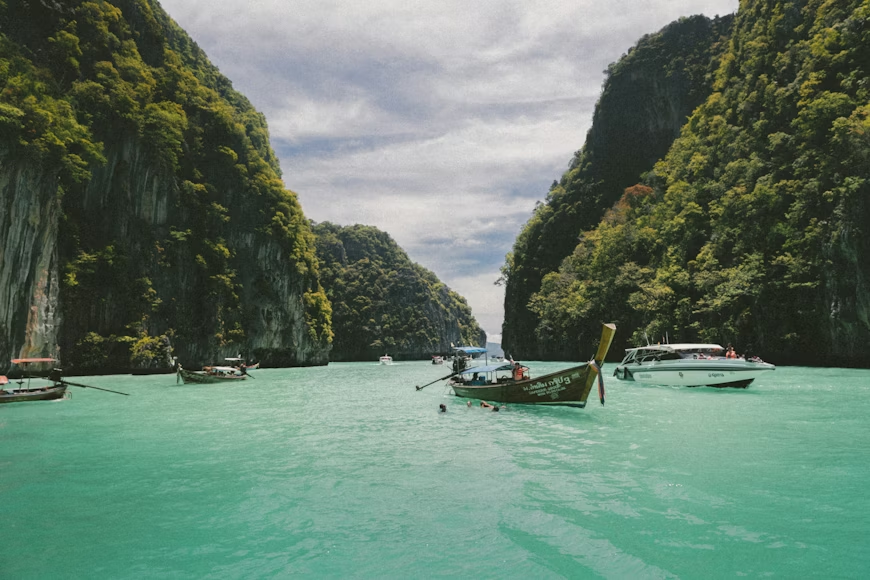
Two destinations often appear on your shortlist when planning a Southeast Asia trip from India. Thailand vs Vietnam turns into a real decision point, especially if this is your first visit to the region. Thailand feels easy with well-organized tourism, island beaches, and lively night markets. Vietnam feels more grounded, shaped by history, river towns, long coastlines, and everyday meals that reflect local life.
Each country offers warmth, safety, and strong value for money, yet the overall travel experience differs in meaningful ways. This travel guide focuses on the details that influence your trip the most. It compares weather, visa rules for Indian passport holders, daily costs, transport, food, and sightseeing pace.
Source: Unsplash
- Thailand vs Vietnam: Quick Comparison Overview
- Best Time to Visit Thailand vs Vietnam
- Top Places to Visit in Thailand vs Vietnam
- Thailand vs Vietnam: Activities and Experiences Compared
- Thailand vs Vietnam: Food and Cuisine Differences
- Thailand vs Vietnam: Transportation and Getting Around
- Budget Comparison: Thailand vs Vietnam Costs in 2026
- Thailand vs Vietnam: Visa Requirements for Indian Travellers
- Thailand vs Vietnam: Which Destination Should You Choose?
- FAQs
Thailand vs Vietnam: Quick Comparison Overview

Source: Unsplash
Money often influences your travel choice, especially when comparing Thailand and the Maldives, as daily expenses and overall trip budgets differ widely. This section breaks down what you typically spend on stays, food, transport, and activities.
| Factor | Thailand | Vietnam |
| Visa for Indians | Visa-free for 60 days+ TDAC required | E-visa needed |
| Flight Duration | 4-5 hours from major cities | 5-6 hours from major cities |
| Currency | Thai Baht (THB); THB 1 =
INR 2.85 |
Vietnamese Dong (VND); VND 1 = INR 0.0034 |
| Daily Budget (Mid-range) | ₹5,000-₹8,000 | ₹3,500-₹6,000 |
| Best For | Beaches, nightlife, temples, and islands | History, landscapes, food tours, trekking |
| Language | Thai (English in tourist spots) | Vietnamese (Limited English) |
| Trip Duration | 7-14 days recommended | 10-14 days recommended |
Suggested Read: Thailand’s New Entry Requirements 2025 – Complete & Updated Guide
Best Time to Visit Thailand vs Vietnam

Source: Unsplash
The weather affects how your days play out in each destination. Seasonal conditions in both countries shape sightseeing, beach time, and overall comfort.
Thailand Weather Patterns
Thailand follows a predictable three-season pattern, which makes trip planning easier and more predictable.
| Season | Months | Temperature | What to Expect |
| Cool & Dry | November – February | 18°C – 32°C | Low humidity, clear skies, peak tourist season |
| Hot Season | March – May | 30°C – 40°C | Intense heat, Songkran festival, fewer crowds |
| Rainy Season | June – October | 25°C – 33°C | Afternoon showers, lush greenery, and lower prices |
Thailand’s weather varies by region, which affects when each area feels most comfortable. The Andaman Coast, including Phuket, Krabi, and Phi Phi, stays mostly dry between November and April. The Gulf Coast, covering Koh Samui and Koh Phangan, sees heavier rain from September through November. Northern Thailand, around Chiang Mai, cools noticeably from December to February, with evenings that may call for a light jacket.
Lower airfare often appears during September and October, with fares dropping by 30-40%. Rainfall during this period usually falls in short afternoon spells, leaving mornings suitable for sightseeing and travel.
Vietnam Weather Patterns
Vietnam extends over more than 1,600 kilometers from north to south, which creates clear climate differences across the country.
| Region | Best Months | Temperature | What to Expect |
| North (Hanoi, Ha Long, Sapa) | March – April, Sept – Nov | 15°C – 30°C | Cool mornings, clear skies, occasional mist |
| Central (Hoi An, Da Nang, Hue) | Feb – August | 22°C – 34°C | Sunny beaches, typhoon risk Sept-Nov |
| South (Ho Chi Minh, Mekong) | Nov – April | 25°C – 35°C | Dry season, warm and humid |
Northern areas near Sapa can drop below 10°C during December and January, especially at night. Central Vietnam faces rough conditions between September and November, when typhoons affect coastal cities. Southern Vietnam stays warm year-round, though May through October brings frequent afternoon showers.
March and April suit travelers covering north, central, and southern regions in one journey, with balanced conditions across the country. The best time to visit Thailand vs Vietnam helps you pack correctly and plan outdoor activities with fewer interruptions.
Suggested Read: Thailand Visa Photo Requirements for Indians
Top Places to Visit in Thailand vs Vietnam

Source: Unsplash
Both nations offer a wide range of places to visit within compact borders. The sections below highlight the destinations that attract the highest number of travelers.
Must-Visit Places in Thailand
- Bangkok: The capital pairs historic temples with modern transport and shopping. The Grand Palace includes Wat Phra Kaew, home to the Emerald Buddha. Wat Pho nearby features the 46-meter reclining Buddha. The BTS Skytrain connects key areas, including Chatuchak Weekend Market, with over 15,000 vendors.
- Phuket: Thailand’s largest island suits beach-focused trips. Patong Beach centers on nightlife and water sports. Kata Beach offers calmer conditions. Old Phuket Town stands out for its colorful Sino-Portuguese buildings and busy street food lanes.
- Chiang Mai: This northern hub sits within 13th-century walls and hosts hundreds of temples. Doi Suthep overlooks the city from a mountain site reached by 309 steps. The Sunday Walking Street market fills Ratchadamnoen Road each week.
- Krabi nearby islands: Limestone cliffs rise from clear waters across this coast. Railay Beach attracts climbers. The Four Island Tour links boat-only beaches. Maya Bay on Phi Phi Leh operates with visitor limits after restoration.
Must-Visit Places in Vietnam
- Ha Long Bay: Nearly 2,000 limestone islands rise from calm green waters. Cruise routes pass through dramatic rock formations. Sung Sot Cave opens into vast chambers filled with stalactites. Kayaking reaches quiet lagoons beyond the main boat paths.
- Hanoi: The capital carries over a thousand years of history. Hoan Kiem Lake anchors daily life at the city center. The Old Quarter’s 36 streets reflect traditional trades. Giang Cafe serves egg coffee, first made here in 1946.
- Hoi An: This former trading port feels preserved in time. Lantern-lit streets glow each evening, especially during full moon nights. The Japanese Covered Bridge dates to the 16th century. Local tailors produce custom clothing within a day.
- Sapa: Terraced rice fields spread across steep hills in the northern highlands. Local markets feature crafts sold by hill communities. Fansipan, the tallest peak in Indochina, now has a cable car for easier access.
A look at the top places to visit in Thailand vs Vietnam highlights clear differences. Thailand focuses on beaches and temples. Vietnam centers on history, mountain regions, and striking coastal formations.
Suggested Read: Thailand Visa Appeal for Indians
Thailand vs Vietnam: Activities and Experiences Compared

Source: Unsplash
A trip through Thailand often revolves around the coast, with islands and tropical waters setting the tone. Vietnam delivers a contrasting experience, pulling travelers toward rugged mountain roads, expansive caves, and elevated regions away from the shoreline.
Thailand Adventure Activities
Thailand’s strongest pull comes from the sea. Koh Tao ranks among the most affordable places worldwide for scuba certification. The Similan Islands offer clear conditions during peak months, with visibility that often reaches 30 meters.
Rock climbers head to Railay Beach, where limestone cliffs rise straight from the water. Zip-line parks near Chiang Mai run above dense forest areas. Ethical elephant centers in northern Thailand focus on observation, feeding, and bathing without riding.
Vietnam Adventure Activities
Vietnam suits travelers who prefer altitude and long routes. Sapa and Ha Giang support multi-day treks through terraced hills. The Ha Giang Loop stands out for sharp bends and wide valley views.
Phong Nha-Ke Bang National Park contains some of the world’s largest caves, including Son Doong. Cycling routes in the Mekong Delta pass orchards, canals, and rural villages.
Thailand Water Activities
Coastal travel in Thailand relies on boat routes. Long-tail boats from Phuket and Krabi reach snorkeling coves and smaller islands within hours. Kitesurfers favor Hua Hin during the February to May wind season. Sunset dinner cruises operate from most major beach towns.
Vietnam Water Activities
Vietnam’s water-based activities stay closer to natural settings. Kayak routes in Ha Long Bay pass between limestone karsts and sheltered lagoons. Mui Ne attracts kitesurfers from November to April. Snorkeling trips from Nha Trang visit offshore reefs, while Phu Quoc and Con Dao offer calmer waters away from mainland crowds.
Suggested Read: Thailand Visa Rejection for Indians
Thailand vs Vietnam: Food and Cuisine Differences

Source: Unsplash
Any Thailand vs Vietnam travel guide should cover food, as meals influence how each day feels on the road. Thai cuisine relies on bold combinations that mix sweet, sour, salty, and spicy flavors in a single dish. Vietnamese food stays lighter, built around fresh herbs, clear broths, rice noodles, and touches shaped by French colonial cooking.
Thailand Culinary and Dining Experience
Thai cuisine is known for strong, layered flavors created with ingredients like chilies, fish sauce, tamarind, lime, and coconut milk. Meals are available everywhere where vendors prepare fresh food daily.
- Pad Thai is the most popular noodle dish, cooked with tamarind, peanuts, bean sprouts, and lime
- Green curry and tom yum goong bring creamy coconut bases and tangy, spicy broths to daily meals
- Som tam is made fresh by pounding green papaya with chilies, lime, dried shrimp, and peanuts
- Mango sticky rice ends meals with sweet coconut rice paired with ripe mango
- Street food generally costs ₹80–₹200, while restaurant dishes range from ₹300 to ₹700
Vietnam Culinary and Dining Experience
Vietnamese food stays light and balanced, built around rice noodles, fresh herbs, and slow-simmered broths. Meals feel clean and aromatic, with French influence showing up in crisp baguettes and strong coffee sweetened with condensed milk.
- Pho serves as the national staple, pairing beef or chicken with fragrant bone broth and rice noodles
- Banh mi fills crusty baguettes with pâté, pickled vegetables, cilantro, and grilled meat
- Bun cha combines charred pork patties with cool vermicelli noodles and baskets of fresh herbs
- Goi cuon wraps shrimp, pork, and greens in translucent rice paper for a fresh, light bite
- Street food meals usually cost ₹100–₹250, while sit-down restaurants charge around ₹400–₹800
- Vegetarian food is easy to find, especially near Buddhist temples and pagodas
Suggested Read: Vietnam Visa Photo Size Requirement & Specification Guide
Thailand vs Vietnam: Transportation and Getting Around

Source: Unsplash
Daily travel feels very different in these two countries, and the Thailand vs Vietnam travel cost difference becomes noticeable once you start moving between places. Thailand relies on organized rail systems, metered taxis, and scheduled ferries that suit visitors well. Vietnam depends more on motorbikes, app-based rides, and long-distance buses that pass through varied terrain.
Thailand Transportation
Thailand offers structured, visitor-friendly transport across cities, beaches, and islands. Urban travel stays efficient, while longer routes connect smoothly by air, rail, or road.
- The BTS Skytrain and MRT Metro run daily from 6 AM to midnight, with ticket prices usually between ₹25 and ₹60 per trip
- A Rabbit Card allows quick, contactless travel throughout the BTS system
- Tuk-tuks are commonly used for short trips, costing about ₹80–₹150, with prices fixed before the ride begins
- Meter taxis start at roughly ₹30, though some drivers may need to be asked to switch on the
- Chao Phraya Express Boats charge around ₹12–₹40 and provide transport between riverside attractions and
- Domestic flights connect Bangkok to Phuket in about 1.5 hours and to Chiang Mai in nearly 1 hour, with fares ranging from ₹2,000 to ₹5,000
- Night trains to Chiang Mai include sleeper options priced between ₹800 and ₹1,800
- VIP buses operate on most long-distance routes, with tickets generally costing ₹400–₹1,000
- Ferries and speedboats serve island routes, such as Krabi to Koh Phi Phi, which takes around 90 minutes and costs about ₹500–₹800
Vietnam Transportation
Vietnamese transport centers on two-wheel travel and flexible long-distance options. Ride-hailing apps bring structure to city movement, while buses and trains handle cross-country routes.
- Grab operates in major cities with upfront pricing and app-based booking
- Xe om motorbike taxis cost about ₹50–₹100 for short neighborhood trips
- City buses charge ₹20–₹50, though route information often appears only in Vietnamese
- Cyclos in Hanoi and Hoi An offer slow rides through historic districts
- Domestic flights connect Hanoi and Ho Chi Minh City in about 2 hours for ₹2,000–₹5,000
- Open bus tickets support multi-city travel along set routes for ₹3,000–₹5,000
- Overnight sleeper buses reach Sapa from Hanoi in around 6 hours for ₹400–₹600
- The Reunification Express train runs the length of the country in roughly 33 hours, with sleeper berths priced between ₹1,500 and ₹3,000
Suggested Read: How To Check Vietnam Visa Status In India
Budget Comparison: Thailand vs Vietnam Costs in 2026

Source: Unsplash
This Thailand vs Vietnam holiday comparison shows what travelers usually spend over a week in both countries.
| Expense Category | Thailand (7 days) | Vietnam (7 days) |
| Flights (Round Trip) | ₹15,000 – ₹25,000 | ₹18,000 – ₹35,000 |
| Visa | Free (60 days) | ₹2,000 – ₹4,400 |
| Accommodation (per night) | ₹1,500 – ₹5,000 | ₹800 – ₹3,500 |
| Food (per day) | ₹800 – ₹1,500 | ₹400 – ₹1,000 |
| Transport (per day) | ₹200 – ₹500 | ₹150 – ₹400 |
| Activities (per day) | ₹500 – ₹2,000 | ₹400 – ₹1,500 |
| Total Estimated Cost | ₹40,000 – ₹70,000 | ₹30,000 – ₹55,000 |
In the Thailand vs Vietnam expensive or cheap comparison, Vietnam often comes out ahead for affordability, with everyday costs generally lower than in Thailand.
Suggested Read: Vietnam Visa Rejection for Indians: Top Reasons and Solutions
Thailand vs Vietnam: Visa Requirements for Indian Travellers

Source: Unsplash
These two destinations have different entry requirements for Indian passport holders. Thailand grants visa-free access for short tourism stays, while Vietnam requires an e-visa application before departure.
Thailand Visa Process: Visa-Free Entry (60 days)
Indian citizens get a 60-day visa-free stay on arrival in Thailand. Travelers must carry a passport valid for at least six months, confirmed accommodation details, return flight tickets, and proof of 10,000 THB per person. The Thailand Digital Arrival Card (TDAC) is now required and must be filled out within 72 hours before departure.
Vietnam Visa Process: E-Visa Required (90 days)
Indian passport holders must apply for an e-visa before traveling to Vietnam. Print your approved e-visa before departure, as airlines may check it at boarding.
Phu Quoc Island offers a separate visa-free option for up to 30 days if you fly directly from outside Vietnam and depart from Phu Quoc without visiting the mainland. This exemption does not apply if you enter through Hanoi, Ho Chi Minh City, or any other mainland port first.
Suggested Read: Vietnam Visa Extension for Indian Citizens
Thailand vs Vietnam: Which Destination Should You Choose?

Source: Unsplash
The better choice depends on how you like to travel. Thailand suits travelers who value easy beach access, organized tourist areas, and nightlife that stretches well past midnight. Vietnam appeals to those drawn to mountain routes, history-focused museums, and street food stalls where menus often appear only in Vietnamese.
Daily spending generally stays lower in Vietnam. Dishes like pho and banh mi cost less than pad Thai or green curry, guesthouses remain cheaper outside major hubs, and long-distance buses cover large distances at modest prices.
A combined trip works well within two weeks. Five or six days in Bangkok and one island in Thailand set the pace, followed by a short flight to Hanoi. Routes then flow to Ha Long Bay, south to Hoi An, and onward to Ho Chi Minh City in Vietnam.
Suggested Read: Comprehensive Guide to Vietnam Visa for Indians: Requirements, Process & Tips


FAQs
How many days should I spend in Thailand and Vietnam?
A week works well for either country if you focus on one or two regions. Thailand’s highlights can fit into 7-10 days, covering Bangkok plus one island destination. Vietnam benefits from 10-14 days due to longer distances between Ha Long Bay, Hoi An, and Ho Chi Minh City. Combining both countries comfortably needs at least two weeks.
Is Vietnam safer than Thailand for solo travelers?
Both countries rank among the safest destinations in Southeast Asia for solo travelers. Petty theft, like bag snatching, exists in tourist areas of both nations. Vietnam sees less rowdy nightlife behavior than Thailand’s party islands. Women traveling alone report positive experiences in both countries. Standard precautions apply everywhere.
Can vegetarians find food easily in both countries?
Vietnam handles vegetarian food better due to Buddhist influence. Many restaurants offer “com chay” (vegetarian rice plates). Thailand uses fish sauce and shrimp paste in most dishes, making strict vegetarian eating trickier. Both countries have Indian restaurants in tourist areas.
Which country has better beaches?
Thailand wins on beach variety and quality. Phuket, Krabi, Koh Samui, and Koh Phi Phi offer some of Asia’s finest beaches with clear water and soft sand. Vietnam has fewer developed beach destinations, though Phu Quoc, Nha Trang, and Da Nang provide good options. For a pure beach holiday, Thailand is the stronger choice.
Should I visit Thailand or Vietnam first as a beginner traveler?
Thailand is usually the easiest first international trip for beginners. English works well in tourist areas, transport systems feel straightforward, and visa-free entry keeps planning simple. Vietnam suits tighter budgets but needs more adjustment, so for Thailand vs Vietnam, most first-time travelers find Thailand more comfortable to start with.