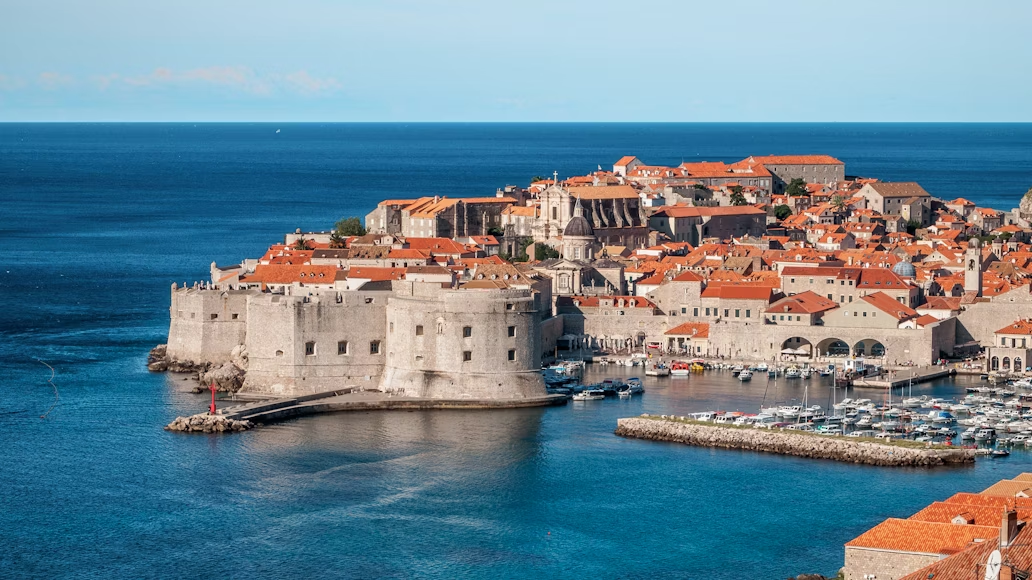
Dubrovnik is a coastal city in southern Croatia known for its old stone walls and red-roofed buildings facing the Adriatic Sea. The historic center is compact and walkable, with limestone streets, churches, small squares, and sea views at every turn. The things to do in Dubrovnik include walking the city walls, exploring the old town, visiting nearby beaches, and taking short boat trips.
This guide focuses on the main things to do in Dubrovnik, Croatia, that travelers usually plan during a visit. It includes details to help you move easily between places. You can adjust your time around history, coastal scenery, or film locations, depending on your interests.
1. Dubrovnik City Walls

Walls of Dubrovnik define the city’s history. The stone ramparts form a full loop of nearly two kilometers around the Old Town and rise up to 25 meters in some sections. The views from the top stretch across red rooftops on one side and the Adriatic Sea on the other. This walk stands at the top of the things to do in Dubrovnik for first-time visitors.
The narrow streets and small courtyards appear far below as you move along the path. Early morning or late afternoon hours feel more comfortable due to softer light and cooler temperatures.
- Google Rating: 4.6/5
- Location: Gundulićeva poljana 2, 20000, Dubrovnik, Croatia
- Timings: Daily 8:00 AM – 6:00 PM
- Price: €35.00/ INR 3780 for adults; Set aside 2 hours for the round-trip circuit
Suggested Read: How to Book a Visa Appointment for Croatia
2. Stradun (Placa)

Stradun runs straight through the Old Town, linking the Pile Gate with the Old Port of Dubrovnik. This wide limestone street forms the city’s main walking route and remains a core part of the things to do in Dubrovnik, Croatia. Baroque buildings line both sides, rebuilt after the 1667 earthquake, which gives the street its clean and balanced look.
Cafés, small shops, and landmarks like Onofrio’s Fountain sit along the way. The locals and visitors often walk here in the evening during the traditional korzo stroll.
- Google Rating: 4.8/5
- Location: Old Town Center, Dubrovnik, Croatia
- Timings: Open 24/7
- Price: Free entry; Set aside roughly 1 hour to walk the length, enjoy the architecture, and browse the side streets
Suggested Read: Croatia Visa Extension for Indians
3. Mount Srđ & Dubrovnik Cable Car

Mount Srđ provides the widest view over Dubrovnik and the Dalmatian coast. A ride on the bright orange cable car takes you up about 405 meters in a few minutes. From the top, the Old Town appears small and tightly packed, surrounded by clear blue water. This trip counts as one of the fun things to do in Dubrovnik, especially for first-time visitors.
The sunset brings softer light and strong colors across the sky, which makes this spot popular in the evening and places it high among the top things to do in Dubrovnik. The summit also includes the Museum of the Homeland War inside Fort Imperial.
- Google Rating: 4.8/5
- Location: 20000, Pile-Kono, Dubrovnik, Croatia
- Timings: Daily 9:00 AM – 11:00 PM
- Price: €27.00/ INR 2916 for a round-trip adult ticket; Set aside 1.5 hours to explore the fort and enjoy the views
4. Lokrum Island

Lokrum Island lies about a 15-minute boat ride from the Old Port and offers a quiet break from the city. The dense greenery, walking paths, and rocky swimming spots cover the island. Many visitors come to swim in the small salt lake known as the “Dead Sea” or walk through gardens where peacocks move freely. This trip ranks high among the top things to do in Dubrovnik for tourists who want nature close by.
A former Benedictine monastery stands near the center of the island, and fans of television often stop to see the Iron Throne display linked to Game of Thrones. The shaded pine paths and sea access make it easy to spend several relaxed hours here.
- Google Rating: 4.6/5
- Location: Croatia
- Timings: Daily 9:00 AM – 7:00 PM (April–October). Ferries typically depart every 30 minutes during peak season; the last ferry back to the mainland usually leaves 15 minutes before the reserve closes.
- Price: €30.00/ INR 3240 for adults; Set aside 3–5 hours.
Suggested Read: Croatia Visa Appeal For Indians
5. Lovrijenac Fortress (St. Lawrence Fortress)

Fort Lovrijenac stands on a 37-meter cliff just outside the western city walls and is often called Dubrovnik’s Gibraltar. Thick stone walls and open courtyards show how the fort once protected the city from Venetian attacks. A carved inscription above the entrance reads, “Liberty is not well sold for all the gold in the world.”
The fort now hosts theater performances and appears on screen as the Red Keep in Game of Thrones. Terraces at the top look back toward the city walls and the sea, which makes this stop popular for photos.
- Google Rating: 4.6/5
- Location: Ul. od Tabakarije 29, Dubrovnik, Croatia
- Timings: Daily 9:00 AM – 3:00 PM
- Price: Included with the Walls of Dubrovnik ticket; roughly €15.00/ INR 1620 if purchased separately; Set aside 1 hour for exploring the courtyards and terraces
6. Rector’s Palace

Rector’s Palace once served as the government seat of the Republic of Ragusa. Gothic and Renaissance elements shape the building, with a graceful atrium at its center. The rooms inside include former state offices and old prison cells, which give a clear picture of how the city was governed. This site holds a strong place among the must see places in Dubrovnik for visitors interested in history.
Today, the palace operates as the Cultural History Museum, displaying furniture, clothing, documents, and coins from different periods. Stone carvings and balanced design details stand out throughout the structure. The inner courtyard often hosts classical music concerts thanks to its natural acoustics.
- Google Rating: 4.2/5
- Location: Pred Dvorom 3, Dubrovnik, Croatia
- Timings: Tuesday to Sunday 9:00 AM–4:00 PM, closed Monday
- Price: €15.00/ INR 1620 for a single ticket; Set aside roughly 1.5 hours to explore the museum and courtyard
7. Buža Bars (Cliff Bars)

Buža Bar refers to small bars reached through narrow openings in the southern city walls. Simple terraces sit directly on the cliffs, with open views across the Adriatic Sea. A drink here places you right above the water, where sunset colors and occasional cliff jumpers draw steady attention.
Two spots operate under the same name: Buža I and Buža II. Both entrances are easy to miss unless you know where to look, which keeps the atmosphere relaxed and unpolished. The time spent here fits well into the things to do in Dubrovnik today, especially during late afternoon hours when the light softens, and the sea stays calm.
- Google Rating: 4.0/5
- Location: Crijevićeva ul. 9 (Look for “Cold Drinks” signs on the wall)
- Timings: Daily 10:00 AM – 8:00 PM
- Price: Free entry, drinks typically range upto €12.00/ INR 1296; Set aside roughly 1–2 hours to enjoy a drink and the sunset views
Suggested Read: Croatia Visa Photo Requirements for Indians
8. Banje Beach

Banje Beach sits just outside the Old Town near Ploče Gate and offers direct views of the city walls and Lokrum Island. Clear water and a pebble shoreline make swimming popular here.
Many people stop here after sightseeing to rest and cool down. In the evening, the beach club shifts into a lively spot for drinks and music. Banje Beach remains a well-known part of the things to do in Dubrovnik, Croatia for travelers who enjoy both swimming and nightlife.
- Google Rating: 4.0/5
- Location: Ul. Frana Supila, Dubrovnik, Croatia
- Timings: The beach is accessible 24/7
- Price: Free entry to the public area; Set aside roughly 2–3 hours for swimming and relaxation
9. Franciscan Monastery & Old Pharmacy

Franciscan Monastery offers a quiet break inside the Old Town. The complex includes a calm cloister with a small garden and a long arcade of twin columns. One of the main draws is the monastery pharmacy, which has operated continuously since 1317 and ranks among the oldest in the world.
The rooms inside the monastery function as a small museum, displaying religious objects, early medical tools, and rare books. The setting feels peaceful and unhurried compared to the busy streets outside. This site remains one of the most rewarding top things to do in Dubrovnik for tourists interested in architecture, history, and everyday life from past centuries.
- Google Rating: 4.5/5
- Location: Stradun 30, 20000, Dubrovnik, Croatia
- Timings: Daily 9:00 AM – 2:00 PM
- Price: €6.00/ INR 648 for entry to the museum and cloister; free to enter the church. Set aside roughly 1 hour for your visit.
Suggested Read: Croatia Visa Rejection for Indian Nationals
10. Dubrovnik Cathedral

Dubrovnik Cathedral stands on the site of an older Romanesque church that was destroyed in the 1667 earthquake. The current Baroque structure feels calm and balanced, with high ceilings and soft light inside. A major draw is the cathedral treasury, which holds more than 100 gold and silver reliquaries, including relics of St. Blaise, the city’s patron saint. A visit here is among the things to do in Dubrovnik today if you want to see the wealth and faith of the former republic.
Art lovers often pause at the main altar to view a polyptych by Titian. The interior stays cool even during hot afternoons, which makes it a comfortable stop near the Stradun.
- Google Rating: 4.7/5
- Location: Kneza Damjana Jude 1, Dubrovnik, Croatia
- Timings: Monday to Saturday 8:00 AM–7:00 PM, Sunday 11:30 AM–7:00 PM
- Price: Free entry to the Cathedral; approximately €3.00/ INR 324 for the Treasury. Set aside roughly 1 hour for a full visit.


FAQs
What are the best things to do in Dubrovnik for first-time visitors?
First-time visitors should walk the City Walls for the best views and take the cable car to Mount Srđ. A stroll along the Stradun and a ferry trip to Lokrum Island offer a great mix of history, architecture, and nature.
What shouldn’t you miss in Dubrovnik?
You shouldn’t miss the Jesuit Stairs if you’re a pop-culture fan, or the Old Pharmacy inside the Franciscan Monastery, which is a rare piece of medieval history. A sunset drink at a Buža Bar also captures the relaxed Dubrovnik lifestyle.
What are the best things to do in Dubrovnik during the day?
Daytime is perfect for sea kayaking around the city walls, visiting the Rector’s Palace, or relaxing at Banje Beach. To escape the heat, museums like War Photo Limited and the Cathedral Treasury offer a cool way to explore history and art.
What are the best things to do in Dubrovnik at night?
At night, Dubrovnik feels magical. You can enjoy fine dining on an Old Town terrace or attend a classical concert in the Rector’s Palace atrium. For a livelier evening, Revelin Culture Club offers music and dancing inside a medieval fortress.
What are the most kid-friendly activities in Dubrovnik?
The Dubrovnik Aquarium, located in the St. John Fortress, is great for children. Lokrum Island is also a favorite, with peacocks and rabbits roaming freely. Families will also enjoy the cable car ride and the “Dead Sea” salt lake.
What are the best cultural things to do in Dubrovnik?
You can watch a show at the Dubrovnik Summer Festival (July–August) or visit the Ethnographic Museum to learn about local traditions. Attending a mass at the Cathedral or exploring Lovrijenac Fortress gives a deeper connection to the city’s history.
What are the top food experiences in Dubrovnik?
You should try Crni Rižot (black risotto with squid ink) and fresh Adriatic oysters from nearby Ston. For dessert, taste Dubrovačka Rozata, a local custard pudding like flan, and enjoy a glass of Malvasia or Plavac Mali wine from the Pelješac Peninsula.
What are the best shopping areas in Dubrovnik?
The Stradun has plenty of high-end shops, but for local and handmade items, explore the side streets for coral jewelry, traditional embroidery, and lavender products. In the morning, the Gundulić Square Market is the best spot for local honey and dried figs.
What’s the best time of year to visit Dubrovnik for sightseeing?
The best time to visit Dubrovnik for sightseeing is during the shoulder months, May, June, September, and October, when the weather is warm enough for swimming. These months are ideal for outdoor things to do in Dubrovnik, from beach swims to wall walks. July and August see the largest crowds and highest temperatures, so plan early mornings if you visit then.