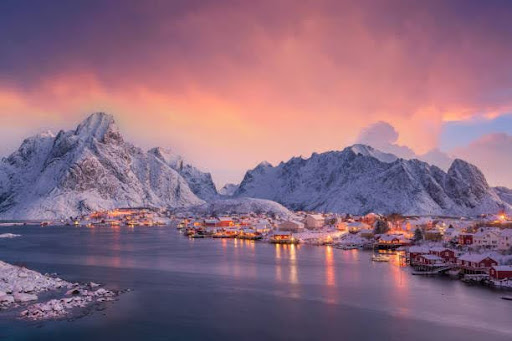
With 6.2 million international visitors in 2024 and numbers still climbing, this Scandinavian gem attracts travelers year-round. But book your trip without checking the calendar first? You might come home disappointed, broke, or wondering why you chose the worst time to visit Norway.
Norway’s worst travel periods fall at opposite ends of the year but for completely different reasons. Between mid-November and January, polar night takes over Northern Norway, with weeks passing without the sun ever rising above the horizon. At the other end of the calendar, June through August brings an entirely different problem: overwhelming crowds. Fjord cruises sell out, hiking trails overflow, and popular destinations feel packed.
This guide breaks down why certain times of year are harder for travelers, from pitch-black winter months that disrupt sightseeing to peak summer season crowds that drive up prices and test patience. It also includes practical planning strategies for anyone who must travel during these challenging periods.
What is the Worst Time to Visit Norway?

Norway offers two contrasting travel challenges depending on the season. Winter brings the worst weather in Norway, with polar darkness across the Arctic regions, inland temperatures falling below −15°C, and limited daylight hours. Meanwhile, summer, from June to August, creates a different set of problems, as heavy tourist congestion turns quiet fjord villages into crowded hotspots.
In places like Tromsø and the North Cape, the sun disappears entirely from mid-November to late January, according to the Norwegian Meteorological Institute, nearly two months of nonstop darkness. Then summer flips the script, with Statistics Norway logging 2.3 million overnight stays in Northern Norway between June and August 2024.
| Period | Conditions | Primary Challenges |
| Polar Night (Nov-Jan) | -5°C to -20°C, no daylight | Total darkness, limited activities |
| Shoulder Months (Oct, Feb-Mar) | -2°C to 5°C, limited daylight | Cold, unpredictable weather |
| Peak Summer (Jun-Aug) | 15-20°C, midnight sun | Overcrowding, high prices |
Suggested Read: Norway Visa Rejection for Indians
Norway Polar Nights (Nov–Jan): Why It’s Difficult for Travelers

The worst months to visit Norway for sightseeing are from mid-November through January, when the polar night grips everything above the Arctic Circle. This isn’t metaphorical darkness, as the sun literally stays below the horizon for weeks at a stretch.
Extreme Darkness and Its Effects
Travelers expecting to explore fjords or capture outdoor photographs face a significant challenge during winter. A visit to Norway confirms that from mid-November through late January, most of Northern Norway experiences no sunrise. In Tromsø, polar night lasts roughly two months. The North Cape sees no sun from November 20th until January 22nd, leaving the first 20 days of January in total darkness.
| Location | Polar Night Duration | Daylight Hours (December) |
| North Cape | Nov 20 – Jan 20 | 0 hours |
| Tromsø | Nov 21 – Jan 21 | 0 hours (twilight only) |
| Lofoten (Røst) | Dec 9 – Dec 31 | 0-2 hours twilight |
| Bodø | None technically | 3-4 hours |
The famous Lofoten Islands present marginally better conditions. Their dark period runs just under four weeks. However, travelers in December should still prepare for only a few hours of usable twilight rather than true daylight.
Temperature Extremes
Norway’s coldest conditions are found inland, where continental weather patterns dominate. Karasjok, situated on the Finnmark plain, has recorded the lowest temperature in the country at -51.4°C, and inland Lapland typically averages around -15°C per day in February.
Along the coast, conditions are far milder due to the Gulf Stream. Bergen’s January average sits at 2.5°C, while Værøy, an island north of the Arctic Circle, avoids average subzero temperatures entirely throughout the year. The trade-off for this mild climate is persistent wind, storms, and heavy precipitation.
Activity Limitations
When not to visit Norway becomes clear when you consider what activities actually work during polar months:
- Fjord cruises operate on limited schedules with reduced scenic value in the darkness
- Most hiking trails become inaccessible due to ice and snow
- Mountain roads close entirely, cutting off iconic destinations
- Photography opportunities shrink to brief twilight windows
- Outdoor sightseeing feels rushed and uncomfortable
Despite the challenges, this period delivers some of the best Northern Lights viewing. Just be prepared for long waits, clear sky dependence, and freezing outdoor conditions.
Suggested Read: Norway Visa Appeal for Indians
The Busiest Months: Peak Summer Travel Issues

Summer completely flips the script in Norway. From June through August, 24-hour daylight and school holidays create the country’s busiest season. July 2024 alone recorded 6.5 million guest nights nationwide, by far the most crowded time in Norway.
Tourist Surge Statistics
The numbers tell a stark story if you escape the worst weather in Norway to travel during the peak season. Northern Norway alone welcomed 1.1 million international overnight guests during summer 2024, a 9% jump from the previous year. Bodø saw foreign stays surge 42% after being named European Capital of Culture, proving that high-profile events can transform regional tourism virtually overnight.
When demand surges in summer, Norway’s iconic destinations quickly shift from scenic to saturated. Here’s how:
- Geirangerfjord fills daily with cruise passengers
- Trolltunga hiking requires advance booking
- Lofoten accommodation sells out months ahead
- Bergen’s Bryggen wharf becomes shoulder to shoulder
- The Flåm Railway operates at maximum capacity
- The Preikestolen trail experiences dangerous congestion
- Atlantic Road parking regularly overflows
- North Cape viewpoint becomes packed with tour buses
Why Summer Creates Problems
The bad time to travel to Norway for crowd-averse visitors peaks in late July. School holidays across Europe, combined with perfect hiking weather and midnight sun, concentrate visitors into a narrow window.
Norway’s fjord villages were not built to handle mass tourism, which is what makes overcrowding so frustrating. Tight roads, scarce parking, and modest infrastructure are pushed to the limit by city-sized visitor numbers.
Suggested Read: Norway Visa Photo Requirements for Indians
Price of Popularity: How Seasons Shape Norway Travel Costs

Norway worst travel months hit your wallet differently depending on the season. Summer brings eye-watering prices for accommodation and tours. Winter offers lower rates in some areas but higher costs for specialized Northern Lights experiences.
Summer Price Escalation
Budget Your Trip data reveals Norway hotel prices average $120 but spike to $224 during peak summer. The price surge hits certain destinations even harder. In Bergen, accommodation costs swing from $81 in low season to $412 at peak times, a fivefold increase that can wreck travel budgets overnight.
| Destination | Low Season Rate | Peak Season Rate | Difference |
| Bergen | $81/night | $412/night | +409% |
| Tromsø | $109/night | $203/night | +86% |
| Lofoten | 1,500 NOK | 6,000 NOK | +300% |
| Flåm | $100/night | $300+/night | +200% |
Please note: These numbers represent estimated costs, not official pricing.
Northern Lights Season Costs
Winter completely reshapes Norway’s pricing patterns. In Tromsø, hotel rates rise from October through March as Northern Lights season drives demand, reversing the usual off-season logic. Mid-range hotels commonly cost 2,200 to 3,500 NOK per night on popular weekends.
Overall, the best and worst time to visit Norway depends heavily on budget priorities. Shoulder months like May and September deliver genuine savings, fewer crowds, and workable weather, while peak periods come with premium prices regardless of season.
Suggested Read: Ultimate Guide to the Norway Visa for Indians
Making It Work: Traveling in Norway During Difficult Periods

Sometimes your travel dates aren’t flexible. Work schedules, family events, or connecting flights might lock you into the worst time to visit Norway. Here’s how to make difficult periods work.
Indoor Alternatives for Dark Months
When polar night eliminates outdoor sightseeing, Norway’s museums provide climate-controlled salvation:
- The National Museum, Oslo: Scandinavia’s largest art museum, opened in 2022, housing over 6,500 works, including Edvard Munch’s The Scream, with striking architecture and a rooftop terrace.
- MUNCH Museum, Oslo: A 13-story waterfront museum dedicated to Edvard Munch, featuring rotating exhibitions and three versions of The Scream shown every 30 minutes.
- Fram Museum, Oslo: A polar exploration museum where visitors can board the original Fram ship used by Amundsen and Nansen, with interactive exhibits for all ages.
- KODE Museums, Bergen: One of the Nordic region’s largest art, design, and music collections, spread across four lakeside buildings featuring Munch, Astrup, and J.C. Dahl.
- Troldhaugen, Bergen: Edvard Grieg’s home from 1885 until his death, now a museum featuring his original villa, composing hut, and a modern 200-seat concert hall.
Dark Season Survival Strategies
| Challenge | Solution | Why It Works |
| No daylight | Plan Northern Lights tours | Darkness becomes an asset |
| Extreme cold | Layer with thermal base, wool mid-layer | The Norwegian layering system works |
| Limited activities | Book museum passes | Indoor attractions stay open |
| Road closures | Use coastal ferries | Hurtigruten runs year-round |
Navigating Through Summer Crowd
If you are traveling during the most crowded time in Norway, these strategies help you stay one step ahead of them.
- Reserve Lofoten accommodation well in advance for July
- Confirm Trolltunga hiking slots before leaving home
- Take early morning fjord cruises to avoid tour groups
- Choose Sognefjord instead of Geirangerfjord
- Visit Bergen’s Bryggen before cruise passengers arrive
- Swap Lofoten for the lesser-known Helgeland coast
Suggested Read: How to Get Visa Appointment for Norway


FAQs
When does polar night occur in Norway?
Polar night affects Northern Norway from mid-November through late January. In Tromsø and at the North Cape, the sun stays below the horizon for nearly two months. This is the worst weather in Norway for sightseeing, but an excellent time for Northern Lights viewing if you are comfortable with darkness.
What are the busiest months for tourism in Norway?
Norway is busiest in midsummer. July 2024 saw 6.5 million guest nights, followed by August with 5.2 million, according to Statistics Norway. These months bring packed attractions, limited lodging, and premium pricing.
How cold does Norway get in winter?
Norway’s climate changes fast depending on where you go. Bergen sits at around 2.5°C in January, while Karasjok holds the national cold record at -51.4°C. The bad time to travel to Norway for cold-sensitive visitors runs from December through February, especially in inland and northern regions.
Is Norway expensive during the summer?
Summer prices in Norway can surprise first-time visitors. Bergen hotel rates jump from $81 in low season to $412 at peak, while Lofoten rorbuer reach up to 6,000 NOK per night. For budget travelers, July and August are the worst months to visit Norway.
Can I see Northern Lights during the polar night?
The best Northern Lights season spans October to March, as polar night ensures dark skies. However, guaranteed sightings aren’t possible during cloudy periods. Tromsø and Alta consistently rank among Norway’s best viewing destinations despite extended darkness.
Which regions avoid the worst crowds?
If you cannot avoid the most crowded time in Norway, avoid the places. The Helgeland coast, Nordland, and inland areas like Røros see far fewer visitors than headline destinations. While Lofoten and Geirangerfjord overflow in summer, these regions deliver a more authentic Norway.
Are fjord cruises worth it in winter darkness?
Yes, some fjord cruises run in winter, but polar night means you’ll miss most of the scenery. With reduced schedules and limited daylight, the experience falls short. For the best views, aim for April-May or September-October.
Which month should I completely avoid?
The worst time to visit Norway depends on your priorities. Sightseers should avoid December-January due to polar night in the north, budget travelers should skip July because of peak prices, and crowd-averse visitors should avoid August, when 5.2 million guest nights flood popular spots.